Artist Philip Colbert: ‘There’s a fascism of seriousness’
The Scottish artist’s most ambitious exhibition has just landed in Pompeii, making him only the second artist (in modern times) to exhibit among the Roman ruins
by:
9 Aug 2026
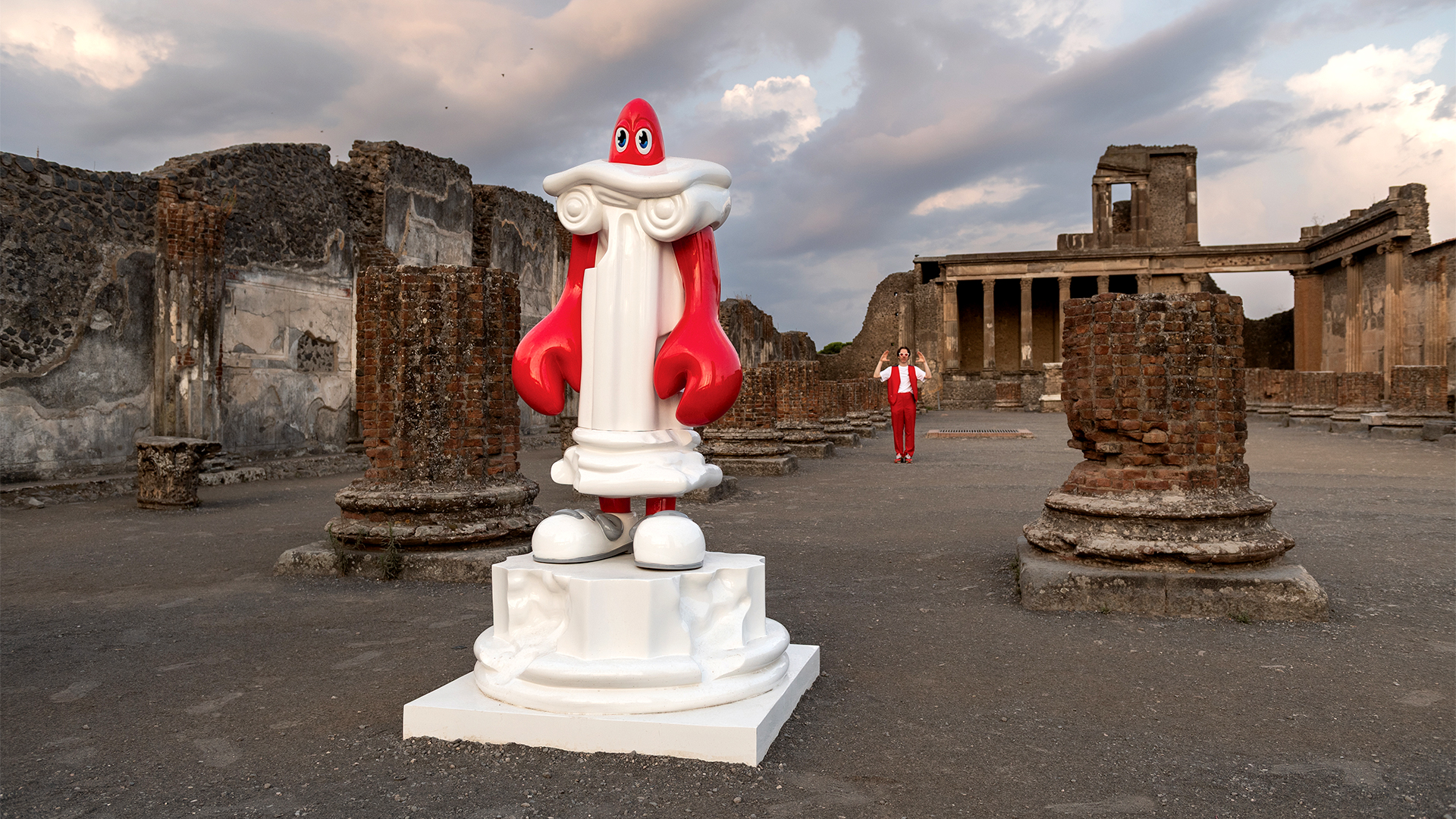
Thirty giant, surrealist lobsters interact with the Roman ruins at the Archaeological Park of Pompeii
Share
Dive into the world of Philip Colbert. Originally from Perth, he studied philosophy at the University of St Andrews, before becoming a fashion designer, then combined the two as he moved into a career in neo-pop surrealism that has made him one of the most collectable and influential artists working today.
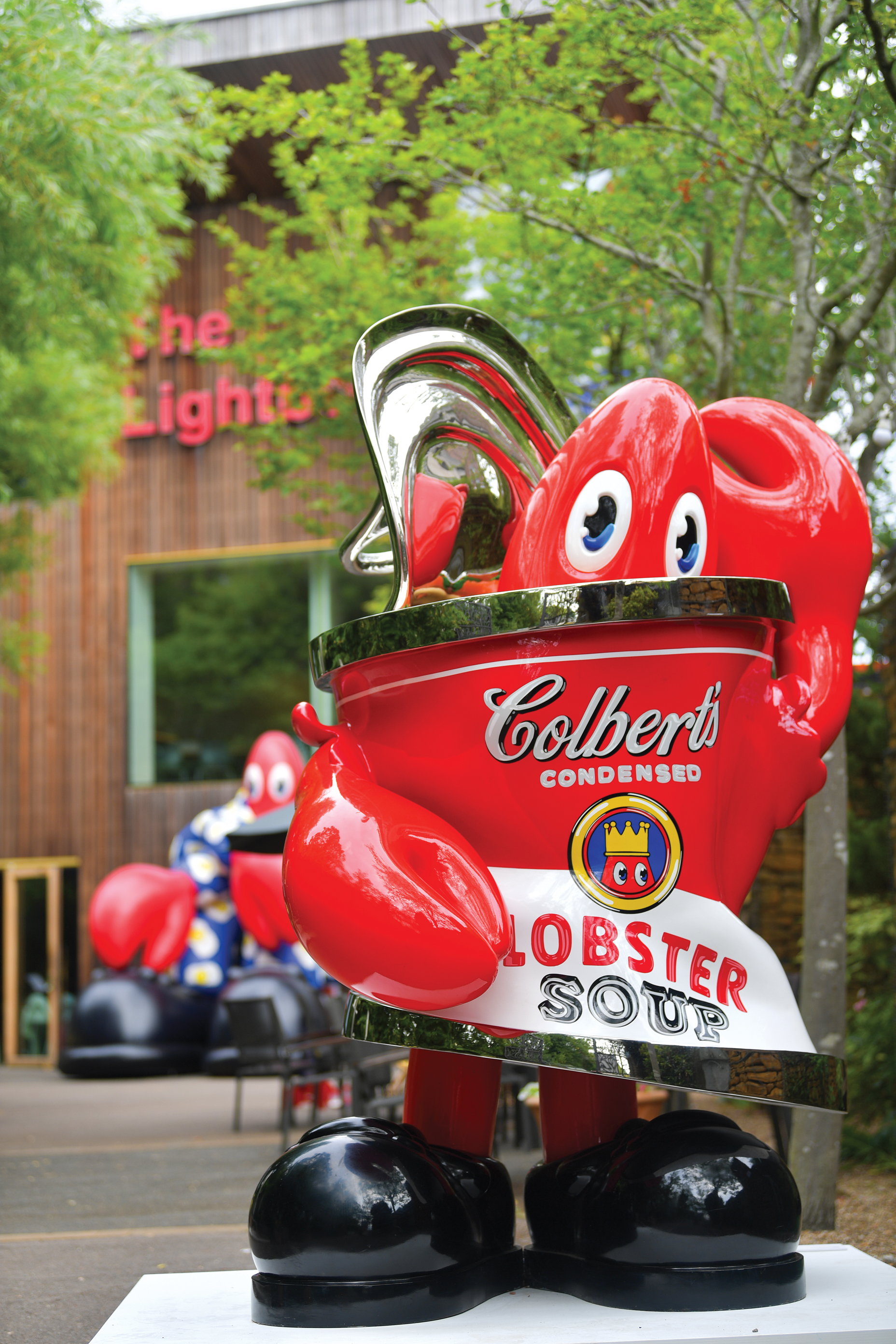
Colbert was christened (not literally) the “godson of Andy Warhol” by the late André Leon Talley, editor-at-large of Vogue, and similarly comments on, critiques and capitalises on consumerist trends and commercial iconography with his lobster-like characters, the Lobstars, citizens of his imagined Lobsteropolis society.
The Lobstars have invaded cities across the world, from Rome to Singapore and across South Korea and China. A giant floating lobster sailed down the Grand Canal in Venice, and his most ambitious exhibition has just landed in Pompeii, making him only the second artist (in modern times) to exhibit among the Roman ruins. On news that 30 of Colbert’s sculptures would be placed around the archaeological site there was excited chatter from fans, as well as comments like: “I wouldn’t be surprised if Vesuvius erupts in anger in response to this silliness.”
Colbert’s work has led to comparisons with Andy Warhol
Colbert’s art provokes a response. That’s the point. We are forced to see the world differently. And although the most modern of modern art, his work belongs to an ancient tradition. He calls Pompeii a “pop city” and is inspired by the frescoes and mosaics that Pompeii’s destruction preserved perfectly.
Closer to home, visitors can enter The Lost Gardens of Lobsteropolis at the Lightbox in Woking. It’s a kaleidoscopic journey through pop culture and art history set against the rise of technology.
He’s also taken time to create an exclusive cover for Big Issue. His bright red lobster character will be sold by our vendors in their bright red tabards. Both are designed to attract attention, and like this magazine can help us look at the world anew.
Advertising helps fund Big Issue’s mission to end poverty
Advertisement
Big Issue: First of all, could you introduce us to the character on the front cover?
Philip Colbert: So that guy is my artistic alter ego, my artistic mask. I become an artist by becoming a lobster.
How did you discover him?
Keep reading the journalism that powers our mission
Register free to continue and learn more about the stories, campaigns and the support we provide, helping people facing poverty across the UK.
I used to use the symbol of the lobster a lot, on clothing and caps and stuff. People were calling me Lobster Man. But I really made this transformation while I was painting a self-portrait. I suddenly was like, why am I painting the way I look in reality? Why don’t I paint the identity I’m known as? Having this character opened up this freedom to go back in time, go to the future, you know, fuck around with stuff.
Why is a lobster a good guide through the themes you explore in your work?
In art history the lobster already has all these connotations… They’re definitely a muse to many surrealists. Dalí was obsessed with lobsters. The poet Gérard de Nerval, the myth was that he would walk the streets of Paris with a pet lobster on a lead. The lobster, in a way, was part of a surrealistic performance. So there does seem to be interesting interspecies dialogue between human and lobsters.
Advertising helps fund Big Issue’s mission to end poverty
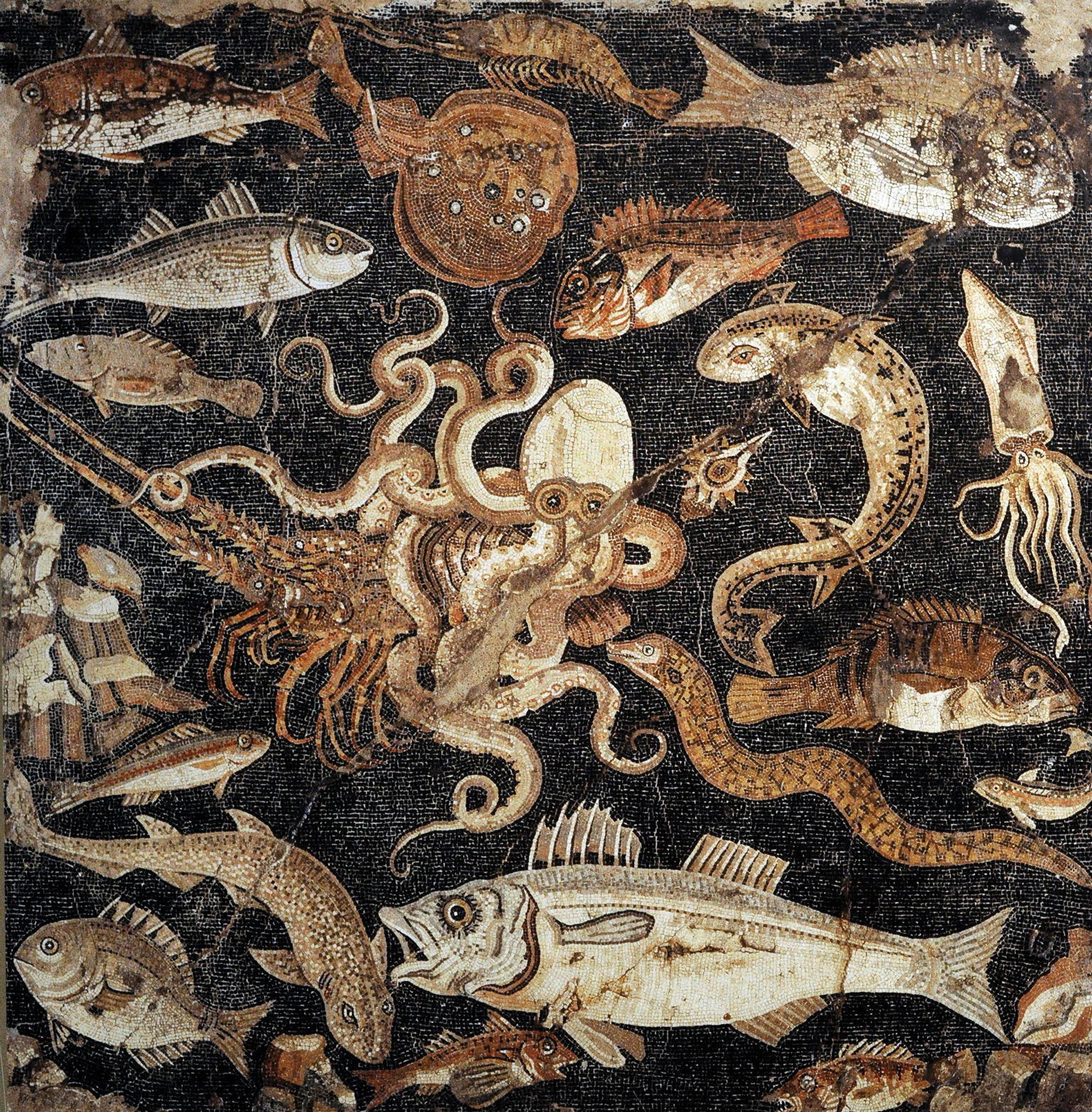
I like the idea that lobsters have alien-like energy. They live under the sea in totally different conditions, their world is so different to our world. You cook a lobster and it goes bright red. In the Dutch still-life period they would paint the red lobster, but the tentacles would still be up so that was like a life and death icon. In Pompeii and in antiquity the lobster was used with the octopus as a symbol of mortality. Again the lobster would be painted or mosaiced in bright red, yet would still be alive.
They wouldn’t have known then that lobsters are basically immortal, right?
Yeah, they may have seen that lobsters could get really big so can live a long time. But they wouldn’t have known scientifically that the cells are immortal. It’s the weight of the skeleton that suffocates the lobster at a certain point. So the lobsters have one claw in eternity. They’re our bridge to the infinite, but they’re still fucked as well.
In the famous mosaic from Pompeii – and in nature – the lobster battling the octopus is the underdog. Do you relate?
I’ve always identified as an outsider. I was never very engaged at school. I was always at the bottom of the class. I didn’t find societal behaviour attractive. Even in the art world, I’m definitely an outsider. I’m very anti-pretension. I mean, I love art history but I can find the industry quite pretentious and meaningless. I really embrace the democratic reach of commerciality and pop culture. In a Warholian sense, I believe in the power, the poetry of the everyday.
Advertising helps fund Big Issue’s mission to end poverty
First-century mosiac of marine life. Image: Alamy
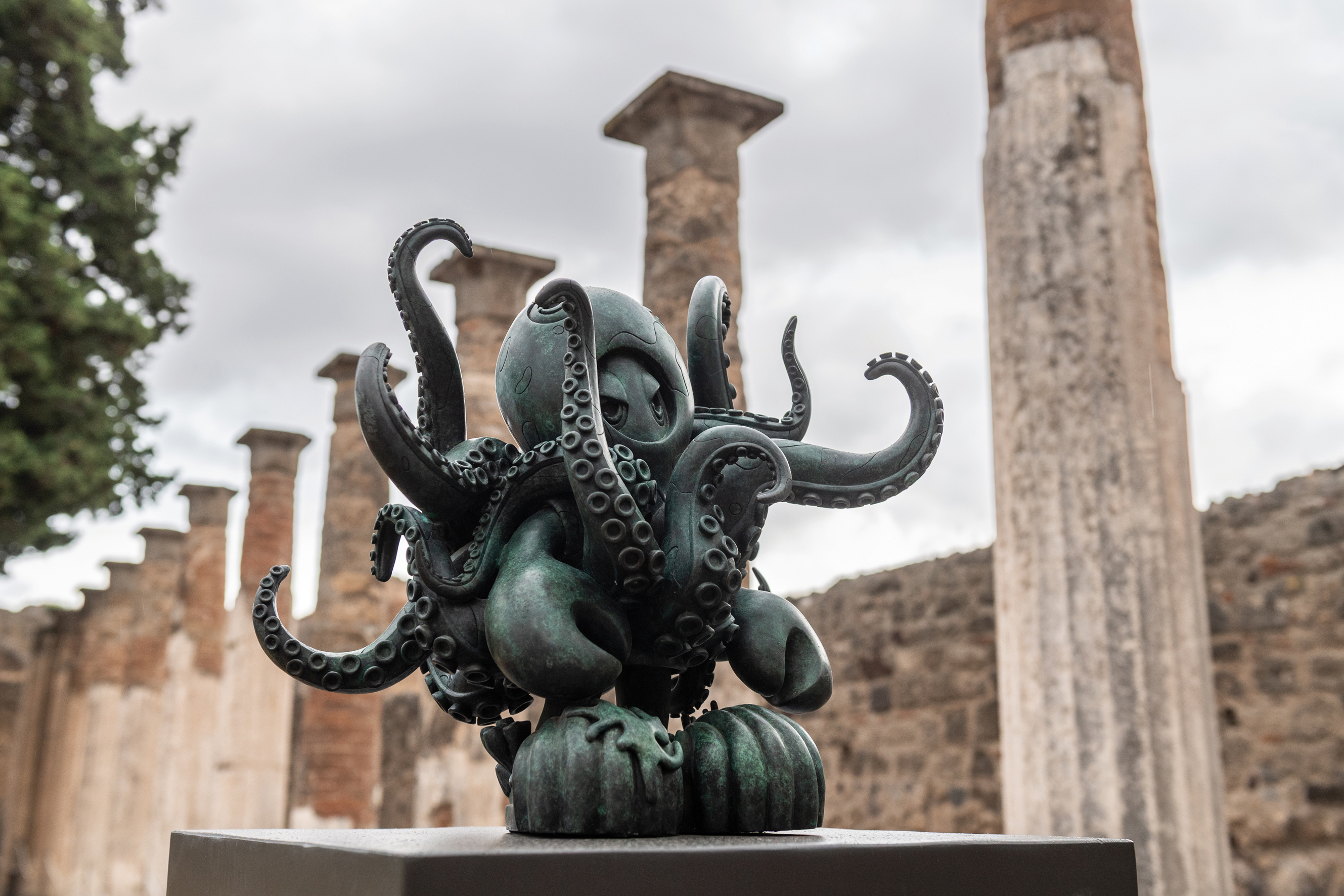
…and Colbert’s interpretation. Image: Ivan Romano / Getty Images for Philip Colbert Studio
Isn’t there enough surrealism in the world already without your lobsters, or does surrealism have a more important role to play than ever before?
I think it has a role to play because first of all, people get very easily sucked into conventions and authority. It’s very easy for humans collectively to end up following narrow-minded trends and so it’s always good to satirise and criticise pretension and seriousness because I think it can also be quite dangerous.
There’s a fascism of seriousness. I’m always one for slightly pulling the rug under the feet of pretension. Also, I like giving good energy to people rather than bad energy. When you look at a sunflower, it gives you an energy. For me, art is a medium to communicate positive, life-affirming energy that connects humans rather than dividing them.
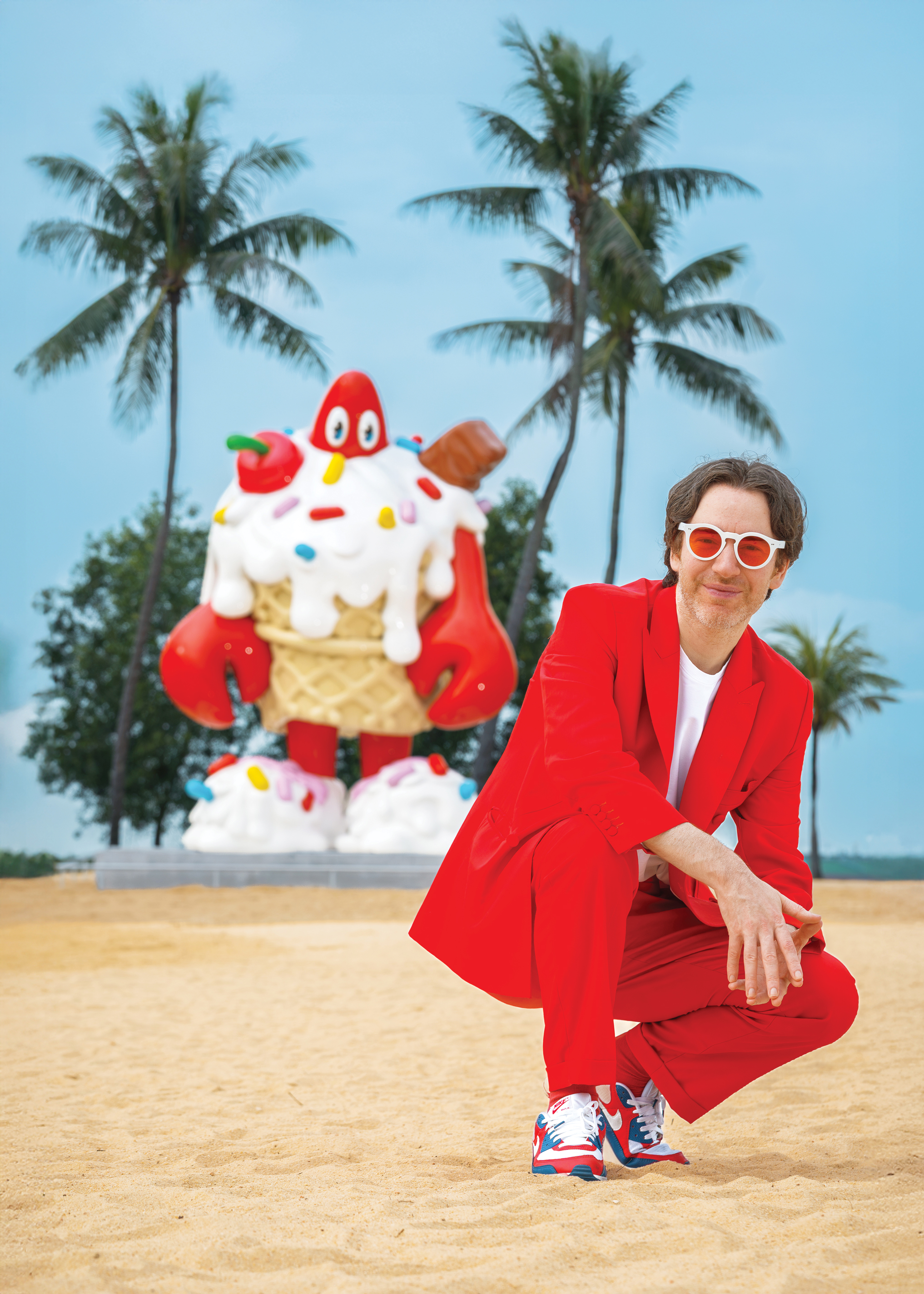
Colbert with one of his crustacean creations. on Sentosa Island, Singapore Image: Vinod Rai Sharma
Your lobsters are often surrounded by sunflowers. Is that a nod to Van Gogh?
Van Gogh obviously did some insanely good sunflower paintings. When I was a kid, they were the first paintings I properly studied intensely and tried to replicate. They’re important for a lot of people. Van Gogh is one of those very distinct original artists; a loner who reinvented the world.
How do you characterise your treatment of great art, or archaeological history?
Advertising helps fund Big Issue’s mission to end poverty
It’s very easy to be nostalgic about things in the past but there were often super dark undertones. You look at the beauty of the ancient world; a lot was built on slavery. Today we live in a more democratic world, where ideas are more accessible. Even luxury is more accessible to a bigger number of people. OK, it’s not perfect, and there are still tonnes of problems, but more people are experiencing more things than before, so in a utilitarian way, things are somehow getting better for more people. I love the democratic spirit of art, be-cause for all the darkness of the past, I think it offsets that to some extent.
Obviously, that comes with downsides. You’re in a sea of noise. Attention spans today are shockingly bad. To be recognised you have to fight so much other information. Before there were less artists, a smaller scene. You got to sit in people’s minds for longer. Changing tides require different activity. Content creation is infinite. That for everyone is a challenge. When you’ve got so much content, content itself is devalued. But on the positive side, there is a huge democratisation of creativity now, especially with AI.
When you talk about there being darkness in history, is there anywhere that’s more apparent than Pompeii?
Pompeii is completely defined by its tragedy. The very fundamentals of art is also mortality for me, because underpinning any beauty is life and death. Why is a flower so particularly beautiful? Because of its temporality. Why is life special? Because it’s precious, it’s a limited number of days. My art is a response. It’s my defiance of temporality. Pompeii is so profound because it’s also a place that’s a bubble beyond time.
We think of time as linear: past, present, future. But in reality, our memories and all the language we carry blurs the present with the past. Past, present, future is layered on top of each other and art is our opportunity to explore the boundaries of our perception of time.
What else makes Pompeii a fitting canvas?
Advertising helps fund Big Issue’s mission to end poverty
The past wasn’t a twee antique to be preserved. Pompeii was a pop city. These temples were pop. They were painted with bright coloured frescoes. They were a phenomenon of creativity for people to walk into. Now they’re seen in the guise of ruins as something to be heavily preserved, which is obviously quite right; what I mean is, people look initially and think my work is a crazy contrast. I don’t believe it is. I believe it’s in dialogue with what created Pompeii. So many of the stories of the frescoes are mythological. Oceanus, the ancient sea god, has lobster claws coming out of his head. I mean, couldn’t be more Marvel. Properly bonkers. Centaurs are everywhere. Guardians of antiquity today, the real gatekeepers, that say antiquity should only be preserved. Get real. This was trippy, crazy art.
Do you feel like you’re in direct communication with artists who made mosaics of lobsters 2,000 years ago?
One hundred percent. The artistic mastery of all the elements were amazing. The story-telling, the detailing. Putting my works into that context creates a visual cue for people to think: hang on, there’s something that’s from another dimension going on here. Suddenly there’s a conceptual question between the elements that creates a visual conversation, that immediately creates a reaction.
As well as the times being surreal, they’re also very reactionary. But not all reactions have to be bad?
Bad responses are as important as good responses because it would be very bland if all response was the same. It’s great that you get people that really don’t like it. I myself am obviously biased. I love art that dialogues across time. That’s why I’m obsessed with antiquity. I find it really inspiring. It does something for me which is like time travel. It’s like a visual explosion.
Right to Rome – Philip Colver’s favourite Roman Britain sites
If you can’t make it to Pompeii, there are Roman sites across Britannia where past and present meet. You can do a little time travelling and imagine a ‘visual explosion’. Philip Colbert tells us about his favourites.
Advertising helps fund Big Issue’s mission to end poverty
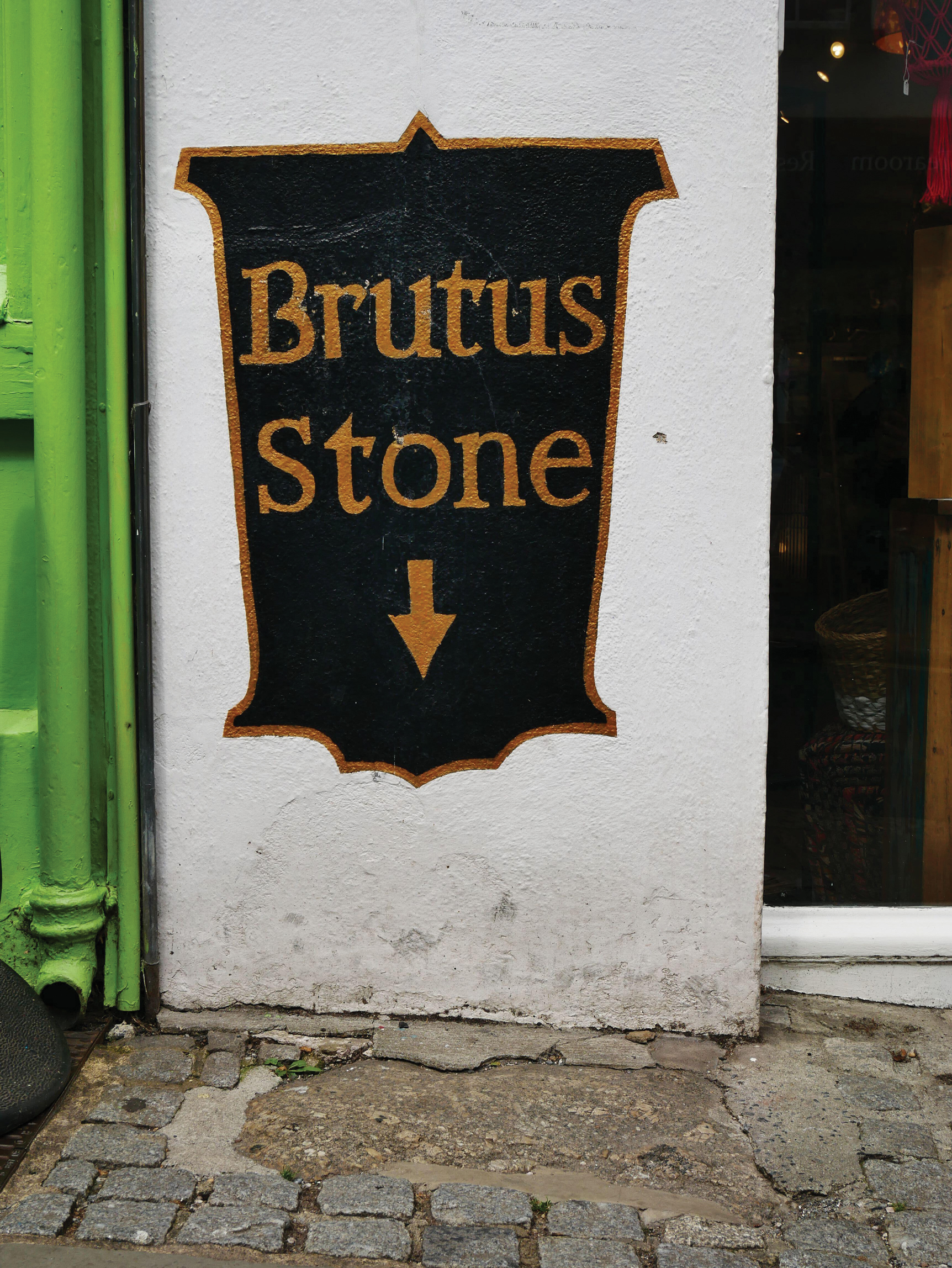
The Brutus Stone. Image: Alex Hinds / Alamy
The Brutus Stone
The Brutus Stone is a small granite boulder embedded in a pedestrian pavement on Fore Street in Totnes, Devon. According to medieval legend popularised by Geoffrey of Monmouth, it is the exact rock where the Trojan hero Brutus first stepped ashore to found Britain. Legend states Brutus arrived and declared, “Here I stand and here I rest, and this good town shall be called Totnes.” He also founded London, naming it New Troy. Upon his death, Brutus divided his island kingdom among his three sons; the legend goes that his son Albanactus became the first King of Scotland, where I was born, so I love the idea that Scotland had a Trojan King. There is a claim that the London Stone, housed at 111 Cannon Street in the capital, is also the Brutus Stone.
Roman mosaics
To me, these are the blueprints of western painting. It’s amazing that some of these remarkable works can be found right here in the UK, at Bignor Roman Villa and Fishbourne Roman Palace, both in West Sussex.
London Mithraeum Bloomberg SPACE
The London Mithraeum Bloomberg SPACE is one of the most remarkable Roman sites in Britain. Located at 12 Walbrook, it presents a reconstructed third-century Temple of Mithras in the very place it was discovered during excavations. Descending beneath the modern office building feels like stepping into another world, as light and sound recreate the atmosphere of the Roman sanctuary.
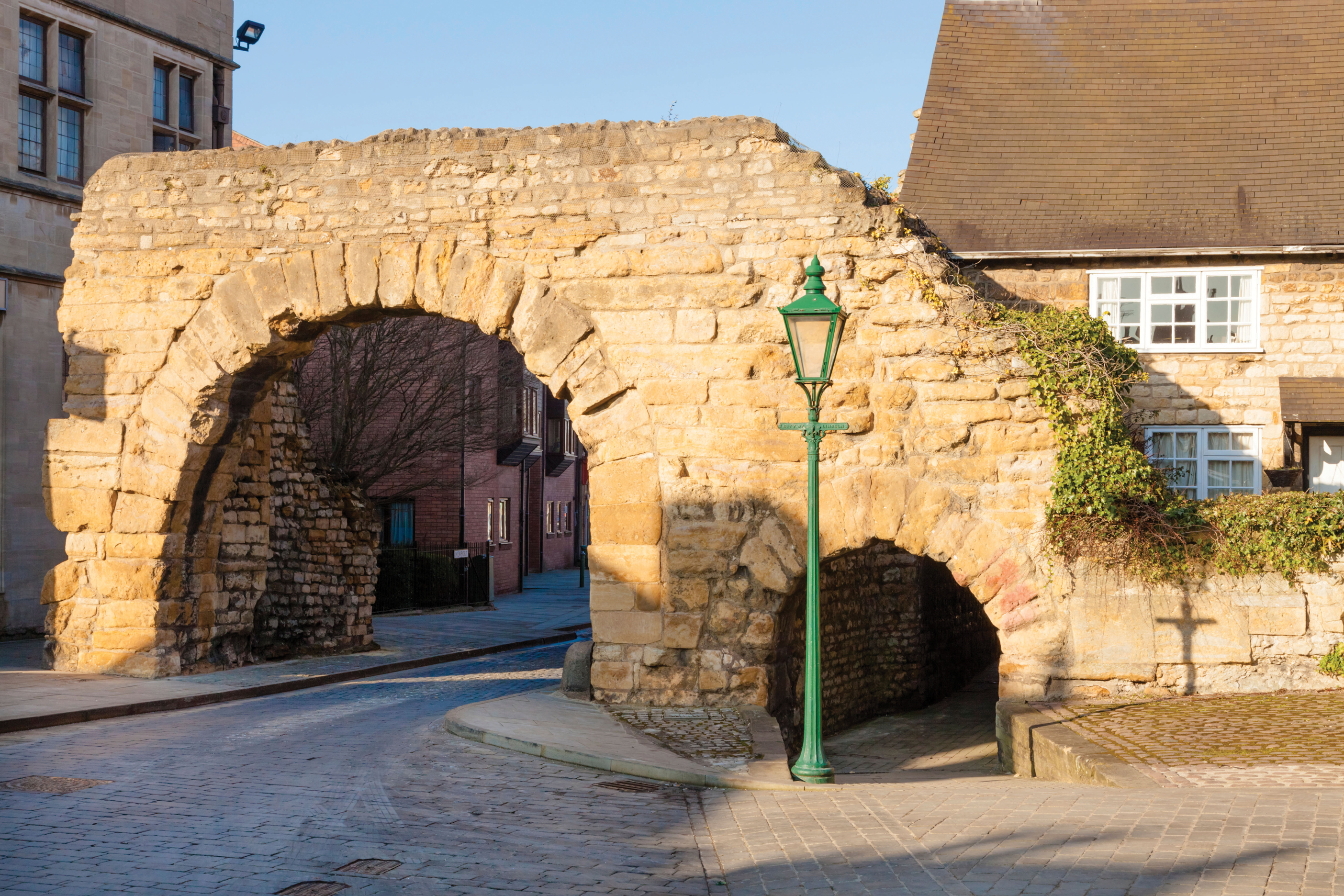
Newport Arch. Image: Martyn Williams / Alamy
Newport Arch, Lincoln
My favourite image of Roman Britain is this arch in Lincoln. I love the juxtaposition of the Roman architecture with the charming British cottage and the lamppost. I’ve always wanted to make a ceramic sculpture of this scene. It feels quintessentially British to me – a place where nearly 2,000 years of history are still part of everyday life.I especially love that the arch continues to serve its original purpose, with the road still passing through it.
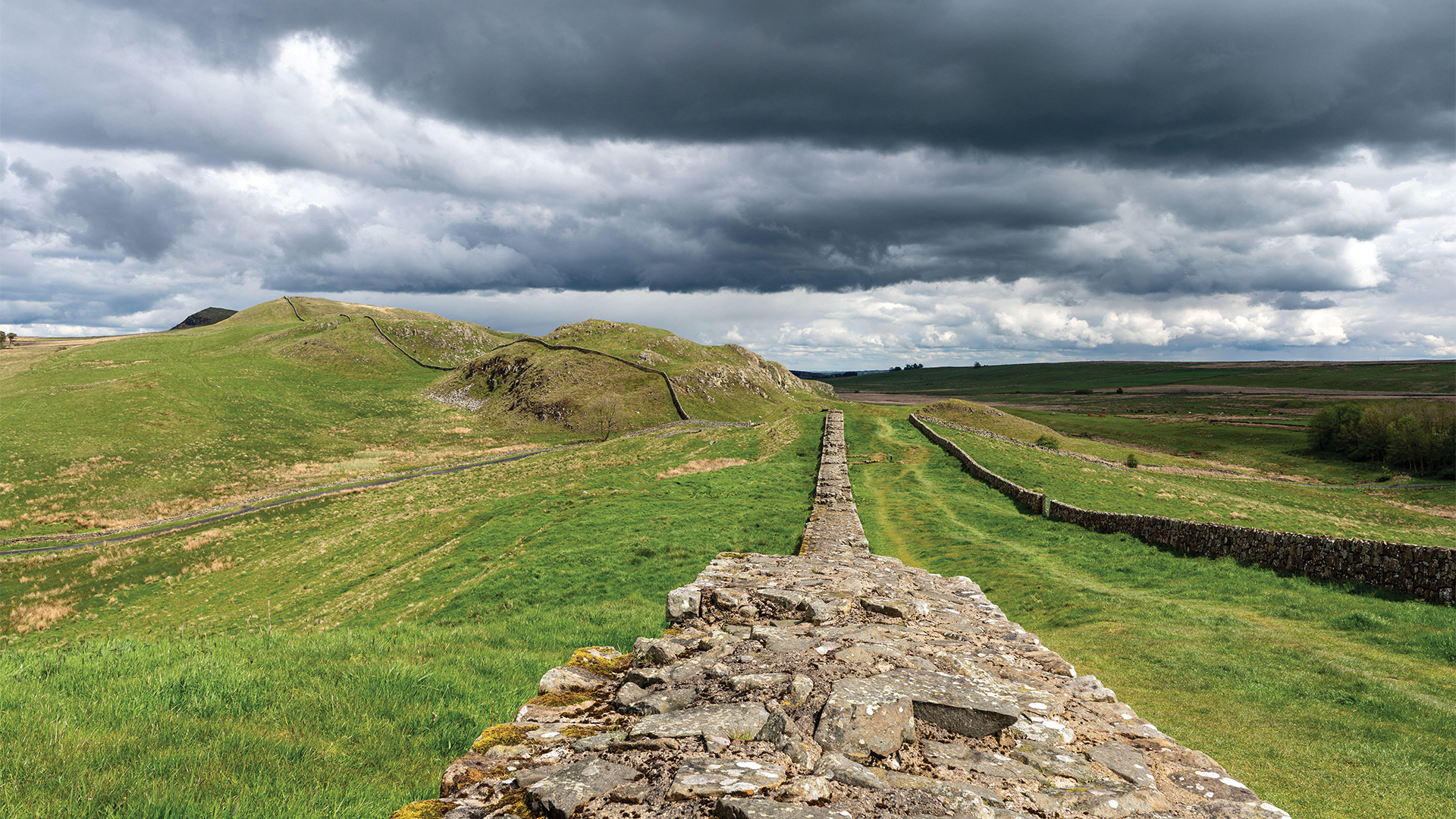
Hadrian’s Wall
Love this epic wall for an epic walk. Hadrian’s Wall is a historic Roman frontier fortification spanning 73 miles from Wallsend to Bowness-on-Solway, featuring major sites like Housesteads Roman Fort, and built in AD 122.
Some of the remaining ruins of Hadrian’s Wall. Image: Frank Schackmann / Alamy
Inchtuthil
Inchtuthil is a first-century AD Roman legionary fortress in Perth and Kinross, Scotland. Built around AD 83 by the governor Gnaeus Julius Agricola and abandoned just a few years later, around AD 87, it covered 21.5 hectares and housed between 5,000 and 5,500 soldiers. Today it is perhaps best known for the extraordinary discovery of a buried hoard of around 875,000 iron nails.
Advertising helps fund Big Issue’s mission to end poverty
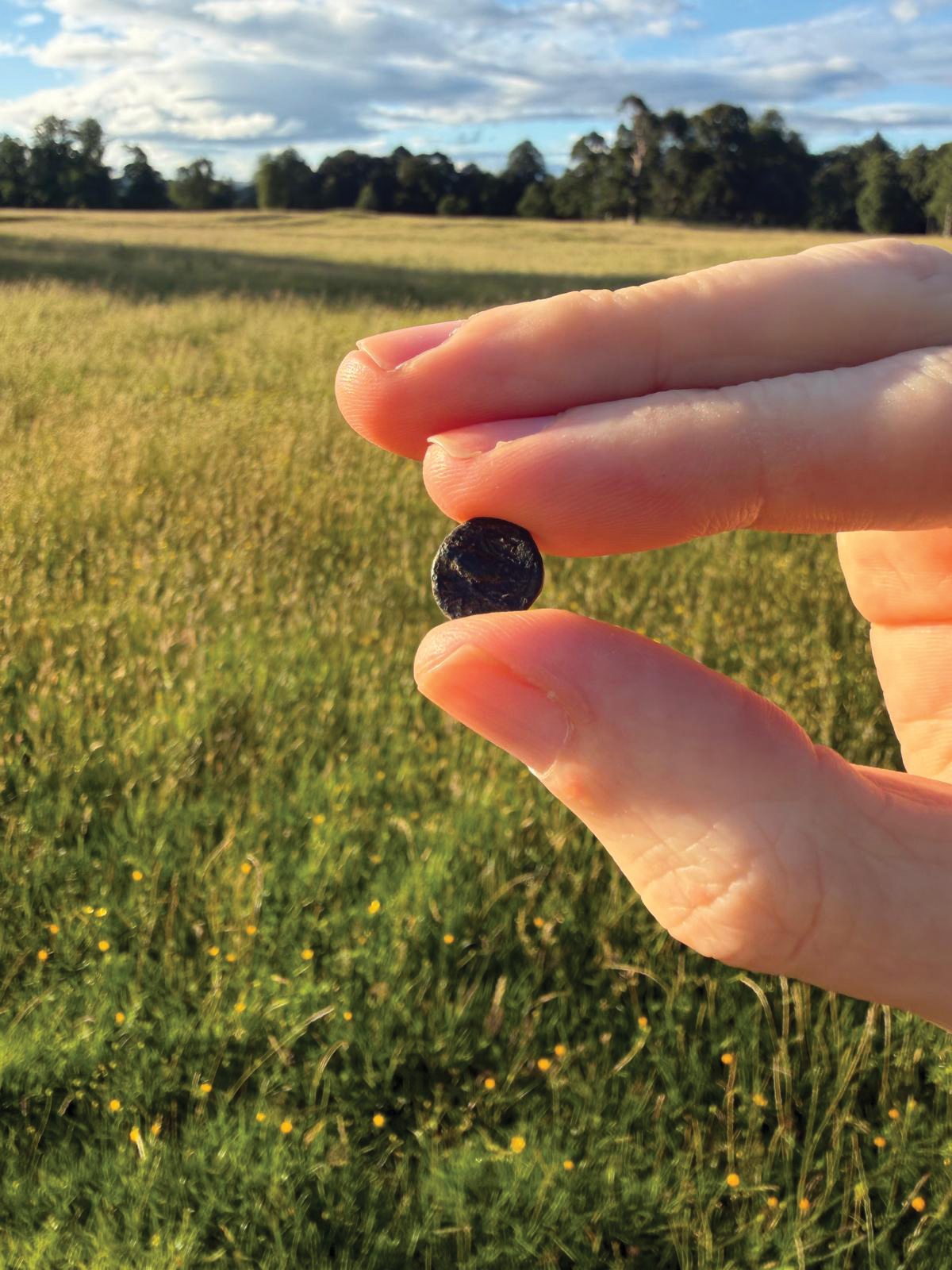
A Roman coin will be painted and returned to Pompei
It is a wild, remote site in rural Scotland, with very little sign of modern civilisation. Standing there today, it takes real imagination to picture the vast military fortress that once occupied the landscape.
On a very personal level, this place means a great deal to me. My dad used to take me there when I was a child – it was only a 15-minute drive from our house. I was lucky enough to find a heavily worn fragment of a Roman coin and a Roman nail. That discovery completely blew my mind. The thought that this quiet, windswept field had once been home to thousands of Roman soldiers made the ancient world feel suddenly real and tangible.
For my exhibit in Pompeii I am returning the coin. I am painting on it an image of a lobster and the sea god Oceanus – a small intervention that plays with time, archaeology, and discovery. I like the idea that someone, centuries from now, might find it in Pompeii and wonder about its journey.
Philip Colbert: The Lost Gardens of Lobsteropolis is at The Lightbox, Woking until 1 November; Philip Colbert in Pompeii: Pop Mythology, Archaeological Park of Pompeii, until 30 November.