Mr Skelly artist Christian Watson: ‘I had a pretty rough childhood. I felt wronged by the world’
Christian Watson’s Mr Skelly stories offer a hopeful and accepting approach to being alive
by:
28 Oct 2026
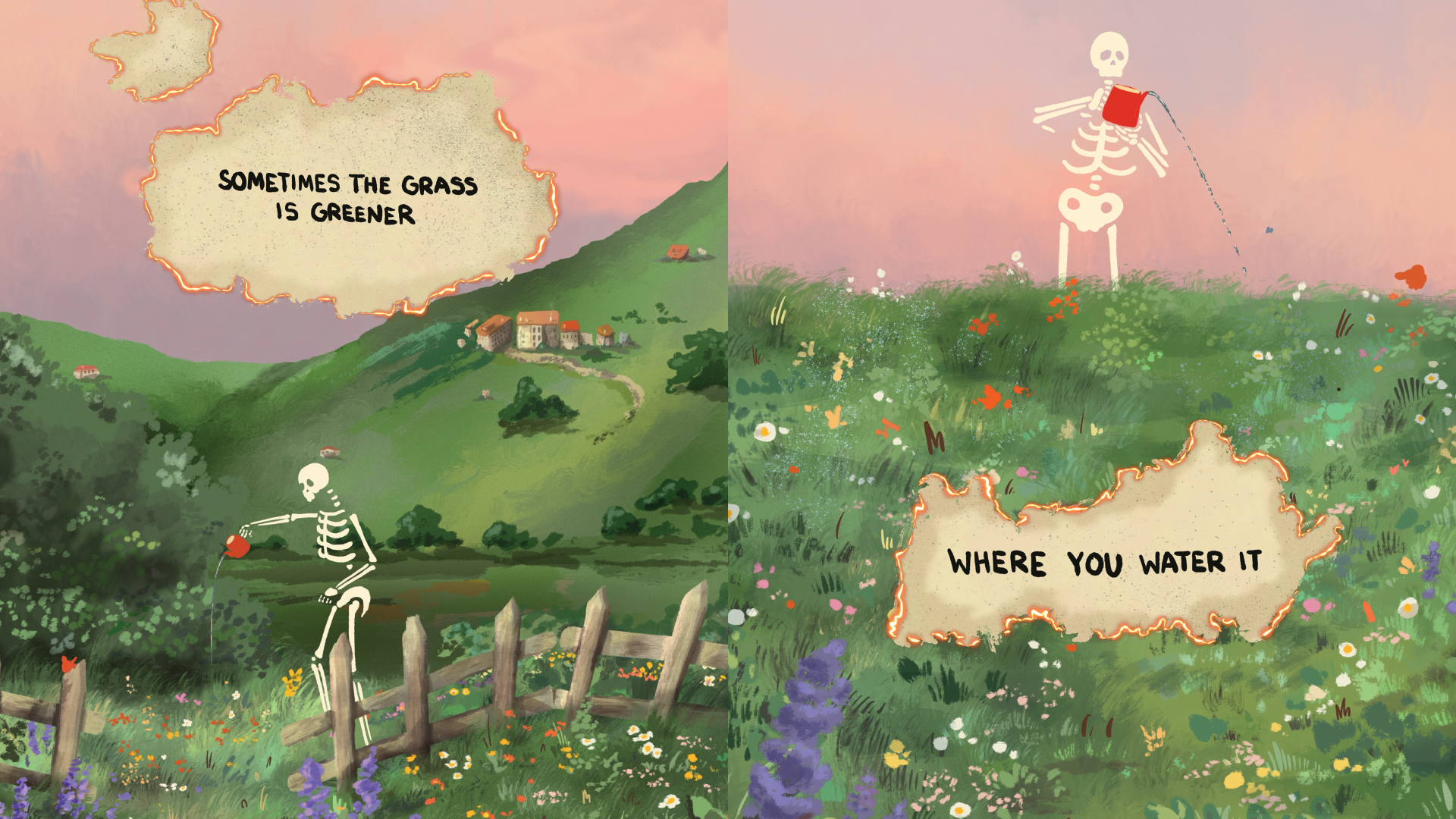
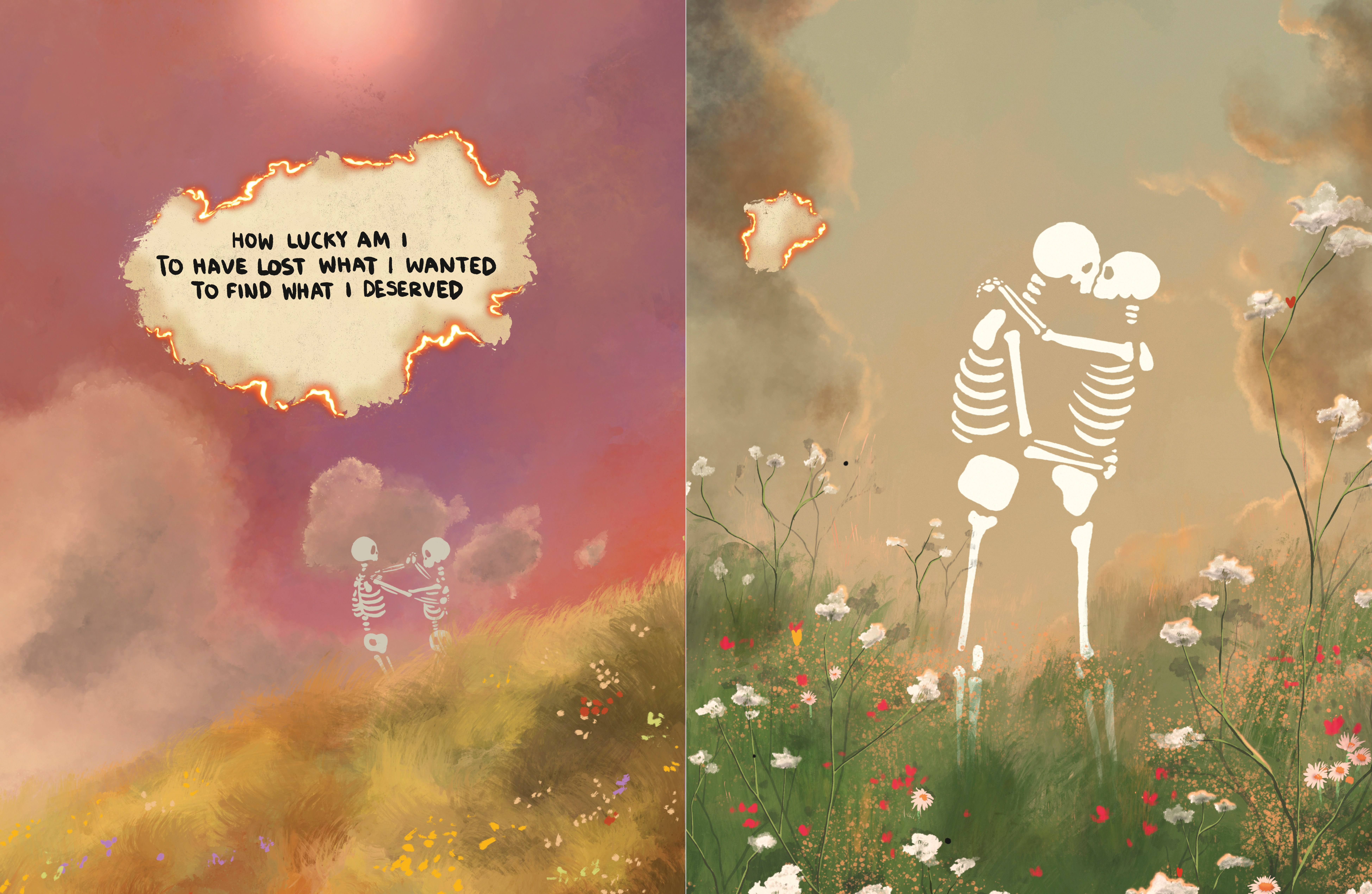
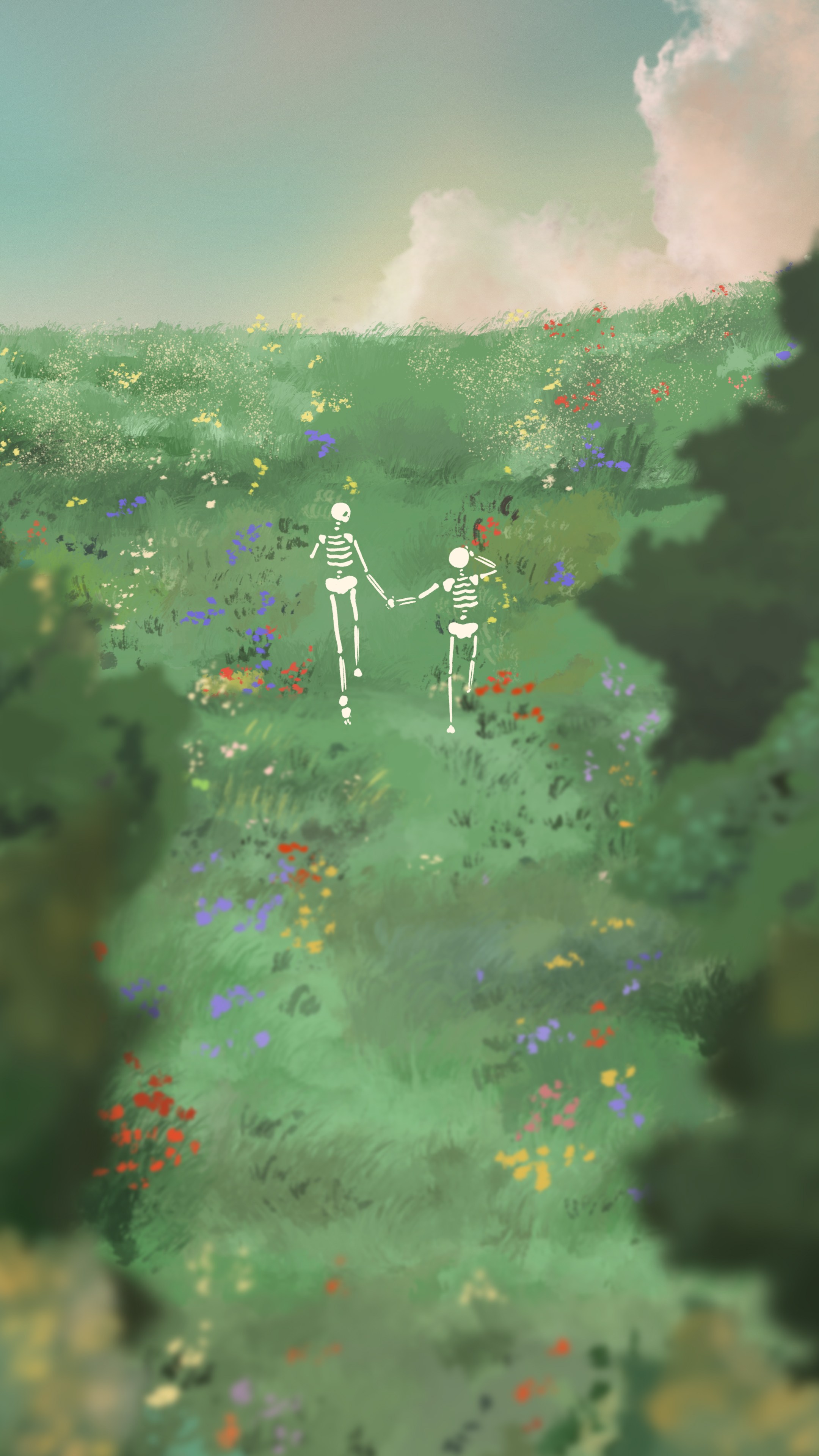
Mr Skelly artwork. Images: Christian Watson
Share
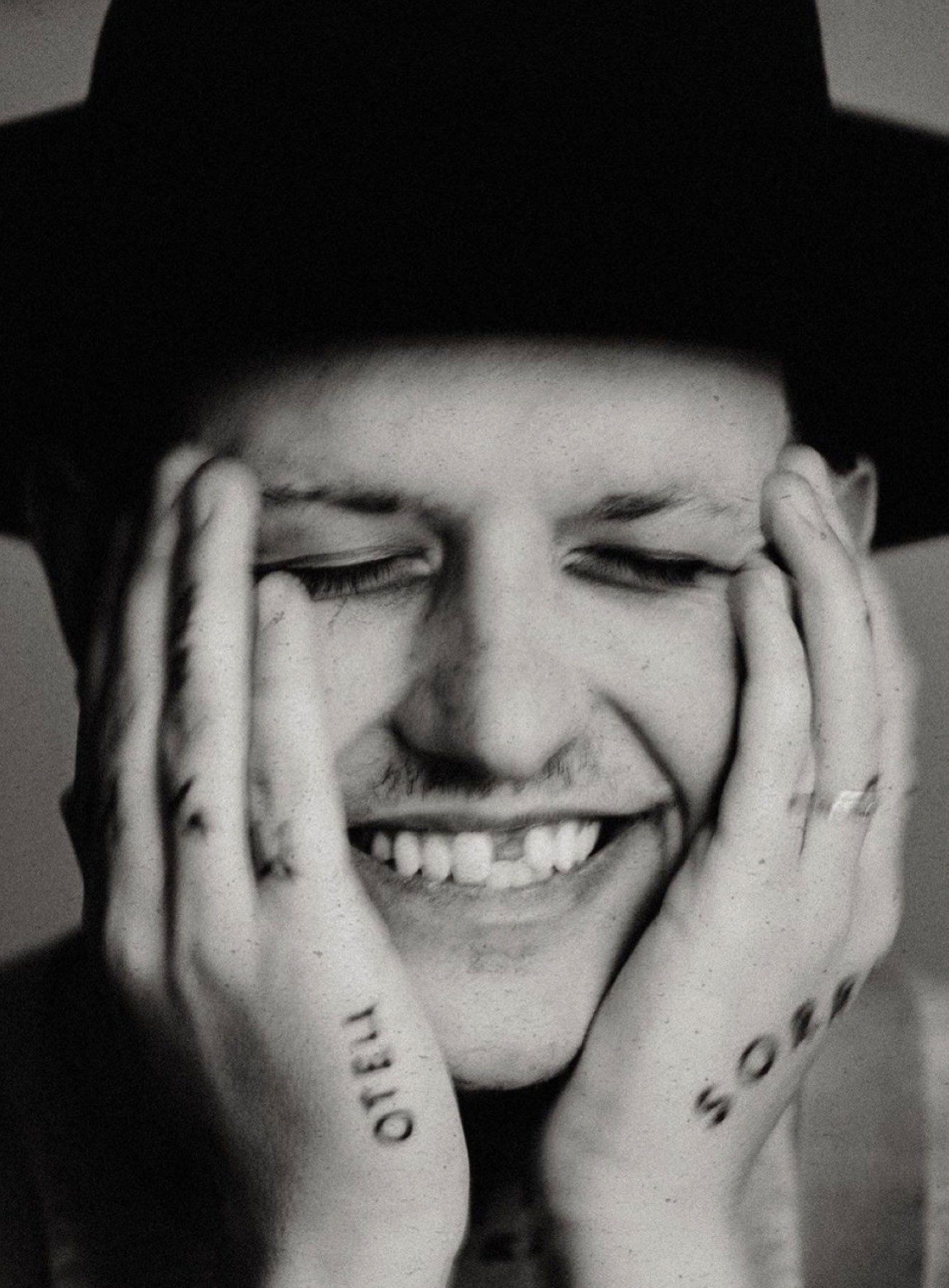
There are hurricane-force winds blowing when Big Issue calls Christian Watson in his adopted home in Tasmania. He can feel the walls of his convict-era house moving. But inside all is calm, the conversation is reasoned and reflective.
Christian Watson
This contrast mirrors his art. Watson tames the biggest and darkest of themes – loss, grief and death – and transforms them with scenes about self-acceptance, resilience, hope and the elemental joy of being alive.
His artistic alter ego is a skeleton, who Christian christened Mr Skelly. The world he inhabits seems to exist on a higher, more peaceful, dreamlike plane.
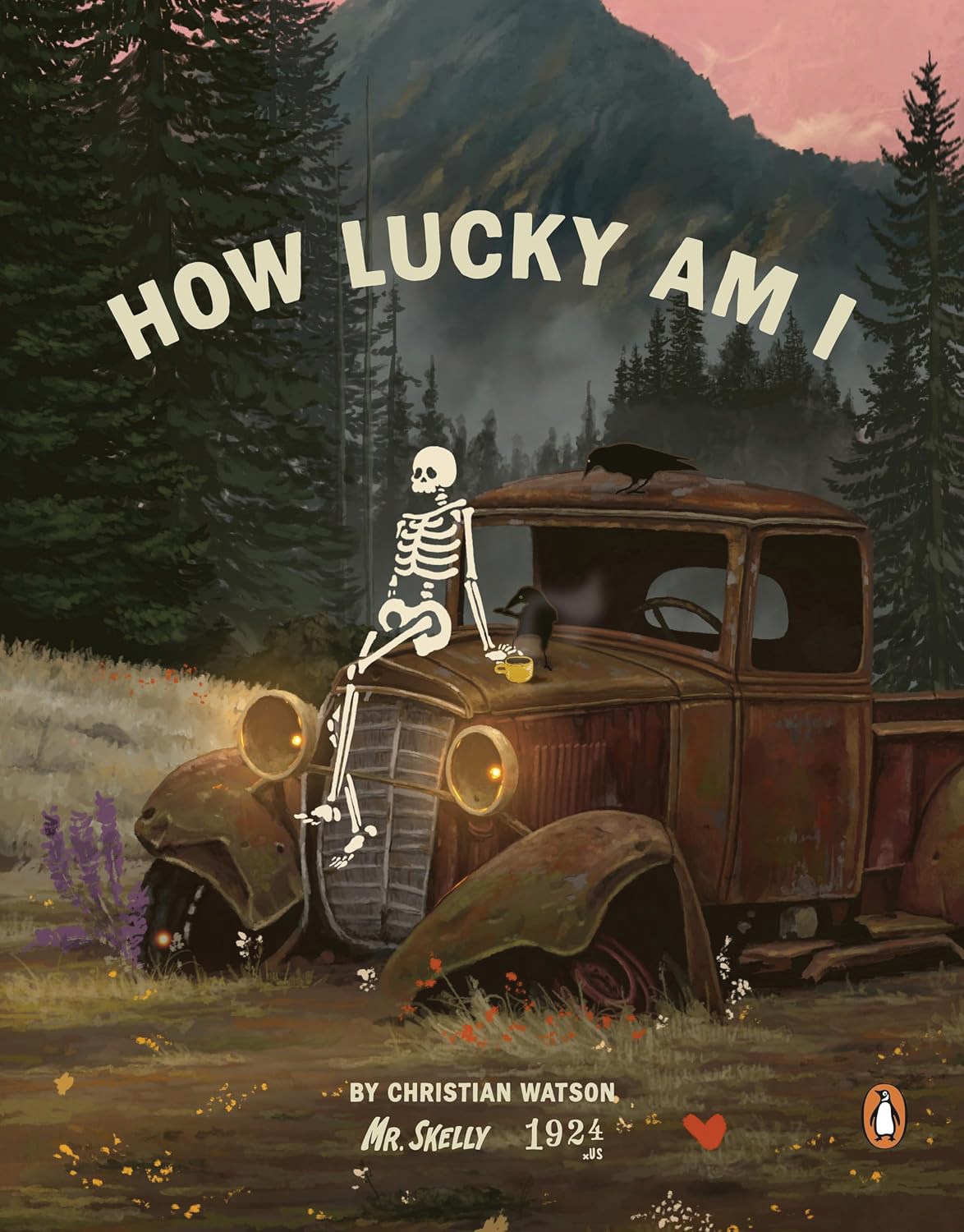
The bones have connected to bodies around the world. Watson, originally from Oregon, has built up a following of over six million on Instagram, and his first book, How Lucky Am I topped the Sunday Times and New York Times bestseller charts after its publication this summer.
So, how lucky does Watson consider himself to be?
“Pretty darned,” he says. “I went through a lot of nihilism as a child, a lot of cynicism and pessimism. All the isms. I was very unhappy and felt wronged by the world.
Advertising helps fund Big Issue’s mission to end poverty
Advertisement
“I had a pretty rough childhood. I left home at 14. A lot of the things that shaped me were negative thoughts. When I got into my early 20s, I decided I don’t want to pursue the rest of my life repeating the same mantra back to myself that everything is terrible, why did all the hard things I went through happen to me, poor me…
“I realised that gratitude was the one thing that could keep me going in a hard moment. I wanted the book to be like a statement: how lucky am I. It’s really true that I am.”
Read more:
Keep reading the journalism that powers our mission
Register free to continue and learn more about the stories, campaigns and the support we provide, helping people facing poverty across the UK.
Mr Skelly was born after Watson moved with his Australian wife to Tasmania, and after their two children were born too. He had always loved drawing skeletons but wanted to simplify his illustrations so they were easier to animate. He filmed himself, sometimes joined by his children, using the video as a guide to trace over.
On his first animation he wrote: ‘Life’s too short to not be at peace’. It “blew up” on social media and it’s “been non-stop ever since”.
What is it about the skeleton that makes it somehow extra human?
“A lot of people can see themselves in it because there’s absolutely no race, religion or gender that’s quickly identifiable,” Watson says.
“We call him Mr Skelly but anybody could look at him and be like, ‘Ah, that’s me’. [Skeletons] have got some negative connotations and I’ve always thought that was silly. I designed Mr Skelly more on the whimsical side, teardrop shaped eyes that are a bit cartoony, just a little bit softer around the edges. Really quickly people were saying it was helping them process whatever they were going through. I was just having fun animating.
“To hear that, I felt almost a civic responsibility, which I know sounds so silly in the grand scheme of things. It’s an Instagram post. But the way art impacts people, sometimes it has a mind of its own.”
Image: Christian Watson
Watson, whose day job is running his 1924us boutique branding studio, has effectively taken death on as a client.
Although far from his intention, he does feel death is due a rebrand in western culture, where we’re most likely to see a skull to spook us at Halloween or worn by someone trying to act tough.
Image: Christian Watson
“That’s kind of weird,” thinks Watson, “because we all have skeletons inside of us and 99% of people are not wearing these shirts.
“So many societies around the world actually are quite good at dealing with grief and death,” he continues. “This is something all of us have inside of us. It’s not something to be afraid of.
“It gives me a lot of peace to imagine my life as a short thing, as opposed to being afraid of it being short. If that makes sense.”
Watson’s artworks are notes to himself, rather than his millions of followers, to remember ideas like: ‘How lucky I am to have lost what I wanted to find what I deserved’ and ‘How lucky I am to be broken so the light could come in.’
He explains: “A solid wall, you can’t see what’s through it. In order to become transparent, in a way, you have to break or crack or have these holes poked in you, so that you can see what’s on the outside.
“A lot of life is this series of cracks and pokes. And being able to understand that pains we endure are not necessarily indicative of our worth, that’s a really hard thing for people to imagine.
“It’s almost a special gift to endure grief or trauma – to help other people navigate it a little bit easier.
“We can think of suffering as a bridge as opposed to a divide. There’s something very special in that.
“I definitely think that’s where the light comes in.”