How conspiracy theories around JFK fueled the paranoia of US politics today
Author Martin Fitzgerald on the febrile politics of Dallas in 1963 has become the dominant politics of America’s modern age
by: Martin Fitzgerald
11 Jul 2026
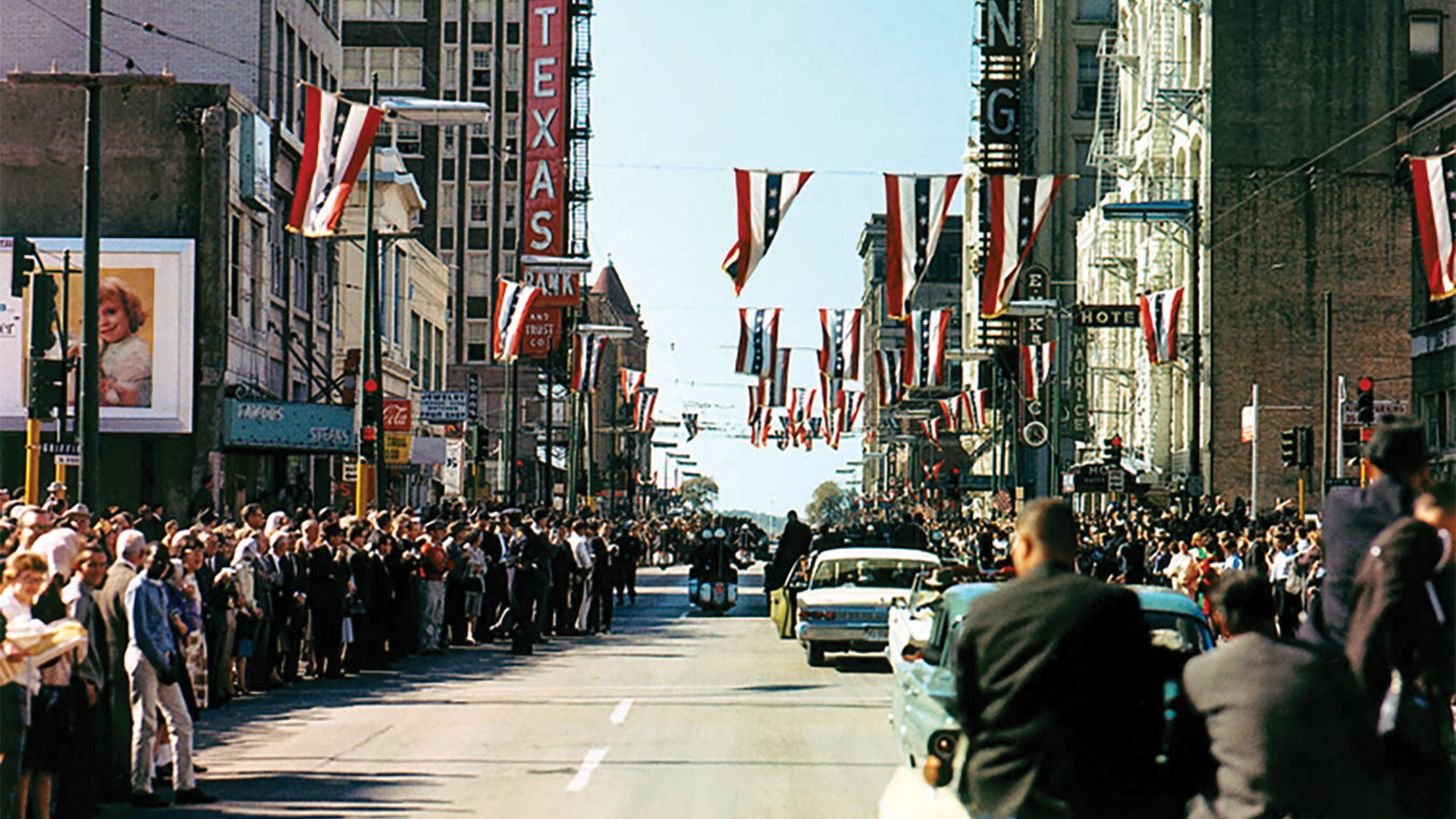
Downtown Dallas on the day of the JFK Assassination. Image: Cecil Stoughton / Alpha Historica / Alamy
Share
It’s the morning of Friday, 22 November 1963.
President John F Kennedy sits in a hotel room in Fort Worth, preparing for the short flight to Dallas. As he flicks through today’s edition of the Dallas Morning News, he pauses and looks up at his wife. With evident frustration, he says, “We’re headed into nut country.”
His weary comment reflects the tense political climate awaiting him there. Although Dallas had long been a Democratic stronghold, its politics began to shift during the 1950s. An influx of Republican-leaning voters from the north helped turn the city Republican in 1952 and 1956. In the 1960 presidential election, Kennedy lost Dallas by a larger margin than in any other major American city.
This new Republican enthusiasm in Dallas wasn’t just a consequence of shifting local demographics. It was also a product of the nationwide ‘red scare’, which fuelled suspicion of liberal institutions, organised labour, and perceived left-wing influences.
It was the era of McCarthyism, of ‘reds under the bed’, and films like Invasion of the Body Snatchers, which suggested, through a metaphor involving pods, that your nearest and dearest could become a communist at any moment.
In Dallas, this mood was particularly intense. A group of powerful ultra-conservatives had taken centre stage, using their money and influence to ensure their message was heard. They bullied from the altar, the airwaves, and the editorial pages of newspapers, promoting a politics of fear and suppressing dissent in the name of patriotism.
Advertising helps fund Big Issue’s mission to end poverty
Advertisement
At the forefront of these self-styled super-patriots stood Edward ‘Ted’ Dealey – the editor of the Dallas Morning News.
Welcome to nut country, Mr President…
Dealey was a fervent anti-communist and outspoken critic of the United Nations, trade unions, federal aid, and social welfare – to list a few of his least favourite things. Under his leadership, the Dallas Morning News spearheaded a full-throttle shift to the right – attacking democratic institutions with a series of nicknames that would have made Donald Trump, a harmless child at the time, glow with pride.
The American Civil Liberties Union became the “Swivel” Liberties Union, the Civil Rights movement the “Civil Wrongs” movement, and the New Deal the “Queer Deal”. Democrats, meanwhile, were variously portrayed as an assortment of subversives, perverts, and miscellaneous security risks.
Keep reading the journalism that powers our mission
Register free to continue and learn more about the stories, campaigns and the support we provide, helping people facing poverty across the UK.
On the morning of the assassination, a full-page advertisement appeared in the Dallas Morning News. Paid for by the American Fact-Finding Committee, a kind of analogue precursor to today’s online grievance networks, the ad carried the sarcastic headline, “WELCOME MR KENNEDY TO DALLAS”. Beneath was a series of rhetorical questions portraying Kennedy as a communist sympathiser and traitor to the Constitution. It was this ad that prompted Kennedy’s “nut country” comment.
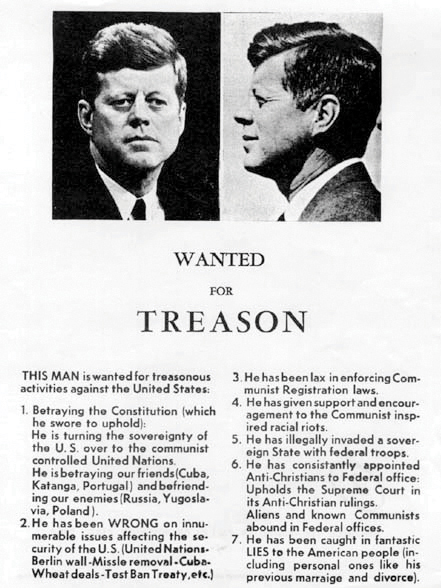
Unbeknownst to Kennedy, five thousand “Wanted for Treason” leaflets had been distributed across Dallas. They displayed his image head-on and in profile, like a fugitive from justice.
At 12:30 p.m., Kennedy was assassinated in Dealey Plaza, a downtown park named after Ed Dealey’s father.
He had been in Dallas for less than an hour.
The speech that Kennedy was due to give that afternoon cautioned against those who confused “rhetoric with reality and the plausible with the possible”. He argued that, left unchecked, they “will gain the popular ascendancy with their seemingly swift and simple solutions to every world problem”.
Nine months later, the Warren Commission concluded that Lee Harvey Oswald, acting alone, had been responsible for Kennedy’s death. During its investigation, they also discovered that the Red Scare of the 1950s had produced the opposite effect on the alleged assassin.
In 1953, aged 14, Oswald was handed a leaflet protesting the impending execution of Ethel and Julius Rosenberg – a married couple convicted of spying for the Soviet Union. The prosecutor in the case – a man named Roy Cohn – had insisted on the death penalty. Oswald sympathised with the Rosenbergs’ plight, and it sparked an interest in socialism that, in 1959, saw him defect to the Soviet Union. He lived there for nearly three years before returning in 1962, settling in the Dallas-Fort Worth area.
The irony was striking. Kennedy had been killed in one of the most right-wing cities in America, yet according to the Warren Commission, the man who pulled the trigger was a communist.
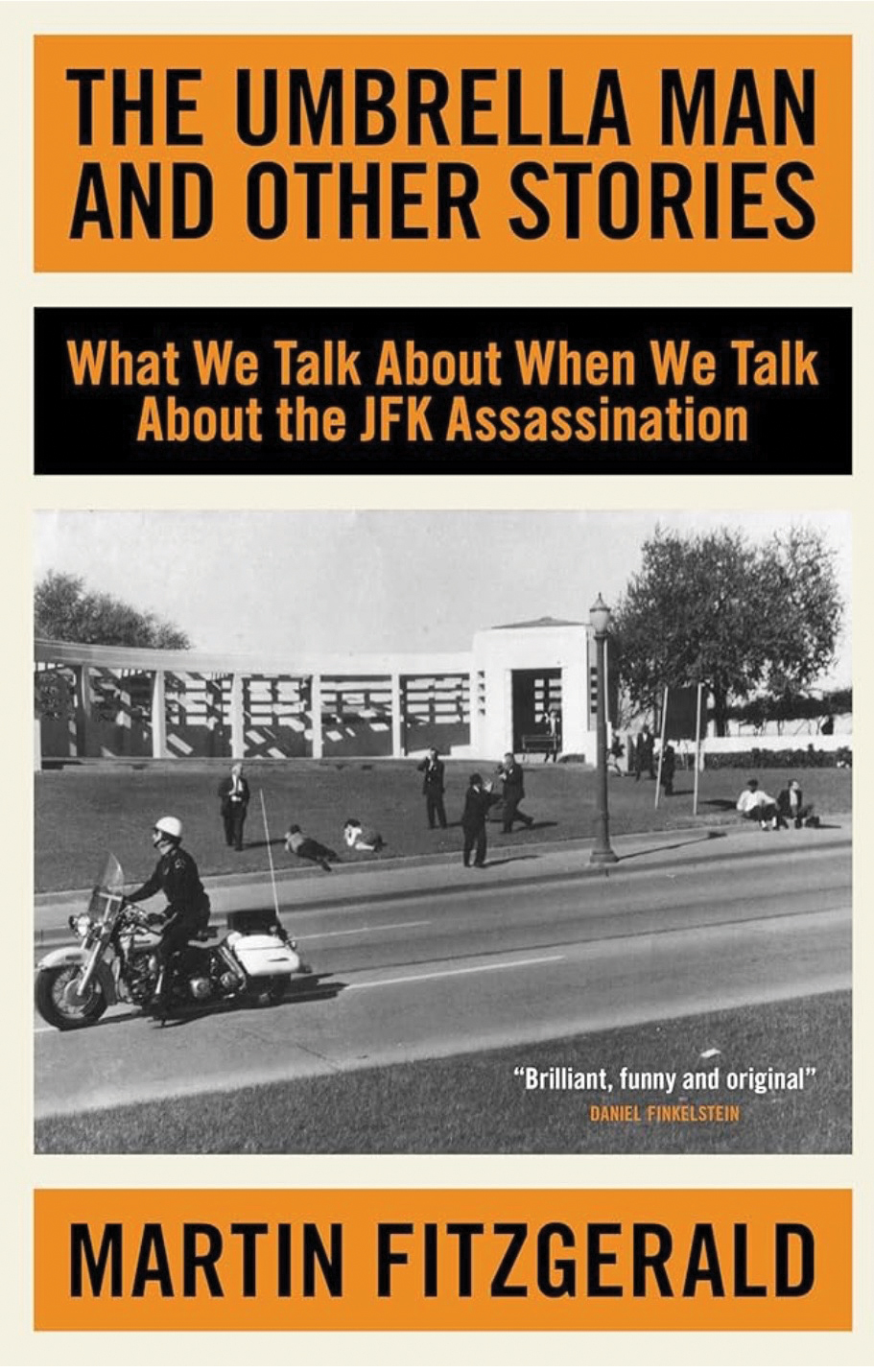
However, like many of the Commission’s findings, this was either ignored or disputed. The Kennedy assassination became the template for modern conspiracy culture and the source of thousands of unanswered questions. How many shots? From which direction? Why did a man open an umbrella in Dealey Plaza on a clear day? Who were the mysterious three tramps? Did the limousine stop? Was the Zapruder film altered? The list goes on.
They’re are all part of assassination lore, questions I have researched for over 40 years. In many cases, our need to create certainty from uncertainty reveals more about us than it does about those elusive six seconds in Dallas. In studying the images from that fateful day, sometimes we’ve zoomed in too far and lost focus.
After the events of November 1963, Dallas went on a fascinating political journey. In 1964, Lyndon Johnson rode a local wave of guilt and sympathy – along with the support of local businesses keen to protect the city’s reputation in the aftermath of the shooting – to win Dallas. Thereafter, the city swung back to the Republicans and stayed that way until 2008, when Barack Obama won a majority. Obama won Dallas again in 2012, and the city has remained reliably Democratic ever since. The city that once greeted Kennedy with accusations of treason bears little resemblance to the Dallas of 1963. The super-patriots of Dallas’s past are, no doubt, turning in their graves.
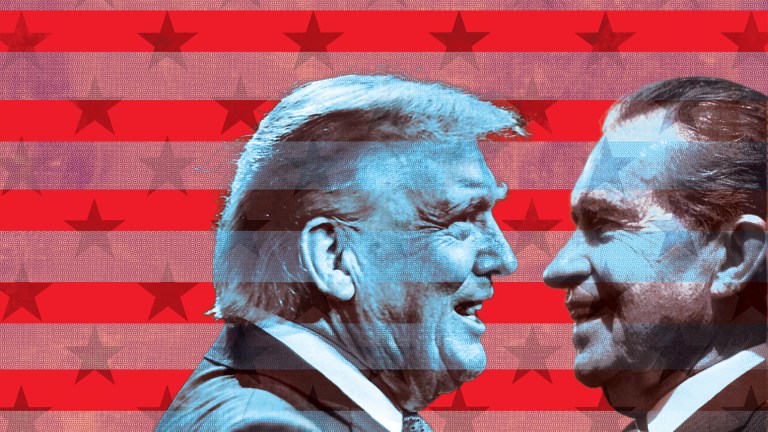
Despite Dallas embracing a more moderate outlook in recent years, large parts of the country have travelled in the opposite direction. In 2016 and 2024 the United States elected Donald Trump – a man who is no longer harmless but, somehow, still a child. His political creed can be reduced to three rules: attack, deny, and claim victory. He learned them from his mentor Roy Cohn – the same lawyer whose pursuit of the Rosenbergs helped inspire a young Lee Harvey Oswald’s interest in communism.
In 1964, conspiracy theories occupied the political margins. Today, they often emanate from the centre of power. Birtherism, faked elections, immigrants eating people’s pets are just some of the outlandish theories supported by today’s White House. Even JFK’s nephew, Robert F Kennedy Jr, has joined in, claiming without evidence that vaccines cause autism and that wireless technologies contribute to cancer.
Martin Fitzgerald’s new book is out now
The echoes from Dallas reverberate in America today: the pervading sense of paranoia and intolerance, the violence on the streets, at home and abroad, and the CAPS ON cheerleading on social media. The ultra-conservatives are again bullying from the airwaves, only this time it’s from the digital platforms they own and manipulate.
Two-hundred-and-fifty years after declaring independence, America remains engaged in the same argument that has animated it from the beginning: whether liberty requires pluralism, compromise, and democratic institutions, or whether opponents are enemies whose legitimacy must be denied. Dallas in 1963 was one expression of that conflict. Today’s America is another.
At home and abroad, many of us can only hope that the current politics of fear, grievance and conspiracy are temporary – and that America itself has not become Nut Country.
The Umbrella Man and Other Stories: What We Talk About When We Talk About the JFK Assassination by Martin Fitzgerald is out now (Biteback Publishing, £20)