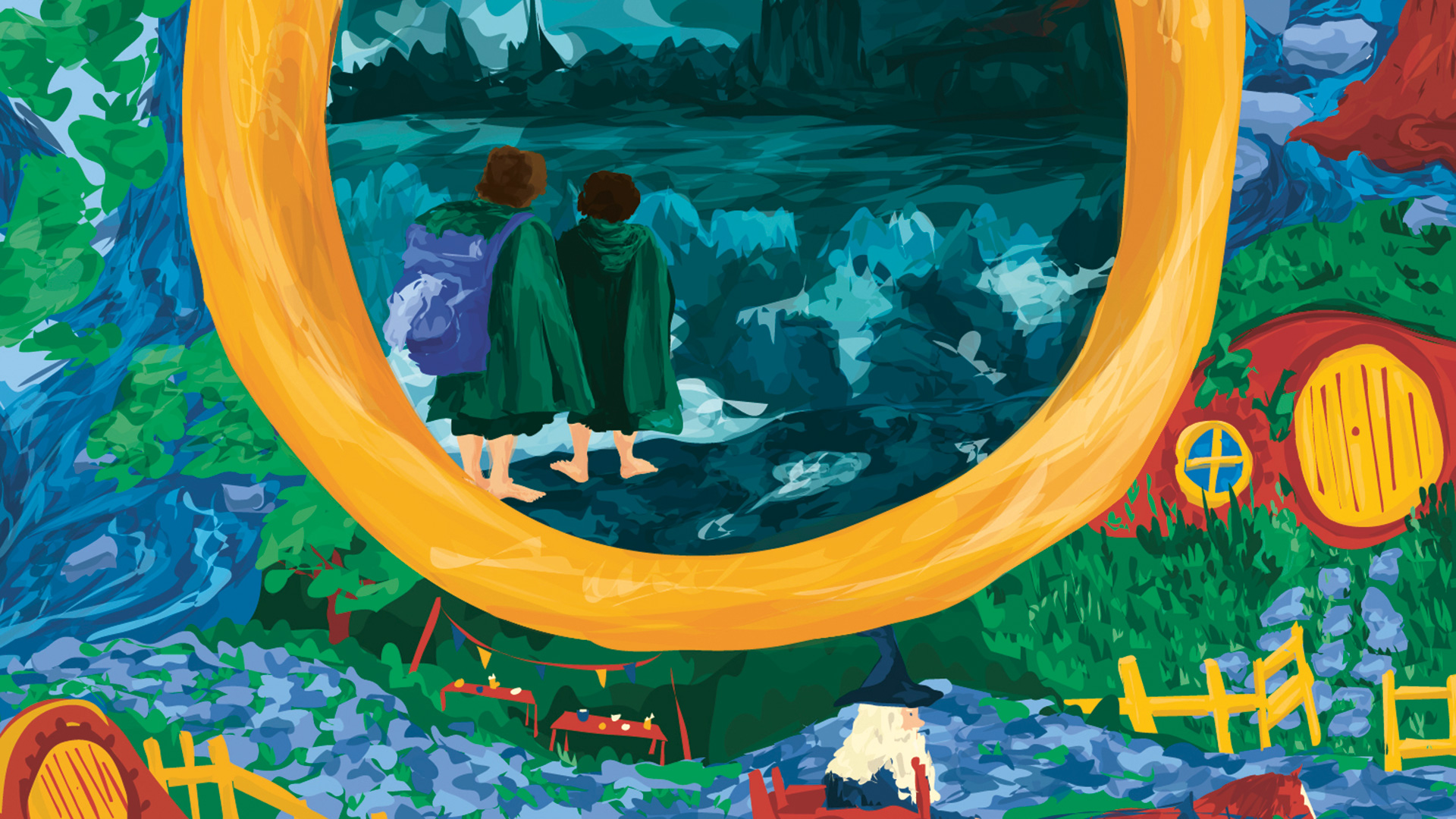
What I discovered was fascinating: Tolkien’s stories have a compelling quality that remains acutely relevant today. Tolkien was writing The Lord of the Rings during the dark days of the Second World War, so he is no patriot for victorious human progress. Instead, he focuses on uncertainty, ambiguity, and above all on failure. His stories end in disappointment, in defeat, and ultimately in death. If good triumphs over evil, it does so only at a terrible cost – such as the disappearance of enchantment from the world.
I was writing my book during our own dark days of pandemic restrictions, and so these themes – of disillusionment and despondency, isolation and loneliness, and helplessness before an implacable and inhuman force – were painfully vivid. Not that Tolkien offers solutions, just the resolution that it is enough to carry on, even in the face of imminent, permanent loss. In other words, I was thinking about the pandemic through Tolkien, and realised that his works can provide a consolation in times when we are victims of circumstances far beyond our control, or even our understanding.
There is an unusual hesitancy and uncertainty in Tolkien’s writing – the author, as well as his characters, frequently seems lost and unsure how to proceed. This is because Tolkien wrote without a plan, preferring to ‘discover’ the plot rather than map it out in advance. So there are dozens of loose ends and false trails, and the experience of reading is shared with the characters themselves, lost in an unfamiliar world and not knowing how to make sense of it. Remarkably, this quality is reflected in Jackson’s movies, as he would typically film the same scene in different ways, meaning that the actors did not know which take would be used in the final edit, or even how their own characters might develop.
Keep reading the journalism that powers our mission
Register free to continue and learn more about the stories, campaigns and the support we provide, helping people facing poverty across the UK.
In researching the movies, I also realised how far they drew on earlier film and radio adaptations as much as on the books. The much-derided and unfinished Ralph Bakshi production of 1978, for example, in which animation is mixed with live action, was in fact crucial in bringing Jackson’s films to the screen by solving problems of pace and structure, providing details of characters, and even supplying the template for some of the most memorable scenes in the later movies.
The Tolkien industry is here to stay. There will be more seasons of The Rings of Power, more films (including The War of the Rohirrim next year), and doubtless more of Tolkien’s papers to be published. And what makes all of these productions distinctive is their attention to non-human species – whether immortal elves or humble hobbits – in offering new perspectives on the human condition. In doing so they remind us all that we humans are not at the centre of things, but instead just one part of a wide and
mysterious world.
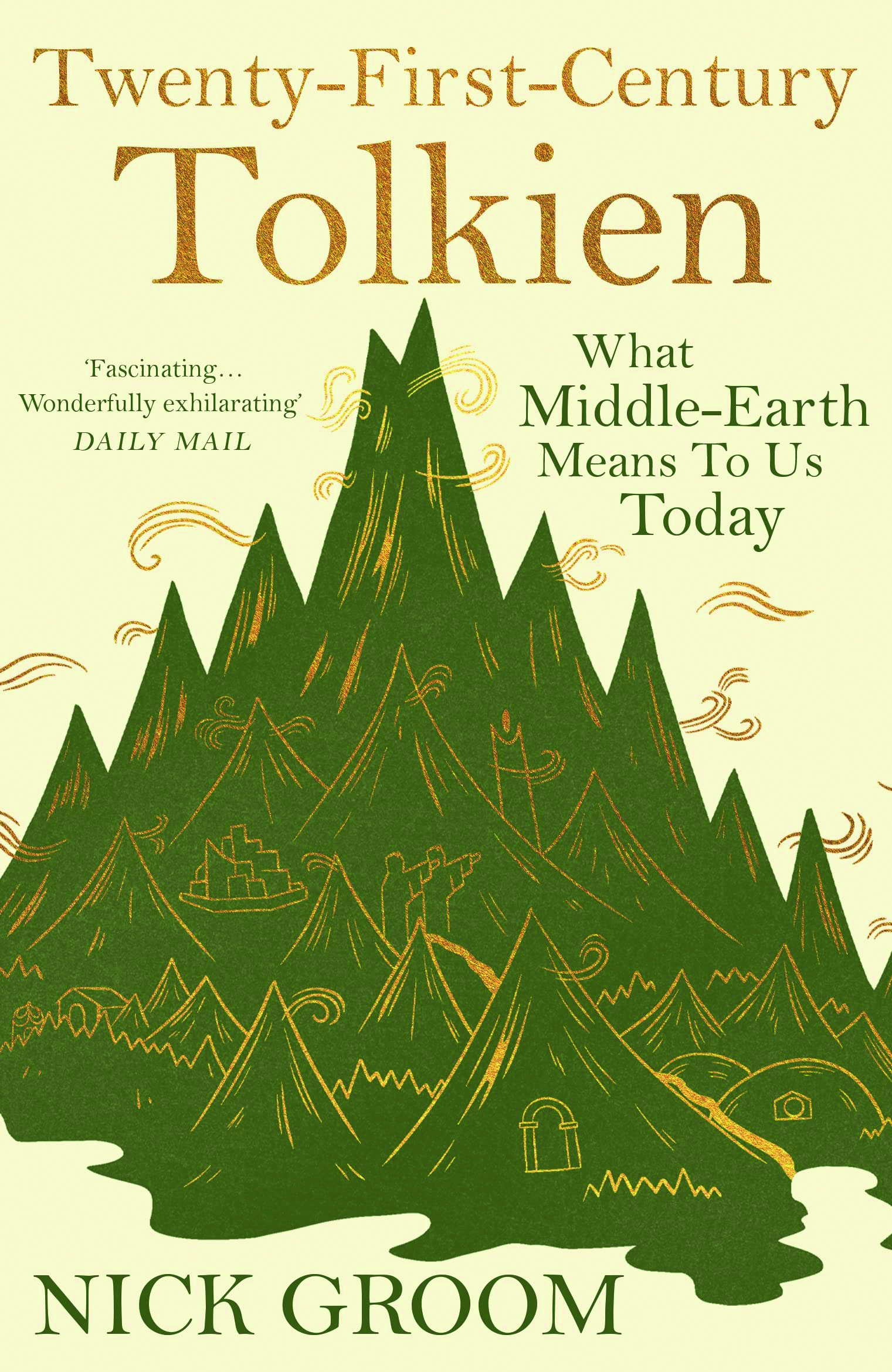
Twenty-First-Century Tolkien: What Middle-Earth Means To Us Today by Nick Groom is out in paperback on 1 September (Atlantic Books, £12.99). You can buy it from The Big Issue shop on Bookshop.org, which helps to support The Big Issue and independent bookshops.
This article is taken from The Big Issue magazine, which exists to give homeless, long-term unemployed and marginalised people the opportunity to earn an income. To support our work buy a copy!
If you cannot reach your local vendor, you can still click HERE to subscribe to The Big Issue today. Or give a gift subscription to a friend or family member. You can also purchase one-off issues from The Big Issue Shop or The Big Issue app, available now from the App Store or Google Play