Over the past decade I and many others like me have tried to bridge this gap in understanding. We have participated in interviews with anthropologists, journalists and documentary filmmakers. We have travelled and spoken in all kinds of international panels and conferences.
We created an Indigenous mapping project to show the government and the oil companies that our territory is not some vast empty green space on their map. In our cartography, the forest is full of life: it is where we find our grocery stores and hardware stores, our pharmacies and temples, our burial grounds and old villages, our beauty salons, cultural centres and art supply shops, our living history. Our stories and memories all reside there.
We had to take the Ecuadorian government to court to make them listen to us, look at our maps and ensure that our rights to decide what happens in our territories are respected. We won in the courts against the interests of the big oil companies, and protected hundreds of thousands of hectares of Indigenous territory and pristine rainforest. And yet the dangers and threats persist.
Continue reading for free
Registration is free and takes less than 30 seconds.
Our supporters make Big Issue’s work possible. Join us to see the impact we’re having together and discover more ways to help people facing poverty access income, opportunity and support.
The book I wrote with my husband Mitch took us a few years because our stories take time. I come from an oral storytelling culture: we talk in the mornings, we talk late into the night, we talk as we walk through the forest, while we work and as we share meals. I told Mitch my stories over many years and then, after a time, Mitch began taking notes, recording some conversations.
He didn’t listen like an anthropologist does. He listened differently; he listened with love and respect and so I decided to trust him with my story.
After more than a year of taking notes and making recordings, Mitch began to write. Sometimes he would excitedly read me his latest pages at night. Often, he would tell them back to me. An editor recently described Mitch as my translator.
Advertising helps fund Big Issue’s mission to end poverty
In a sense, he does do some cultural translation between the Waorani world and the English-speaking world. But he did not translate my book: we wrote my book together. In that sense, our book is itself an embodied offering from the desire to understand and communicate, the desire to respect and not do harm.
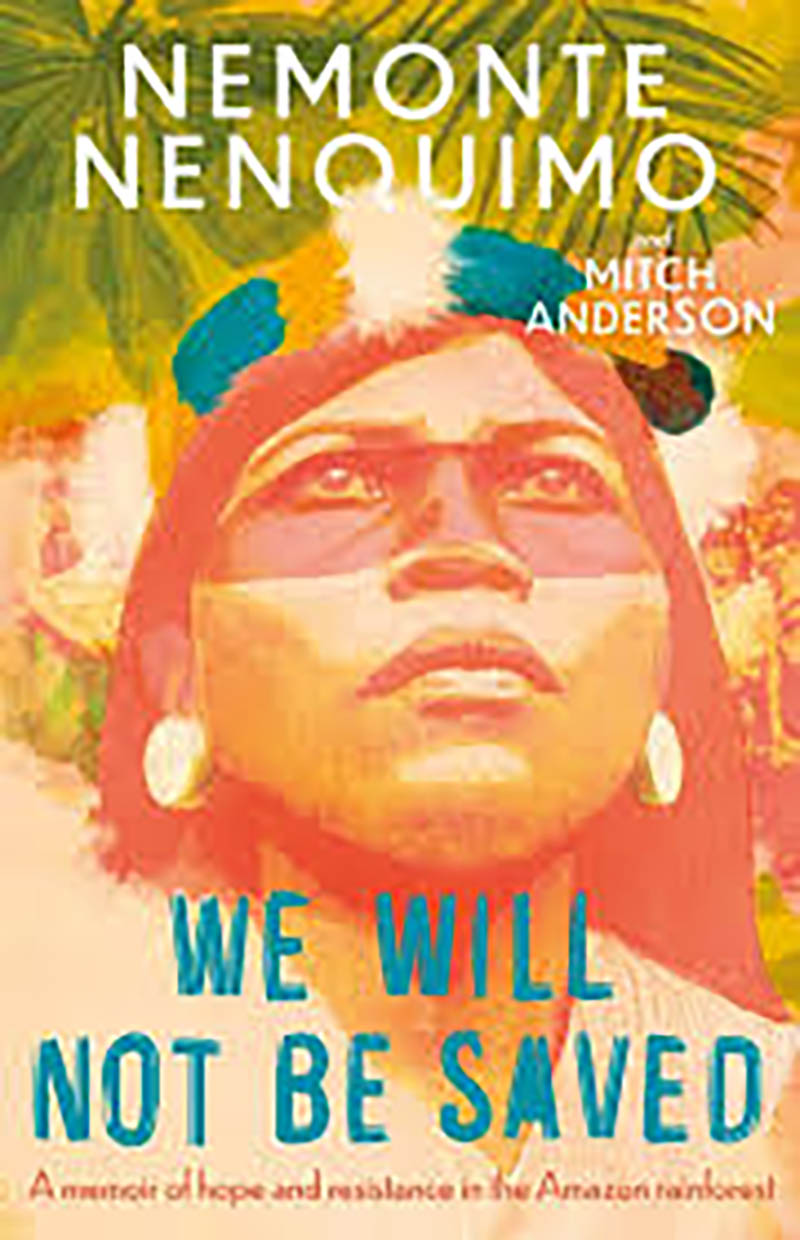
Which leads me to the book’s title: We Will Not Be Saved. For centuries, the people who have done the most harm to my people and the forests where we live, are the very people who have claimed to save us. They said they brought us salvation and the word of God. But they brought disease, slavery, murder, dispossession and racism.
Later they came back, with bulldozers and drills instead of horses and Bibles, saying they would save us from “poverty”, a condition we never knew before their arrival.
People must not understand what they destroy so easily. We don’t want to be saved – which has always been code for conquered or eliminated – we want to be respected. And we hope that our book can play some role, even a small one, in strengthening understanding and respect, and protecting Indigenous lives and the rainforest we call home.
We Will Not Be Saved: A Memoir of Hope and Resistance in the Amazon Rainforest by Nemonte Nenquimo with Mitch Anderson, is out now (Headline, £20). You canbuy it from The Big Issue shop on Bookshop.org, which helps to support The Big Issue and independent bookshops.
Do you have a story to tell or opinions to share about this? Get in touch and tell us more. Big Issue exists to give homeless and marginalised people the opportunity to earn an income. To support our work buy a copy of the magazine or get the app from the App Store or Google Play.
Advertising helps fund Big Issue’s mission to end poverty