Squeeze stars Chris Difford and Glenn Tilbrook: ‘At 16 I was homeless. Music was my lifeline’
Squeeze have soundtracked the lives of generations of fans. And they’re still hitting new heights
by:
13 Nov 2026
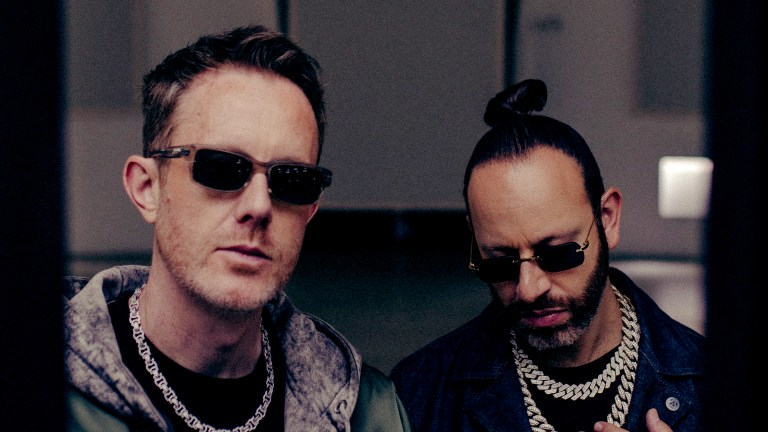
Chris Difford (left) and Glenn Tilbrook. Image: Dean Chalkley
Share
Glenn Tilbrook and Chris Difford met in 1973, when 13-year-old guitarist Tilbrook was the only person to respond to Difford’s ‘musicians wanted’ ad in the local shop. They set about writing songs together and formed the band Squeeze.
The duo were a songwriting dream team, with debut single Take Me I’m Yours (released in 1978), Cool For Cats and Up The Junction (both released the following year), 1980’s Pulling Mussels (From The Shell) and Labelled With Love (1981) among their biggest hits.
Now, more than 50 years after their first meeting in South East London, they are touring the country – playing the album Trixie, which was written in 1974 but not properly recorded or released until earlier this year. The tour will raise money for both the Music Venue Trust and Trussell.
Before they sing songs written by their younger selves to fans old and new, we sat down with each of the duo to create a joint Letter To My Younger Self – looking back at their troubled youths, their musical highs, and how they have maintained their artistic partnership…
Chris Difford: At 16, I was living on a council estate in South London and was in a gang of skinheads. We all grew up together. There was 20 of us and we weren’t quite yobs, but we weren’t far off. We used to go down to Deptford on Saturdays and get imports of reggae and soul records, then on Sunday nights we’d go to a club above a car dealership in Catford called the Savoy. It was a good place to meet girls, let your hair down. Not that we had much as skinheads.
Glenn Tilbrook: I had a challenging upbringing. My mum was a single parent, I didn’t see a lot of my dad. My brother spent more time with my dad, so I wasn’t close to him either. And my mum was very emotionally fragile and quite needy. So it felt like I was the parent. I desperately wanted to get away. I grew up just wanting to not have to be responsible for my mum any more because she didn’t know how to look after herself and didn’t know how to look after me. She absolutely loved me. I know that. But it was a needy kind of love.
Advertising helps fund Big Issue’s mission to end poverty
Advertisement
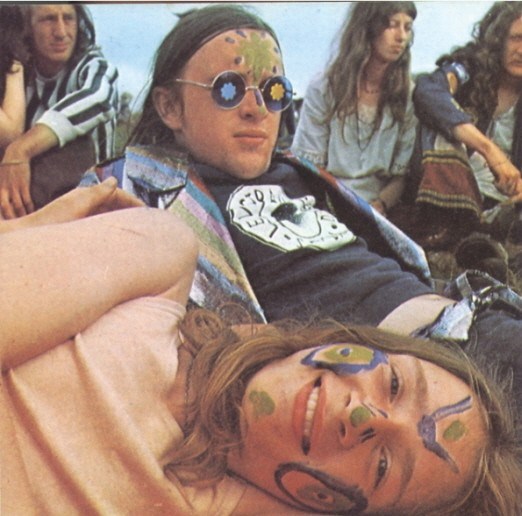
1973: Difford and Tilbrook at a festival
CD: Fashion was very important – tonic suits, Ben Sherman shirts, brogues. So I had that but school was quite different. I didn’t want to be there. There was a lot of tension between different communities around Deptford so I tried to keep my head down. It felt quite heavy walking around.
GT: I lived with my girlfriend Maxine for a while when I was 15. I got out of my house as soon as I could. But when that relationship ended, around the time I turned 16, I was sofa surfing. Music was my lifeline. When I was homeless, I’d met Pete Perrett, who had his band The Only Ones. He offered to house me if I would play in his band. So that’s what I did. It really helped me out. But I wanted to do Squeeze.
CD: The careers master at school asked me what I wanted to do and I said I wanted to be in The Who. He said, “Well that ain’t going to happen, you’ve got to get a job at the biscuit factory down the road.” None of that interested me. Music transported me from my youth into wanting to be in a band. I’d been writing lyrics as a kid as escapism. It gave me the chance to hide behind a sheet of paper. When I see kids scrolling on Instagram, that’s kind of what I was doing, but with poetry.
Keep reading the journalism that powers our mission
Register free to continue and learn more about the stories, campaigns and the support we provide, helping people facing poverty across the UK.
GT: I met a paedophile when I was 13 and he ended up becoming a big part of my life for six years. He was controlling, and coloured my relationships with everyone. He was the first person I had a relationship with outside my home. I didn’t feel like I was gay, but I was with him – so I had all this going on. I’ve spent a long time thinking about my original abuser, figuring out who he was and what he was. I’d love to have a conversation with him now but it would be fruitless and he’s long dead anyway.
CD: I wish I’d known what Glenn was dealing with at the time. I don’t know whether I had the wherewithal to put my arm around him and hold him. I think our songwriting was the cure to both of our backgrounds in a way. His was very complicated with his parents and everything else that happened. And mine was complicated because I was on a council estate, surrounded by people who wanted to beat everyone up. So it was an escape route for both of us.
GT: It’s hard to get into the headspace of my teenage self because I had such a troubled childhood and teendom. The thing that saved me is meeting Chris Difford. I’d written songs by myself before, but they came very slowly. I had been playing with Jools Holland for a year or so, but we never clicked as writers. Jools was as boogie woogie then as he is now, that’s what he does and I love that. But it wasn’t me. Chris was like a machine. He’d give me lyric after lyric and I would match him with tunes. That was such a gift. It transformed my life. We had different influences but as soon as we wrote together, it was like we turned on a tap that wouldn’t turn off. We were gushing songs. I was so grateful to have Squeeze. It meant everything to me. It’s such a rock and roll cliche that I didn’t have any other choice, but it’s true.
CD: When I first met Glenn, I recognised him immediately. I remember looking through the mottled glass of the pub and seeing Glenn and his girlfriend Maxine, who had replied to my ad for a guitarist. Blackheath was a small community and they were very prominent hippie-type people, walking around barefoot. Glenn would always be sitting in rose bushes playing guitar or mandolin! I didn’t have second thoughts. I thought, ‘There’s a reason we’re here.’ They came over to my house and I played six or seven songs I’d written. Glenn played along with a few and we bonded very quickly. It was a very, very special feeling. We were glued together by our songs. The chemistry just worked.
GT: My younger self would be so excited thatTrixies, the latest Squeeze album, is something he wrote [Trixies was released earlier this year]. That to me is the biggest love letter to mine and Chris’s younger selves possible. We wrote it in 1974 when we were in the middle of all that stuff and it transcended our age and our ability to do it justice at the time. But now we have the experience and the chops we didn’t have when we wrote it. It shows what we were capable of, me at 16 and Chris at 19 – it feels like it’s not me any more, so I can say it is among our very best work. And that’s really saying something.
CD:Trixieswas a big leap forward. It was songs the band at the time couldn’t even play – it was very crafted and Glenn was brilliant at that. But it was out of our league. I remember looking at the chord sheets Glenn had written and thinking, ‘I can’t play this’. I still can’t. But it was a real turning point.
GT: When we wrote [1978 debut single]Take Me I’m Yours, it felt like a big step forward for us. Like many of the songs we ended up releasing, we had to record it twice because the first version was not good. We still had so much to learn about how to work in the studio. But it took us to a place where I felt we could make it. Some people had difficulty understanding what we were, because we had so many influences and were not a punk band, although we leaned into that. We dumbed ourselves down for a while to fit in with that punk energy.
CD: John Cale was a bit out with the ponies when we worked with him [Cale produced Squeeze, their first album]. Sometimes he would turn up and just fall asleep in a chair. Then he’d shout at you. But then he’d do something amazing. He didn’t like any of the songs we played to him and I was hurt by that. But it made us look from a different angle and I’m glad. Because the songs we recorded for our demo might have ended up being our first album. And god knows where we would have ended up. So I thank John Cale for that. But it was a scary moment. He said, stop writing love songs, write about a prostitute getting whipped. I said, “I’m sorry, I haven’t experienced that yet”, and he went, “Use your imagination!”
GT: Getting everything that we always wanted was a fantastic experience. When Cool for Cats was a hit [in 1979], I was 21. I didn’t have anything, so to be touring America, going to Europe, being picked up in a limousine when I was living on the top floor of a bedsit was so exciting. The positive thing about being successful is it makes you feel better about yourself. Whether it’s just a sticking plaster or not is a different question. But we believed in what we were doing. It wasn’t always plain sailing, but we met with a degree of success.
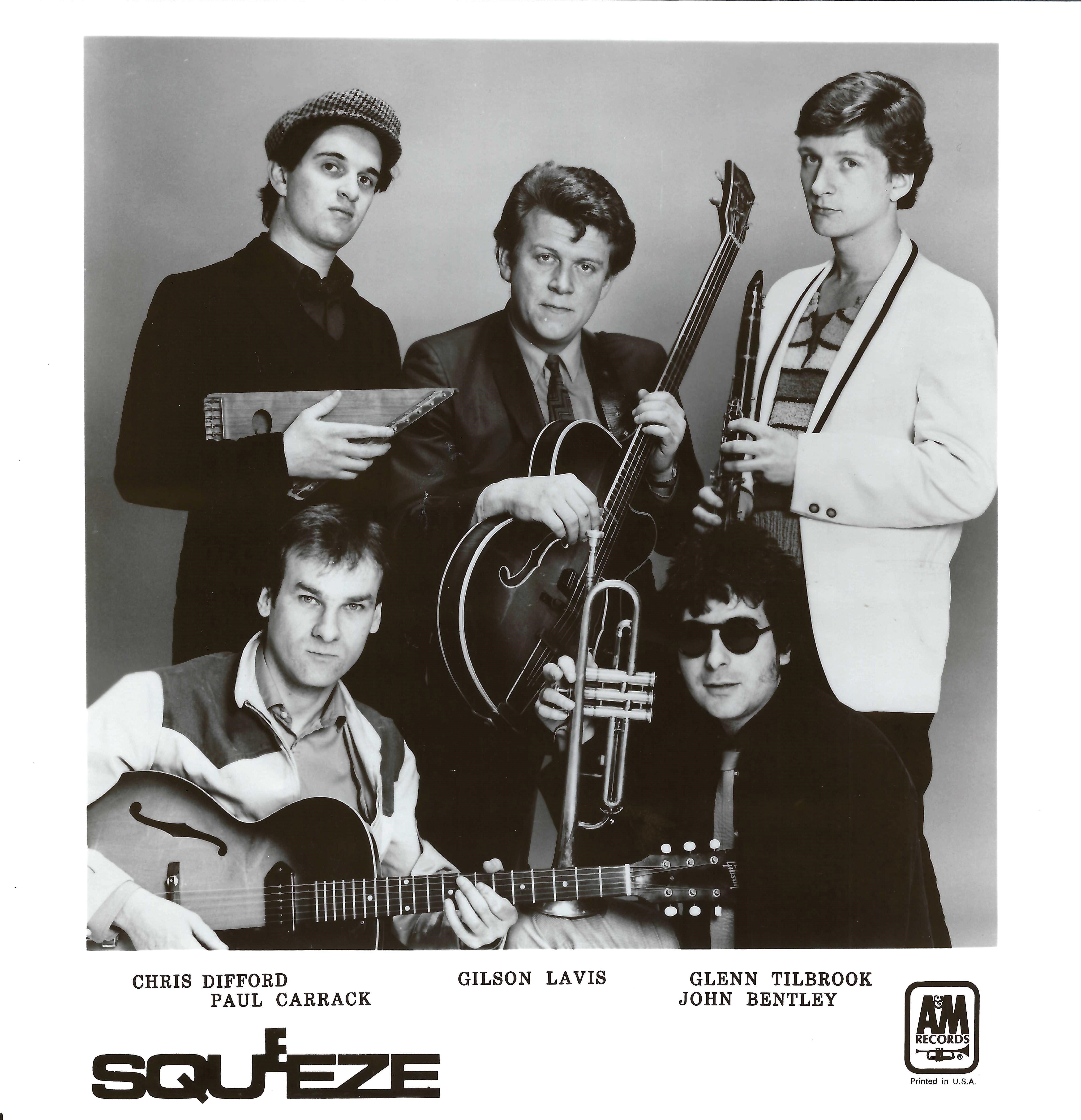
1981: The band had been joined by Paul Carrack and John Bentley
CD: I don’t think I’d water down any of the ups and downs. The journey has been complicated, but you’d expect that with two people. It’s like a marriage. I was watching the Oasis film, and when I saw the chemistry between those two boys, I recognised it. It’s true of most bands: you get one perfectionist and one idiot who hangs on for dear life. And I guess I’m that guy.
GT: I don’t know what I would say to my 16-year-old self. Because I didn’t realise how my life and decision making had been impaired by what I’d already experienced. I had empathy but lacked emotional intelligence. What I’d been through made it hard for me. It had a huge impact, which success masked. Success made me think nothing was wrong and everything was great – whereas in fact it really wasn’t. I didn’t recognise how the way I’d grown up had affected me, so I flailed around through my 20s and 30s.
CD: I don’t think you can ever be prepared for fame. The drugs were for escapism. Even though I grew up surrounded by drugs, I wasn’t interested until I went on tour. Touring America for six months, the only way to get through then was to drink and smoke or take drugs. Eventually, it became habitual. For me, it became a safe place, but not a nice one. It formed agoraphobic tendencies. I didn’t want to go out of hotels or go in a lift. I didn’t want to go on stage. That was a really rough time.
GT: I have always been a drinker and I still am. I took loads of drugs. I don’t do that any more. You know, you have to find a place where you’re comfortable within yourself. I have struggled to find that place throughout my life, but I think I’m there now.
CD: I don’t remember the first time we played Madison Square Garden. So I’d love to relive that day and try and remember it, talk to the young guy who walked on stage that night and ask him, what it is like playing there? What was the feeling like when you came off stage? I’ve seen photographs but don’t remember a thing about it, and that’s a little bit on the sad side.
GT: We’ve just got back from a tour of America where we headlined the Hollywood Bowl for the first time. It was a magical night. There were 10,000 people and it’s a perfect setting. To achieve that at this stage in our career is quite awe-inspiring. We headlined Madison Square Garden when I was 25 and that was an achievement. But I feel like this is the bookend of that. To do that now and have the audience with us was unbelievable.
2026: Squeeze’s current lineup, with (front row) keyboard player Steven Large, Tilbrook and Difford. Image: Dean Chalkley
CD: In the early days, Glenn and I were tied at the hip. We were always with each other and that was wonderful. Once we got girlfriends, we drifted apart. When we got married, we drifted apart further. Then touring took its toll. Constant touring and recording five albums really burnt us out by the late ’80s. It’s taken a long time to get back to understanding each other’s needs. We are so different. It takes a lot of therapy to understand each other!
GT: I don’t think I’d be here if I hadn’t met Chris. It’s the meeting of my life, because it changed the course of my life. I’m proud that we can hold it together. We’re not friends. We are, to use that hackneyed phrase, work colleagues. But I’m deeply fond of him… and I’m sure he feels the same about me. It’s not come easy to us. So I’m proud of the work we’ve put in. Towards the end of the last tour, Chris and I had a hug. And that doesn’t happen often.
Squeeze’s Tried, Tested & Trixies UK tour runs until 5 December with support from Billy Bragg. £1 from every ticket goes to the Music Venue Trust, supporting grassroots music venues, artists and promoters. The band will also be collecting for the anti-poverty charity Trussell.