Goldie: ‘I grew up in care. No one taught me about being a father to daughters and sons’
After growing up in care, the drum and bass pioneer ran away to find his mum, then found his people in the UK’s emerging hip-hop scene
by:
20 Nov 2026
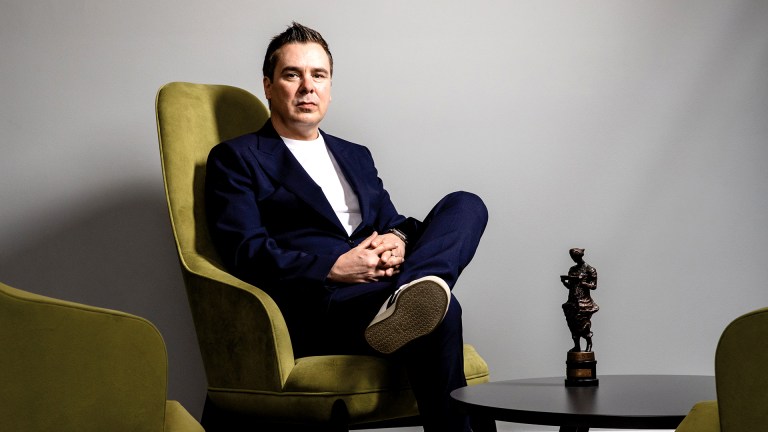
Goldie. Image: Gus Coral
Share
Clifford Price, aka Goldie, was born in September 1965 in Walsall to a Scottish mother and Jamaican father. He was put up for adoption at three and spent his childhood moving around various foster parents and children’s homes. In his teenage years he got involved with local breakdancing crews and graffiti, which led to him moving to New York and Miami in the mid-’80s. On his return to the UK in 1988, he moved to London where he became a key player in the evolution of jungle and drum and bass with his Metalheadz label and club nights.
In 1995, his debut album Timeless won the MOBO for album of the year. Follow-up Saturnz Return featured guest appearances from David Bowie, KRS-One and Noel Gallagher. In the late ’90s he branched out into acting, featuring in The World Is Not Enough and Snatch, before a regular role on EastEnders in the early 00s. He’s since returned to the art world, written two memoirs and become a TV regular.
For his Letter to My Younger Self Goldie looked back on his early years in the care system. finding an identity through music and working with his heroes.
My 16-year-old self was very confused because I’d been in the care system all of my life. I’d say, “Why is my name, Clifford Price, sewn into my collar? I know who I am.” And they were like, “We don’t want to get your clothes mixed up with the 28 other kids in the children’s home when they’re washed.” I was mocked for it at school, kids grabbing me by the shirt, going, “Look at you, fucking p**i. They used to call me that in school because they didn’t know whether I was white or black. I had to take it because the group I was in with were all mad as hell and you wanted to fit in, but at the end of the day, they go home to their parents and you go back to the children’s home. I was always searching for identity.
I knew where my mother was, and when I turned 16, I ran. I remember spending three weeks building up the courage to climb the fence. I knew what time the bus came to get to Wolverhampton. It was only a town away, but when you’re a kid, that’s a big fucking place. So I turned up in Wolverhampton, asking every person on every block, “Do you know a little Scottish lady named Maggie?”
Eventually, I walked around the corner, and she was sweeping a rug outside. She said, “Ah, hello Cliff, I knew you’d come one day. C’mon, do you want to put the kettle on?” It was like nothing had happened. She went, “What have you done?” I said, “Well, kind of run away.” She said, “Don’t you worry, I’ll keep you here as long as I can.” They came round a couple of times for me. Mum wouldn’t answer the door.
Advertising helps fund Big Issue’s mission to end poverty
Advertisement
I got caught in Whispering Wheels [Wolverhampton roller disco] by two CID running across the floor, trying to catch me on a pair of skates. That was a really, really great moment in my life. I remember my heart beating really fast, being carted off in a police car in a pair of roller skates to the station, then waiting for the children’s home to pick me up. Going back to the home, the fear had gone. Being marched out of the car, with all of these kids going, “What was it like?”, “He ran off”, “He did it!” All of a sudden, you feel like it was worth it, regardless of being grounded for three months or whatever the fuck it was.
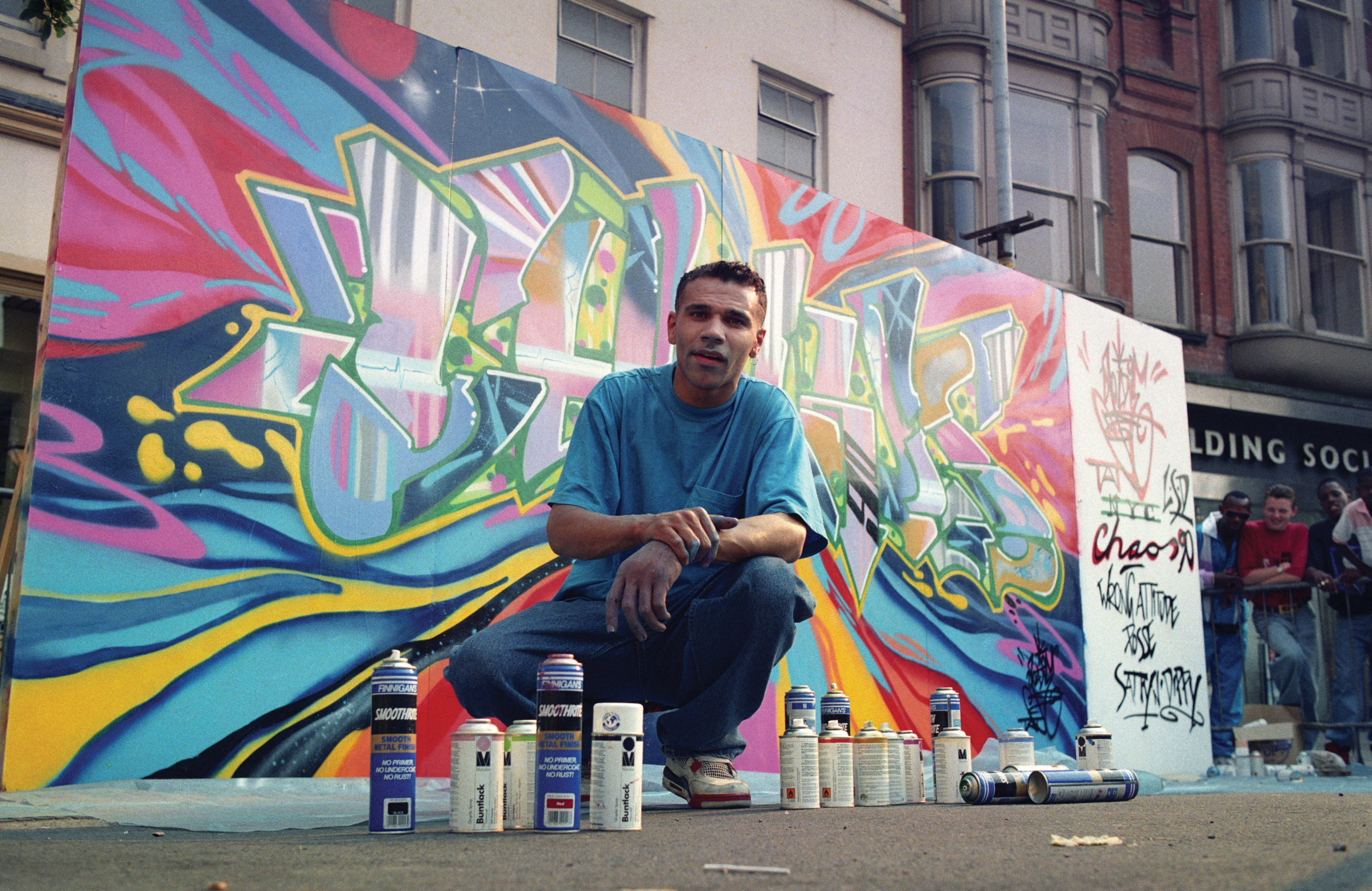
Goldie in 1992 as a graffiti artist in Wolverhampton. Image: David Bagnall / Alamy
Now I was rebelling. I was destroying my room. My social worker was there every week. In the end, we negotiated that I could go back home for weekends. I would wait for the bus on a Friday knowing I’m going roller skating, having the freedom to go to the youth club. I’d be there from six till nine, just spinning and learning, training with the b-boys, everyone’s watching, and we’ve got the tapes on rotation. You know what? I sometimes sort of catch a smell of my youth. The way people might remember their first cigarette around the back of the youth club, I get the fragrance of my sweaty headband and the youth club wax floor and how the tape cassette smelt when I put it in the machine.
Read more:
Keep reading the journalism that powers our mission
Register free to continue and learn more about the stories, campaigns and the support we provide, helping people facing poverty across the UK.
When I was at school, I was troublesome. I failed in everything. My art teacher, Mr Hurst, said, “You’re better than this. I’ve spoken to the children’s home, and they’re going to let you come to me for two nights a week after school. And if you do well, we’ll put you into an A-level.” My sculpture was amazing. I did a Stevie Wonder bust, I did an alien head with Zebrite Grate Polish. He said, “You’ll pass that with flying colours, but your drawing has got to improve.” He put an ashtray, a newspaper, and a crumpled piece of paper in front of me and said, “You’re going to learn to draw this.” I couldn’t get the perspective, but I finally got it. It was beautiful. I couldn’t believe I could actually do something like that by having the patience to listen to him.
Music stayed with me. It was such a part of my multiculturalism, you’re a rude boy as well as a new romantic. You’re a sum of all parts, and isn’t that a better place to be? We were allowed to play music for 15 minutes on a Sunday night – that’s when culture came to me: Public Image, The Stranglers, Judie Tzuke, UB40, Steel Pulse, Yellowman. I’d always managed on my own. Being locked away in a room in a children’s home, or you’re in a foster home and you can’t unpack your suitcase because you don’t know how long you’re gonna be there. I felt like there was no permanence of any sort in my life; music created a permanence in my mind.
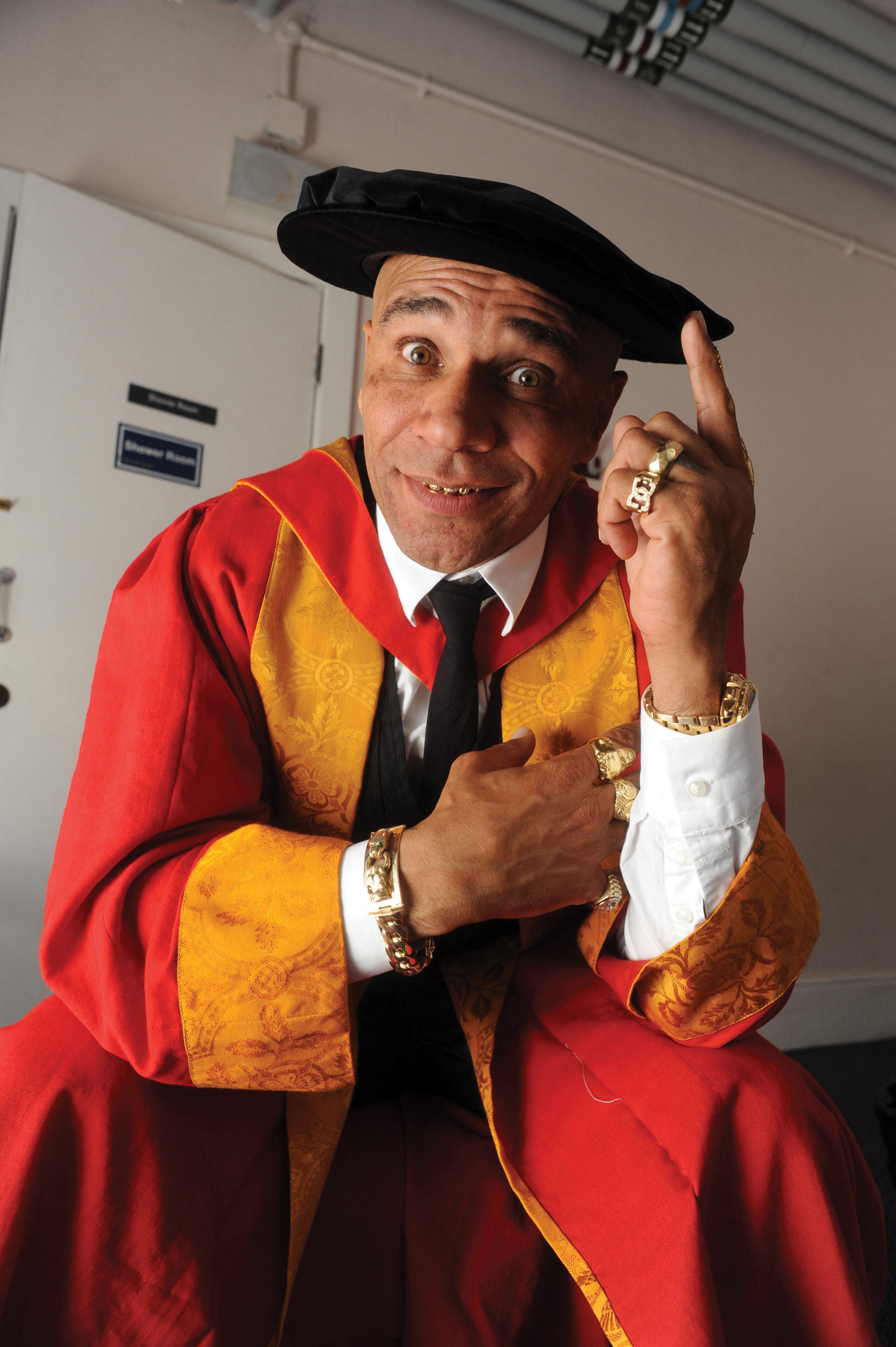
Goldie receiving an honorary degree from the university of Wolverhampton in 2010. Image: David Bagnall / Alamy
Being part of a breakdance crew gave me a family. I started with the Westside Crew. I’d just cut my hair, so I got called Goldilocks. We had these Adidas satin olive green and dark racing green tracksuits, but arguments started happening, so we disbanded. Then I joined Wolverhampton B-Boys, they were the kings. Hip-hop taught me you can take music from anywhere; there were no rules any more.
Timelesswas a coming-of-age album; I knew it was special. I’d just turned 27 when it was being made. I knew the minute the concepts in my head were swimming around, I had to pull them together, which was all Rob Playford [producer], he did an amazing job. Graffiti had taught me about execution. You get the idea in your head. You do the outline. The 2D becomes 3D, it becomes 4D in your mind, and you lay it down – that was Timeless in a nutshell.
Saturnz Return[second album] is a big statement. It’s the purest form of self-help. I knew I would be crucified for Mother [60-minute opening track]. When my mum heard it, she said to John [Akomfrah, director of 1998 documentary Goldie: When Saturn Returnz] off camera, “I didn’t realise the pain I’d caused him. When I die, I want him to play it at my funeral.” I laughed, and I said, “Mum, it’s too fucking long. Everyone will go home.” After she died, I went to the Chapel of Rest in Wolverhampton and I did what my mum asked. Her body was in the coffin, open casket. I kissed her fucking marble head, and sat there and played Mother to myself, and I let her go. It did what it was supposed to do.
My younger self’s mind would be blown that I’d write a song for David Bowie to sing. I remember being in Lew Joseph Children’s Home, in the smoking room where the TV was and seeing Bowie on Top of the Pops. When I heard Space Oddity, it blew my mind. He wanted to make a drum and bass track, but I didn’t want to do it, and he went, “Cool, I’m not going to push you. You do what’s best.” I wrote Truth on a four-day bender. He pointed out my lyric, “Tomorrow for you to know that sorrow hides in sculpture” and went, “Michelangelo used to say the sculpture exists inside the marble, the artist has got to blow the dust away.” That always stayed with me.
I’d tell my older self you’re never going to register that you’re successful. Trauma stops you from believing that you’re worthy of anything, so you constantly feed the fire. I spent a long time feeding it with drugs because they cooled me and anaesthetised me. I got so caught up in how not to be an addict. Well, you’ve got to admit that you’re an addict in the first place. I gave all of it up and moved to Thailand – first move. I set myself up, got a sponsor, worked hard.
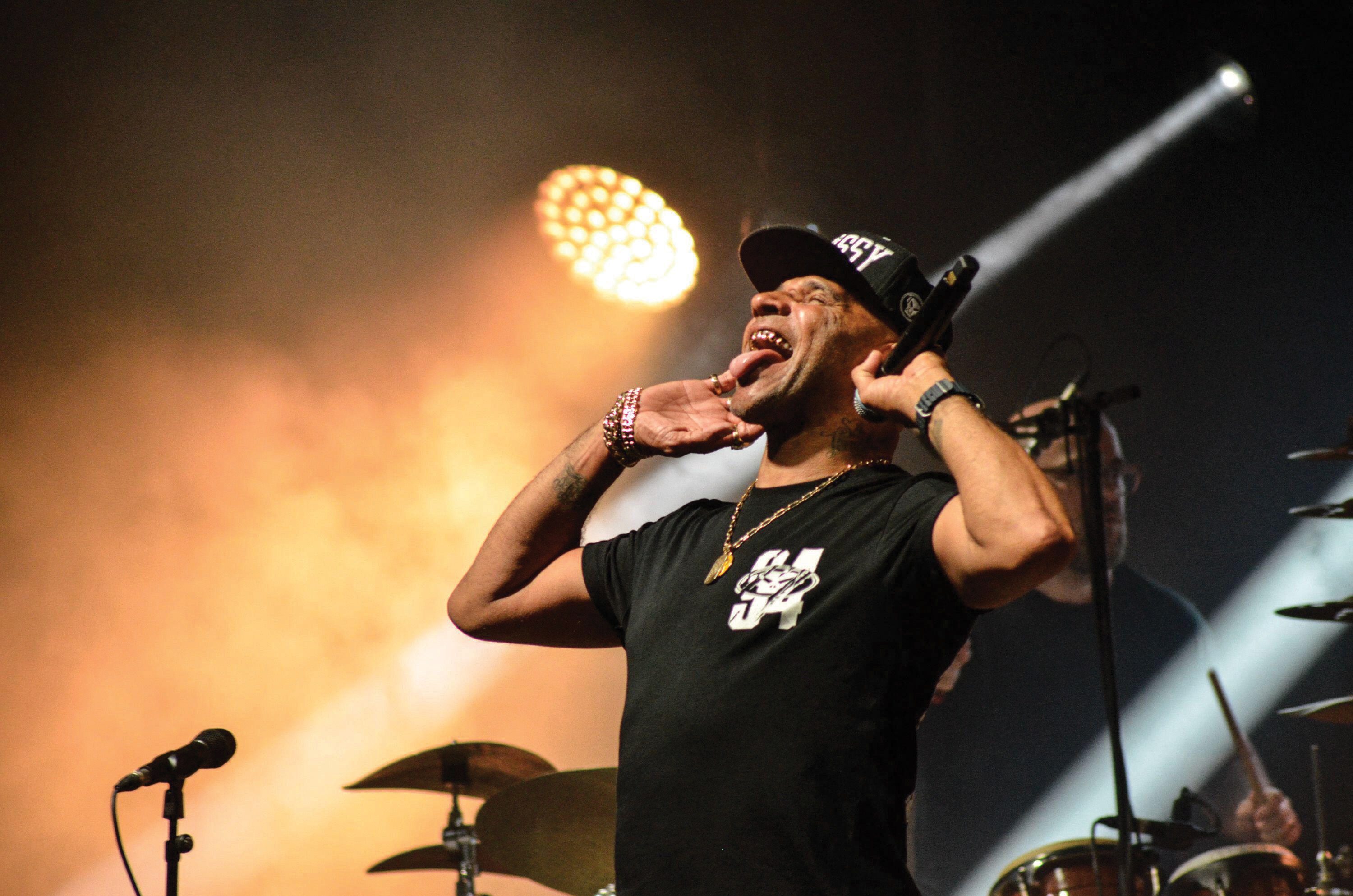
Goldie performs at We Out Here festival in Dorset in 2023. Image: Kingsley Davis / Alamy
I want to watch my little two-year-old grow up now. No one taught me these skill sets. Being in the care system really fucked me up in that respect. I wasn’t brought up in a nuclear family to teach me about being a father to daughters and sons.
I’ve done it all. I’m getting my head around what success means. I’m getting my head around what 61 means. I’m practising yoga three times a week. I’m Superman. I’m Benjamin, motherfucking Button, mate. I go back home and they go, “Fuck me, you look young.”
If I could go back to one moment, it’d be when I was in New York to do graffiti in the mid-’80s. I smelt the subway car brake dust and New York pizza, which was 75 cents a slice, and I realised I was in the mecca. That moment changed everything for me. I just knew that graffiti and hip-hop culture would give me the mother and father that I never had.
Work by Goldie & Metalheadz features in the Beyond the Streets exhibition at London’s Saatchi Gallery