Ziggy Marley: ‘I should have said something to my dad. But I was too young’
He grew up in the spotlight as the child of a global icon. But behind the legend there was a shared musical connection that has never dimmed
by:
19 Apr 2026
Image: Tuff Gong Worldwide-Zach Weinberg
Share
Ziggy Marley was born in October 1968 in Kingston, Jamaica. He is the eldest son of reggae great Bob Marley and singer Rita Marley. In 1979, Ziggy (along with his siblings Cedella, Stephen, and Sharon) made his first public appearance, performing a song written by his father, Children Playing in the Streets, at the National Arena in Kingston. Royalties from the single’s release were donated to the United Nations Children’s Fund. Following his father’s death in 1981, the four siblings formed the Melody Makers, breaking through with 1988’s Conscious Party, which featured the international hit Tomorrow People. Since then, Marley has become an international reggae star in his own right, as well as a noted philanthropist and keeper of his father’s legacy.
In his Letter to My Younger Self, Marley recalls growing up in Kingston, the shock of learning that his parents had been shot, and reveals what he’d most like to say to his father.
I was looking for girls at 16. I went to a catholic high school. And I was starting to get more inquisitive about spirituality and consciousness and yoga. It was also the beginning part of me learning more about the true history of slavery and the West Indies. I started searching for myself, having an independent mind.
I was always playing football, I was on the high school team. I was a Pele fan, he was a king. I was getting into some American music, Sam Cooke, Marvin Gaye, those are lover’s songs. I was starting to explore that, to go out and find that type of music.
I started writing songs and that was magical to me. It was like, what is this thing? And over the years, as you practice that skill, it becomes more intuitive. I love that experience of creating music, creating songs. It’s not a scientific or academic process – it’s spiritual, it’s creating. And that is beautiful for me, it gets me closer to something beyond myself.
My first song was about a girl [laughs]! I must have been really young, because it was before my father passed away. He knew the lyrics to it like, [sings] “Brown eyes baby, I love you to my heart, and I’m never going to part.” I should record that thing, now that I think about it! Because I never did and I still remember the melody, so I’m gonna work on that one, honestly.
Advertising helps fund Big Issue’s mission to end poverty
Advertisement
My father gave me some advice. He wanted me to sing conscious music. Not singing about girls and stuff like that. He didn’t want that. He would always call us around when he was singing. So we learned from example, really – from his discipline. It was every day. It wasn’t something that you did once in a while. It was just your life.
I’m the eldest boy, which means I had a different experience being around my father to my siblings. The girls could never really come around that environment. The studio, everything, the lifestyle – the beach, late-night ceremonies, the herb smoking, the conversations, the jokes [laughs]. The funny thing is that I didn’t know any difference. So it was fine with me. But when I look back, I see pictures of me with him, and I’m the only kid amongst grown men sitting around. My brother Steve would come too sometimes. But it’s very interesting. There were a lot of those moments. Those are the teaching moments, those are the learning moments.
When we grew up, it wasn’t around a revered man. I was around my father and he was a musician. He had a certain way about him that was respected as a person. Forget the music, forget ‘the great Bob Marley’, whatever. He was a good person and he had a strong mental discipline, work ethic and respected other people, going back to his roots and never forgetting that. So as a human being in general, he was a love person. When you add the music to that, then the legend becomes greater and greater.
Keep reading the journalism that powers our mission
Register free to continue and learn more about the stories, campaigns and the support we provide, helping people facing poverty across the UK.
When I working on Many Mourn for Bob [from new album Brightside], I realised my father’s voice was part of the song. I’m not talking about the sample, I’m talking about me singing it. There’s a connection to him. And I said to myself, ‘Oh, man, this could be a Bob Marley song’. It reminded me of Redemption Song in some way. It’s that connection you have with your father’s spirit, obviously, I’m a part of him. It was also like me and him co-writing the song in the spiritual realms [laughs]. That’s how I feel about it.
It was great growing up in Trench Town, we were happy kids playing around. Later on, that geopolitical warfare thing destroyed it. But as kids, we weren’t suffering or starving, it was a great life. You look at the pictures of us as young kids with my father and look at how he’s dressed. It wasn’t a rich life or whatever, but it was great. Eventually, we moved from Trench Town to another place called Bull Bay, which is a lower middle-class type of vibe, so that that was different, that was during the political era. People getting shot, people getting killed, even as kids we were aware of that.
When my father and my mother got shot [in 1976]… I don’t remember how I felt, but I remember the experience. I think my mind was blank, like a deer caught in the headlight. You’re just experiencing this thing, there’s no reaction. That night I wanted to go to rehearsal with my mother. She’s like, no, you have school tomorrow, you got to stay home. So she went and we are home with our grand aunt. In the middle of the night, boom, boom, boom on the door. All of a sudden, my auntie’s saying “We have to go.” A bunch of cops came and got us. I remember speeding away through some winding roads, driving wild and crazy up to Strawberry Hill, Chris Blackwell [Island Records boss]’s place, where my father went after the shooting to get away, out of Kingston. We saw him, and a few days later, I saw my mother. I didn’t know she got shot in her head. Actually, nobody said, ‘Oh, your parents got shot.’ They never really told us everything, or we never really understood everything, until afterwards.
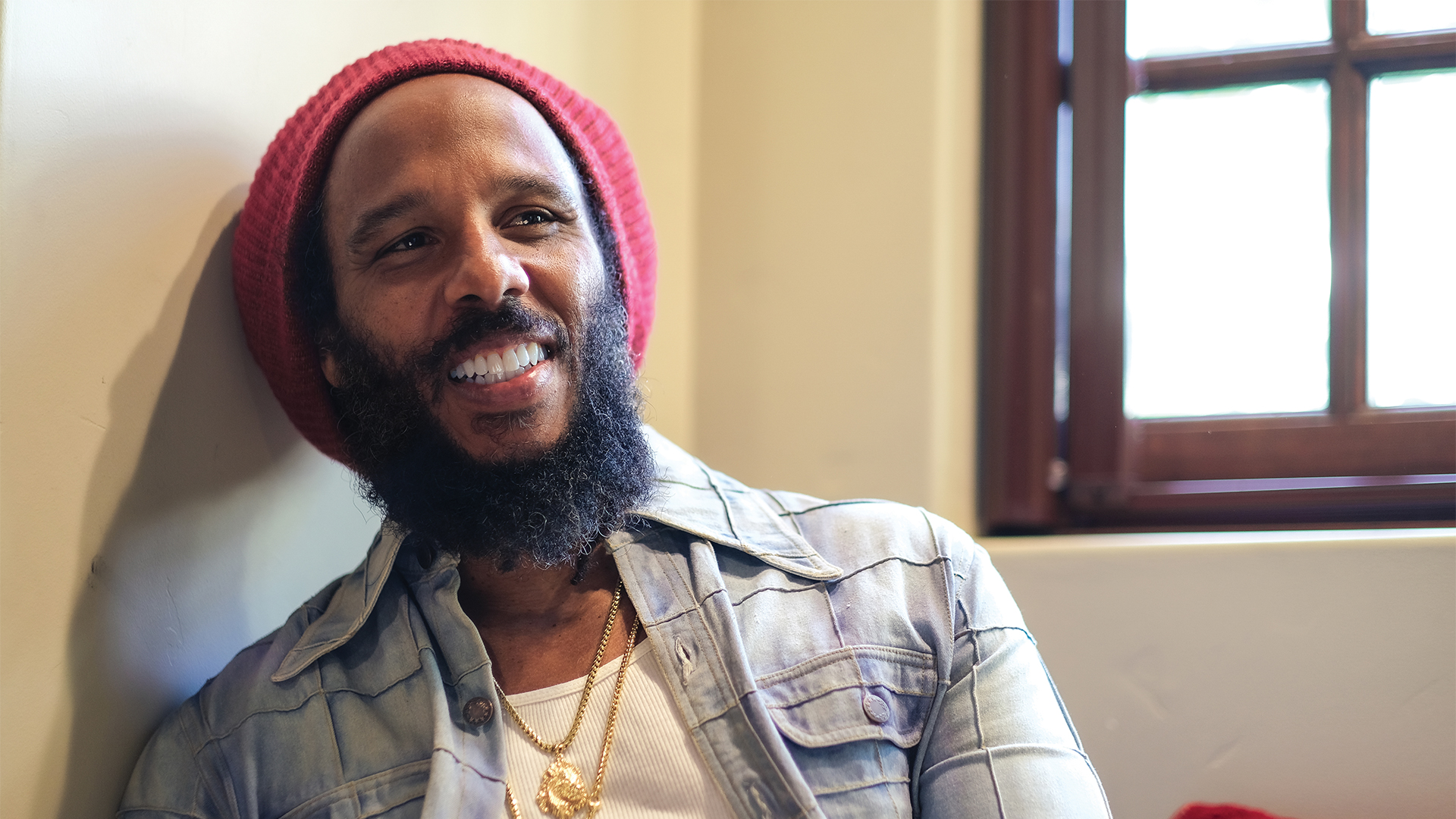
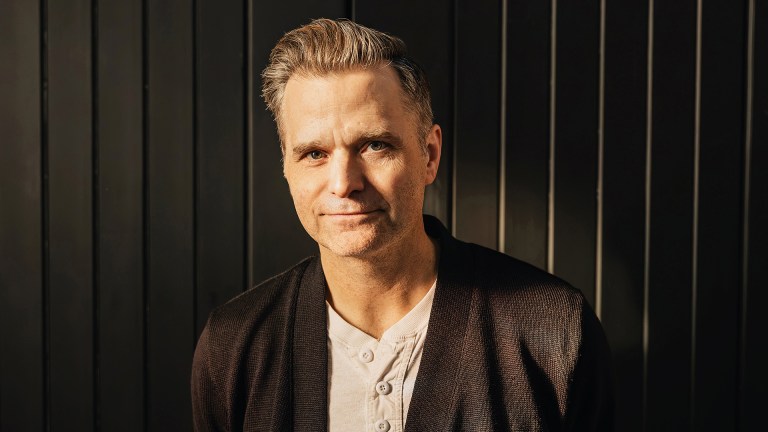
Ziggy Marley. Image: Tuff Gong Worldwide-Zach Weinberg
There was a framed Melody Maker cover with Bob on it in the house. I remember looking up at it and always liked it. It was a centrepiece in our house, you couldn’t miss it and the writing was in red. That’s where the name of the band came from. Growing up, I liked all types of music, rock music, rap music, hip-hop. So making music was a great experiment, just doing what you feel and trying to be yourself. I’m an explorer and I make mistakes. I’m not trying to be perfect. I’m still looking for something, but I’m very happy with where I am now, which is represented on the new album. I’ve experienced a lot, I’ve found out a lot about myself, in terms of what I want to be, because I’m still evolving. I’m very happy with this album, this is one of the only albums that I’ve listened to, not as the person that made it, but just as a listener. It connected with me in a different way, I’m not judging myself. It lifts me out and help me deal with the situations I am in and the world is in. I’m expressing some deeper things.
I really don’t think about success that much. Success is not about the music, none of that stuff, not the charity stuff, it’s about me as a human being, and the path that I am on and how I’m trying to shape who I am as a person evolving. My success probably is not to let the success get to me or make me think any way differently than how I normally think. I feel like I’m a good human being. I have a good heart and love for people and that energy makes everything else possible. If I was hateful or mean, I wouldn’t have this kind of success, I’d have another one. This success is special, because it carries spirituality with it, love with it, open-heartedness, open-mindedness, care for humanity, sympathy, empathy.
I think my father was always searching, always evolving. So, if you listen to songs like Could You Be Loved, he was always going forward, he was an innovator, and he would have still been an innovator. What he would be doing today would not have sounded like what he did yesterday. Musicians don’t like just doing the same thing over and over again, it gets boring. So he would probably have found some different musicians from different places and just carried on with his vibe.
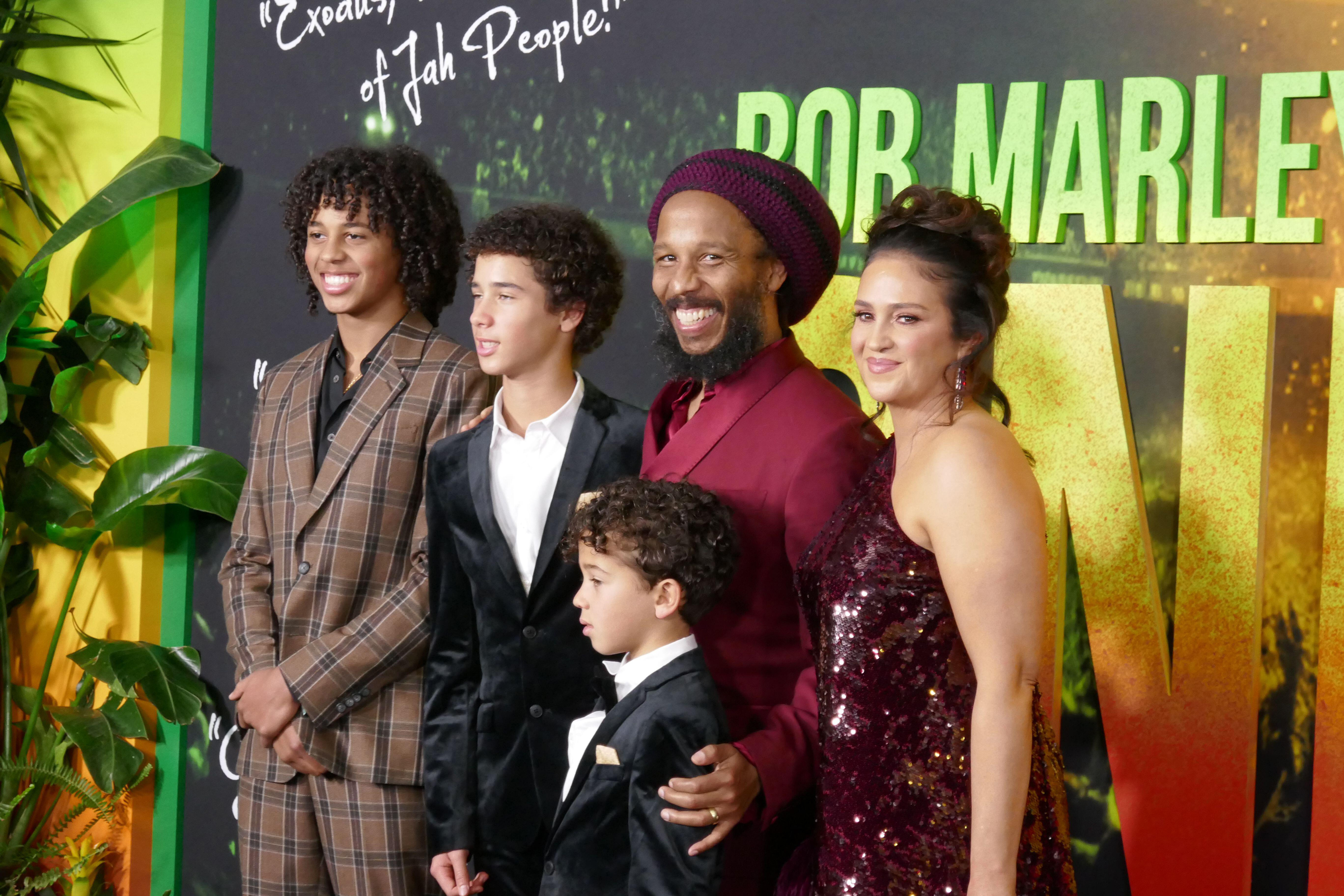
2024: Attending the premiere of One Love in Los Angeles with his family. Image: Barry King / Alamy
We made the Bob Marley movie [One Love] a couple of years ago. I was on the set and we were exploring the emotional side of him, the stuff that changes a person and I did a photo book [Portrait of The Legend] before then. He was so young and even though he was a great musician and has accolades and whatever, there’s a part of me that feels sad for him, what he went through. If there was more care and real friends and real people around him, things could’ve been different for him. But then, the next time I think of him, it would be just with the guitar, like Redemption Song.
If I could give myself advice, I would go back to before my father was sick [Bob Marley died of cancer aged 36 in 1981]. I always wish I could have told him, ‘Be careful’, or ‘Watch these guys’, because there were a lot of people and things going on around him that we don’t like, you know what I mean? I wish I was a man at that time so I could say [shouts] ‘Hey!’. That’s the only advice I would give myself. I should have said something, I should have understood. But I was too young.
Ziggy Marley’s new album Brightside is released on 18 April
Buy from your local Big Issue vendor every week – and always take the magazine. It’s how vendors earn with dignity and move forward.
You can also support online: Subscribe to the magazine or support our work with a monthly gift. Your support helps vendors earn, learn and thrive while strengthening our frontline services.
Thank you for standing with Big Issue vendors.
Advertising helps fund Big Issue’s mission to end poverty