Ruth Madeley: ‘I was written off before I was born – I’m so happy that it all worked out’
The actor never believed anything was impossible. Not even balancing her happy home life with Hollywood
by:
31 Jul 2026
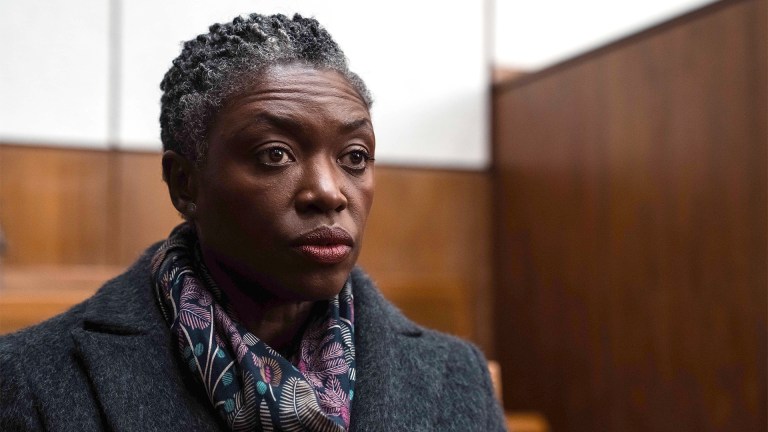
Ruth Madeley. Image: James Pardon; Mammoth Screen / BBC
Share
Born in Westhoughton, Greater Manchester, Ruth Madeley was diagnosed with spina bifida and scoliosis weeks before her birth. The charity Whizz-Kidz supported her family when she was a child and, as she grew up, Madeley became an advocate for disabled people, winning the Diana Award in 200, which recognises change-making young people. She studied English and creative writing at university and worked in scriptwriting, before an unexpected role in a 2009 episode of the BBC show Half Moon Investigations got her interested in acting. She has since become a familiar face on our screens, acting in shows including Years & Years, Brassic, Don’t Take My Baby, Then Barbara Met Alan and Doctor Who.
In her Letter to My Younger Self, Madeley looked back at an adolescence of hospital stays, her acting career to date and her cherished home life.
Throughout my teenage years I was having a lot of spinal surgery that kept going wrong. When I was 16 or 17, I had my last big operation at the children’s hospital – after that, you go to the adult one – so that was my life at that time. A lot of medical issues. I remember doing GCSE coursework from my hospital bed, but I never felt isolated because I had such a strong group of friends. It just felt like a massive inconvenience – ‘I don’t have time for all this, I have a very busy social life!’ Hospital admissions aside, I had a lovely time at school.
I knew every bed in Pendlebury Children’s Hospital. My sister Liz is three years older and had moved out by then, but she would visit the hospital to eat my grapes and chocolates when she was hungover. I was always happy to see her. We are a small family, but very loving and supportive. I had grandparents close by pitching in. And considering how traumatic the medical stuff was, that support got me through.
“I was always a happy, positive, optimistic kid – stubborn and determined,” said Ruth Madeley. Image: BBC / Wall to Wall Media Ltd / Jacquie Madeley
Growing up with a non-disabled sister and parents, there was never anything we didn’t do. We went out as a family, went on holidays, found ways to do things. Our mum and dad never treated me and my sister differently. I was always a happy, positive, optimistic kid – and stubborn and determined. I refused to ever have anyone tell me I couldn’t do or be something. I’m still an incurable optimist.
There’s a reason I’ve never moved away. I’m totally shaped by where I grew up and who I grew up with. I’ve known my best friend since the day she was born – she lived two doors down – and met the rest of my friendship group when I went to high school. And I married my childhood sweetheart. It’s nice to not have the acting world as part of my home life. Everyone is supportive and proud. But my husband Joe doesn’t work in the industry and it’s nice to come home and hear about his job. I’m a homebody, in case that isn’t clear. I find it difficult being away filming. It’s nice to come home to this little network of massive support.
Advertising helps fund Big Issue’s mission to end poverty
Advertisement
I was a wheelchair user and never saw anyone who looked like me on screen. Ever. So it didn’t cross my mind that I could be an actor. I was Mary in my primary school nativity when I was five – maybe that’s where it all started. But it didn’t ever feel like a possibility. Writing was always my thing. I wrote since I was tiny. My first certificate at school was for writing, and I did scriptwriting at university. Even then I didn’t see it as a career choice; I felt it could be something I do on the side.
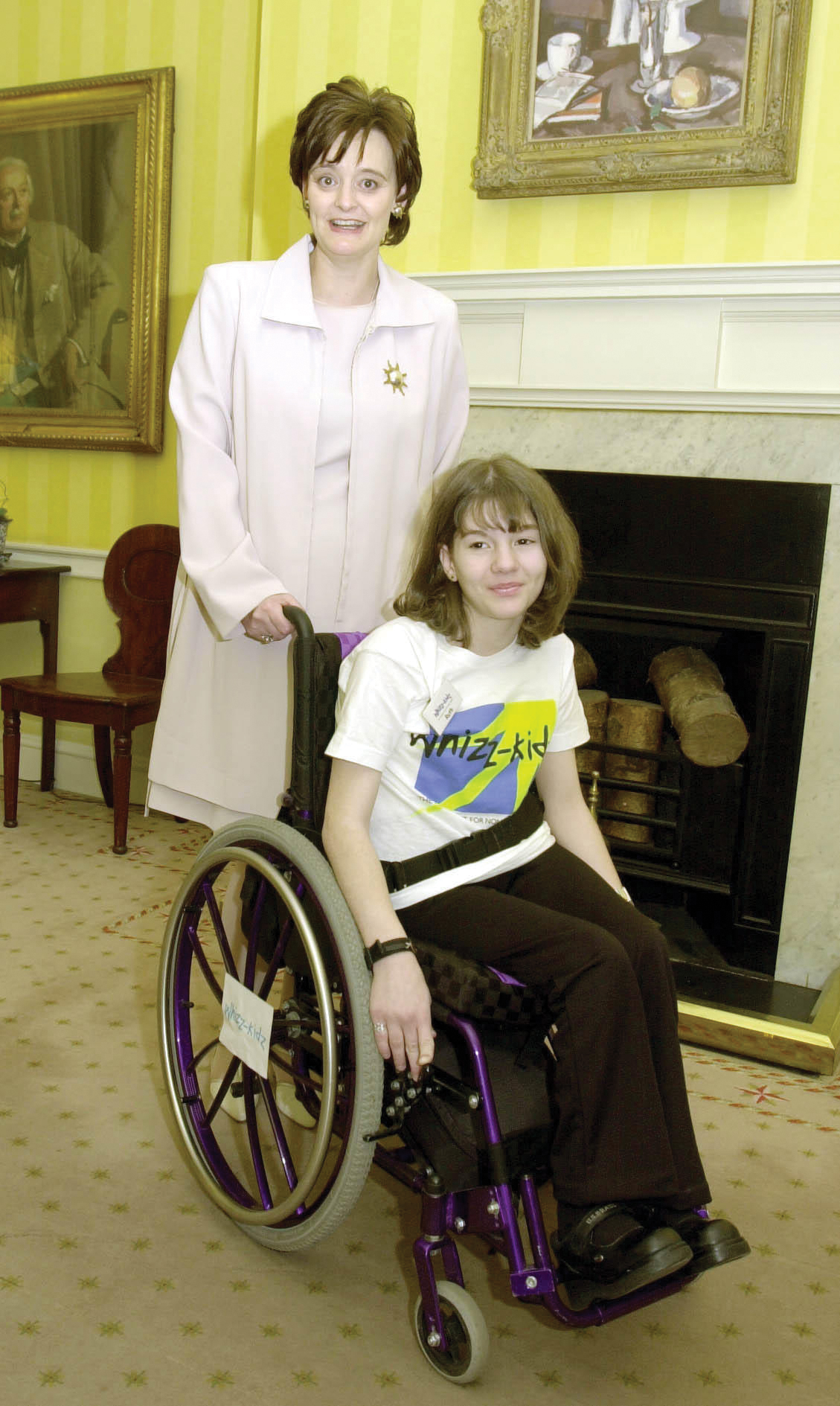
I volunteered for the children’s charity Whizz-Kidz. They buy bespoke wheelchairs and mobility equipment for disabled kids and I was a beneficiary of them from five, when they brought me my first wheelchair. But it wasn’t just the equipment, it was the confidence building, the skills building. I was on their young board of trustees and had a huge world of experience through them. We even had a meeting in 10 Downing Street in 2000 hosted by Cherie Blair. So many young disabled people come to life experiences later. I never had a Saturday job because that wasn’t possible as a wheelchair user. So we don’t develop skills other 16-year-olds are developing. So to be able to develop skills and meet people having similar experiences was so important. I went on to work for Whizz-Kidz after I finished university – that was my real job for a long time.
Read more:
Keep reading the journalism that powers our mission
Register free to continue and learn more about the stories, campaigns and the support we provide, helping people facing poverty across the UK.
I got my acting break when I was doing work experience one summer at the BBC. I was in the script editing team and a producer said they were auditioning for the CBBC drama Half Moon Investigations and needed a wheelchair user for a scene. I only went to be nosy and meet a director, to get more contacts. Then I was hit with the adrenaline. I don’t know how good I was, but I got the job, went off to film in Glasgow and Edinburgh and was fascinated by what everyone on set was doing. I couldn’t believe how many people it took. That feeling of collaboration, being a tiny part of this massive machine, is what I fell in love with. I’m late for everything but I’m never late for work. Never keep people waiting, always respect everybody’s job.
Ruth Madeley meeting Cherie Blair at the 10th birthday of Whizz-Kidz at 10 Downing Street. Image: PA Images / Alamy
I would tell my younger self that you will be asked some absolutely ridiculous questions. So stand your ground. If you think something is wildly inappropriate to ask of a disabled actor, trust your gut. Because you don’t have to agree to everything.
To be afforded the privilege of being on screen and showing now how unbelievably proud I am of my body – for me that is as important as the job itself. I’d had so much spinal surgery with my scoliosis and I was incredibly curved, there was scarring, and my shape kept changing. I was the only disabled person in my year at school, so I grew up knowing my body looked different to other people’s. I went through a phase of being very negative. At one time, I thought, ‘I hate my body, don’t look at it – it doesn’t belong in certain places.’ But it belongs everywhere. And I needed to hear that as a teenage.
I have been so spoiled with the roles I’ve been able to play. All these incredibly strong disabled women – and then other characters that are more vulnerable and show strength in a different way. The one that would most excite my younger self is Then Barbara Met Alan and playing a real-life disabled activist. Because Barbara [Lisicki] is basically the reason I have rights as a disabled person. I’ve just made a film called Being Heumann, where I play Judith Heumann [known as the mother of the disability rights movement in the US] opposite Mark Ruffalo. I’m not just coming at these roles as an actor but as someone with lived experience of disability. But I’ve learned from every single role.
My younger self would be pretty impressed with me, I’m not going to lie. But weirdly, I don’t think she’d be shocked. Because I never thought anything was impossible.
I feel so blessed to know Jack Thorne and Russell T Davies. It was an incredible experience making Don’t Take My Baby with Jack, then getting the Bafta nomination. Going on to do Then Barbara Met Alan together was lovely. Years and Years was another big moment. It felt good to explore a character where disability wasn’t at the forefront. When he went back to Doctor Who, I was so grateful Russell took me with him.
I would tell my younger self you’re going to develop a coffee addiction, but just go with it. I’d also tell her you don’t always have to say yes. I’m still working on that. As a disabled person, you grow up being made to feel like you have to be grateful and amenable. But it’s OK if you’re not. I’m also trying to take a minute to celebrate, rather than constantly being ‘what’s next, what’s next?’ As somebody who’s developed chronic pain and chronic fatigue, I’m reminding myself that rest isn’t failure. Rest allows you to do all the stuff that is going to be magical. So take the opportunities when you can.
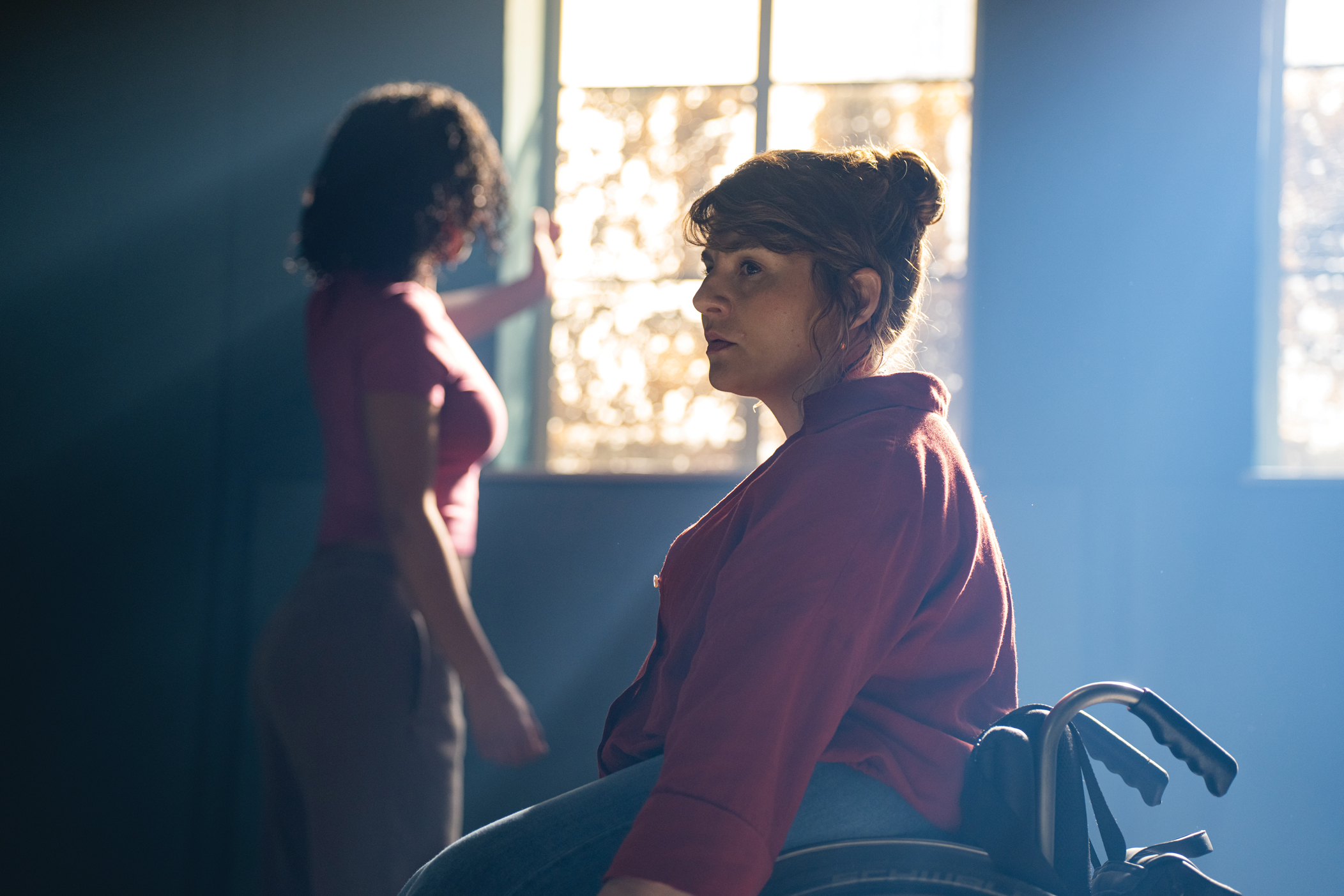
Ruth Madeley with co-star India Amarteifio in The Rapture. Image: BBC / Wall to Wall Media Ltd / Jacquie Madeley
I’ve known my husband since I was five years old – but the number of frogs I have kissed! It took me all that time to realise he was right there. I’ve always really romanticised the idea of being with somebody, and I do feel incredibly lucky. But both of us made it more difficult than it needed to be. I would mainly say to my younger self, what are you doing? He’s right there!
If I could relive one day from my life, it would be when Joe proposed to me. It was just so unexpected and special. More recently, finding out I’d got the role in Being Heumann is a moment I’ll never forget. I’d worked so hard for it and all that time and effort paid off. I’m unashamedly ambitious, so as a physically disabled person to be leading a Hollywood film with Mark Ruffalo and working with an Oscar-winning director… I just felt so proud of myself.
I was written off before I was born. From the moment my mum found out I had spina bifida six weeks before I was born, before I’d even arrived, I was written off, you know? So my younger self would be relieved to be happy and to be healthy enough to work doing something I genuinely love and – don’t tell anyone – that I would do for free. She would be really relieved and so happy that it all worked out.
The Rapture is on BBC One Sundays at 9pm and on iPlayer