
There is good organic dairy farming, and we should celebrate those people. But I have been to farms where the animals never go outside. They are like organic robots living in a horrible environment with no behavioural or social enrichment. They are not allowed to be animals and I can’t countenance that.
However, our farmers are incredibly important when it comes to looking after the environment. Because 70 per cent of the land surface is farmed, we need them to farm it in a sustainable way. So it is vitally important to support people in the meat and dairy business through a process of change, whereby they change their methods and produce to suit the market.
They have greater awareness and the heartening thing is that rather than ignore that education they have embraced it.
Dairy farmers have had a rough time for so long. So many go out of business because supermarkets crippled them by buying milk cheap from overseas. They could be going into organic vegetable production, and we should support them with training schemes and grants to switch the land, equipment and machinery over. Right now, the farming industry is pushing back against the growth of veganism because it sees it as a direct threat to its income. It needs to realise it has to change, so why not do it in a productive and positive way? We must encourage them.
Continue reading for free
Registration is free and takes less than 30 seconds.
Our supporters make Big Issue’s work possible. Join us to see the impact we’re having together and discover more ways to help people facing poverty access income, opportunity and support.
We have to work in partnership to produce a healthy world. We can’t turn our back on people who have been producing meat and dairy for hundreds of years. We need to bring them with us.
So we come to veganism. In the 1980s, when I started my vegetarian diet, it was a niche, hippy thing, seen as a dietary extreme. That was a great shame – had the movement then had the proactive members it has now, it would have grown more quickly. But whatever.
What we’re seeing now is a rapid expansion of veganism, particularly among the younger generation. They are embracing it. They have greater awareness and the heartening thing is that rather than ignore that education they have embraced it.
Advertising helps fund Big Issue’s mission to end poverty
One problem is the didactic nature by which veganism is presented. Either you are vegan or not. In a realistic sense, that is the case. But whether you are a meat eater or already vegetarian, what is important is a trend towards the next step. If you still eat meat, try cutting down to twice a week and see how you feel. Then you might cut down to once a week or a couple of times a month and might start to feel you’re better off without it and can go vegetarian.
If you are vegetarian, why not cut down on dairy? People who aren’t quite 100 per cent vegan, like me, get criticised because we haven’t taken that final step. We shouldn’t discourage people from moving in the right direction. Veganism needs to be more open, it needs to say, come on, join us, but do it in steps if that suits you.
That’s the state I am in when it comes to veganism. I have coconut, soya and oat milk in my fridge. I often have almond as well. We don’t have any dairy in the fridge any more. The last time I had cheese was before Springwatch in May. This is the longest I’ve ever gone without cheese! That is a personal milestone. So the trend is there. I reckon by Christmas, myself and my partner will have got there. But it has taken a few years.
It is the direction of travel that is important. Every year The Vegan Society contacts me in December to ask if I fancy doing Veganuary. This year I am going to pre-empt them, because I will probably already be there by then.
Read Chris Packham’s ‘A People’s Manifesto for Wildlife’ here
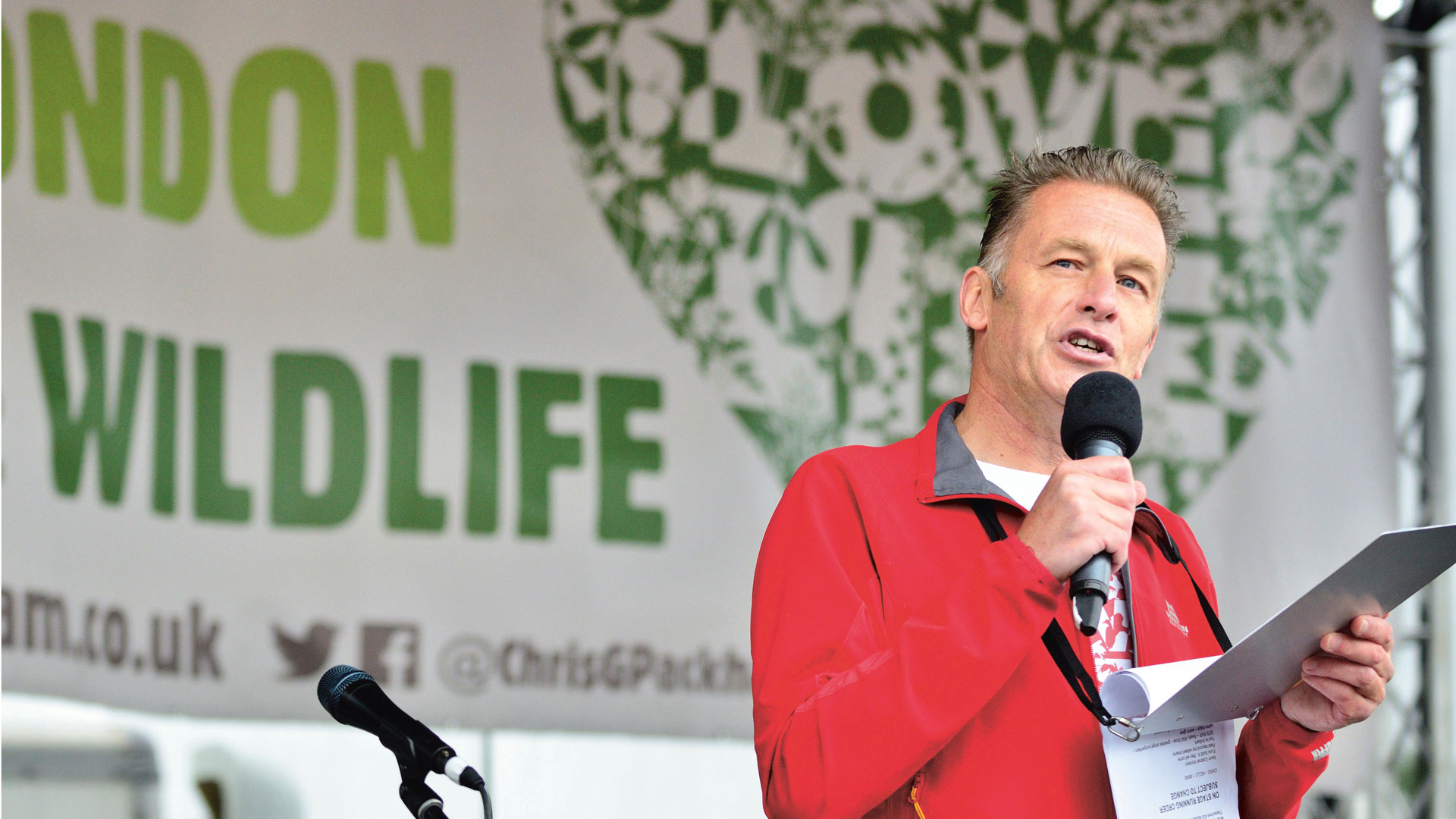
Image: PjrNews/Alamy Stock Photo
Advertising helps fund Big Issue’s mission to end poverty