‘I’ve been axe throwing and tractor riding since being diagnosed with Alzheimer’s’
Ronnie Dean is a 58-year-old based in Clwyd Wales. After finding out at 49 that she had young-onset dementia, Ronnie is on a mission to change the way diagnosis is given
by: Ronnie Dean
3 Sep 2026
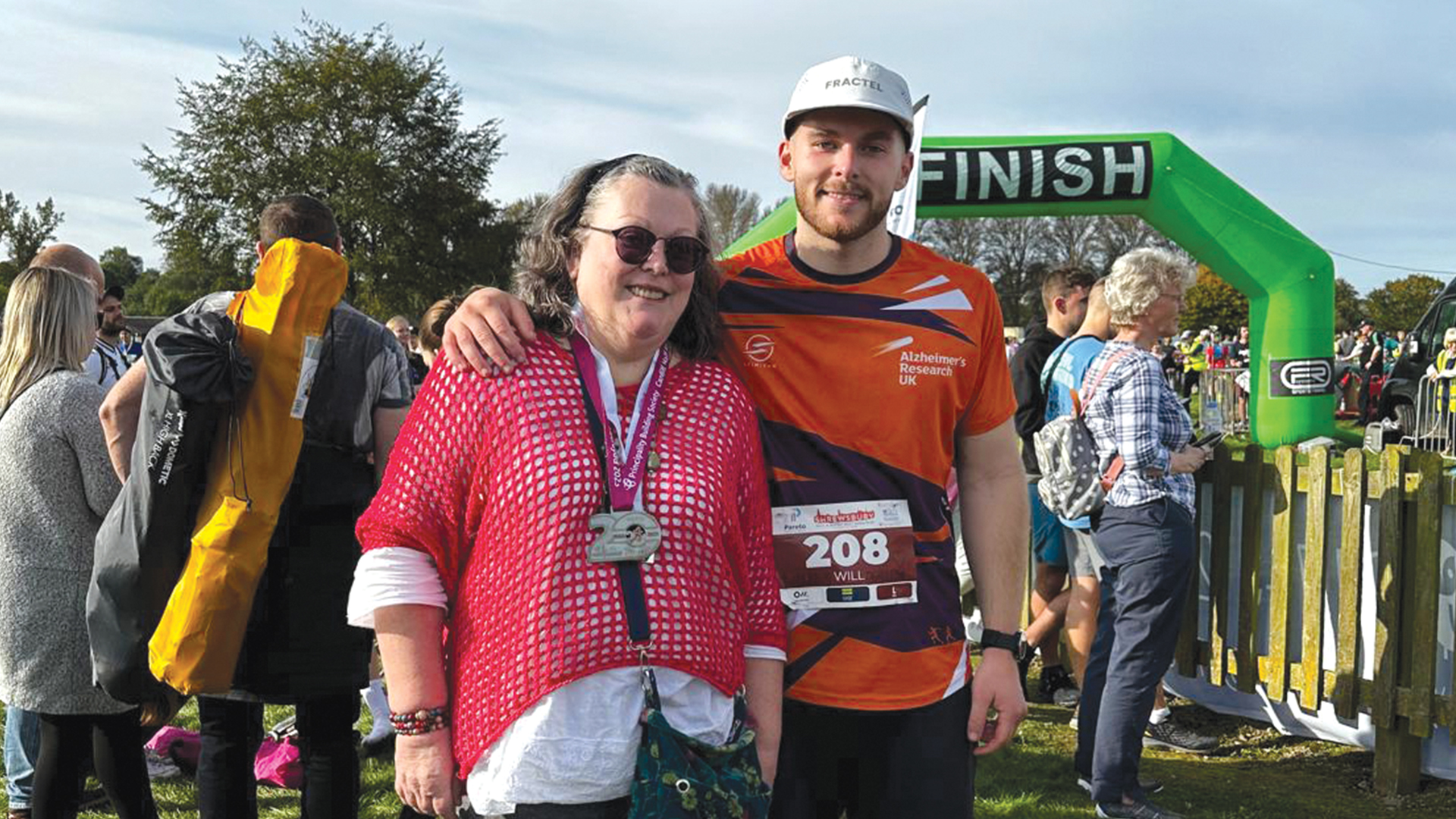
Ronnie Dean and her son Will. Image: Supplied
In association with Specsavers
Share
I was diagnosed with young-onset Alzheimer’s a decade ago, at the age of 49. They gave me two-to-five years. I had to grieve the life I had known before. But when I came out of that grief, I became an advocate for people with young-onset dementia – and any type of dementia. I’m on a mission to change the way diagnosis is given.
I’ve been to parliament. I have spoken to medical students and student nurses. I spoke at the National Paramedics Conference. I will talk anywhere and everywhere.
I’m on medication. My daughter Lizzy looks after my diet and exercise. I live my best life and get up to mischief with my son Will when he’s home. He’s doing an MA in dementia and the brain at Trinity College in Dublin. He’s very passionate. He’s done mad things like running seven marathons in seven days to fundraise for Alzheimer’s Research UK.
Next year, my son’s arranged for me to do part of the Camino de Santiago walk in Spain for my 60th. A lot of it will be in a wheelchair, but I will walk some of it. Every year we do something. Last year it was tractor riding and axe throwing. I think I didn’t put that I had dementia on the forms for that… I’m living well.
Good medical care is brilliant, but it really is a postcode lottery. I live in Wales. It took three years before I was put through for memory testing. They kept saying I was too young. They thought it was depression or menopause.
I was in senior management with North Wales Police for 25 years. I knew something was wrong when the symptoms started to appear. I couldn’t remember names. I was getting lost. I was going down the redundancy route because if I did something wrong, it would be all over the papers. We went privately to get my diagnosis in the end.
Advertising helps fund Big Issue’s mission to end poverty
Advertisement
I got full ill health retirement after that. But waiting times are so much longer now. Without a diagnosis from the memory clinic, I wouldn’t have got ill health retirement.
After I finished work, I didn’t know what to do with myself, and I think that’s why the advocacy took over. It was something to do. It was keeping my brain going. ‘Keep doing it or you lose it’ is how I try and think now.
Read more:
Keep reading the journalism that powers our mission
Register free to continue and learn more about the stories, campaigns and the support we provide, helping people facing poverty across the UK.
Ronnie enjoying an ice cream at Christmas. Image: Supplied
People think of dementia being about memory, being forgetful. But it’s also about issues with concentration, mood changes, depth perception, balance and much more.
People sometimes say to me: ‘You don’t seem to have it.’ That’s because I’m trying really hard. The next day, I’ll be asking Lizzy for a tea bag when I mean hot water bottle because my words get jumbled. I’m so tired because my brain has worked so hard.
We think of carers as adults, but they’re not always. Mine were teenagers when I was diagnosed. I didn’t tell them I was going through the diagnosis process because they had GCSEs and A Levels.
When I did tell them, the first thing Lizzy said was: ‘I’m going to look after you.’ She does an amazing job, but I feel so guilty that she can’t have the life that she wanted. It’s the families of the people with dementia who are most affected. For my daughter, it’s seven days a week. I’m not allowed in the kitchen because I could cause a fire.
Without carers, where would we be? I have said when it gets to a certain stage, I want to go in a home. I didn’t have children for them to take care of me for the rest of my life. But at my age, there are no care homes you can go into that would be stimulating. There’s nowhere for someone with young onset dementia to go.
What I miss most is going abroad with my husband Tony. Our plan was to retire and travel. But I need to be in a wheelchair, and he does get stressed with my dementia, so it’s not fair on him. Medically, I was allowed to fly for the first time in seven years this year. I went with Will to Lyon to a conference and it was magical. I haven’t got the confidence to go on my own anymore. But I will go abroad with Will if I go.
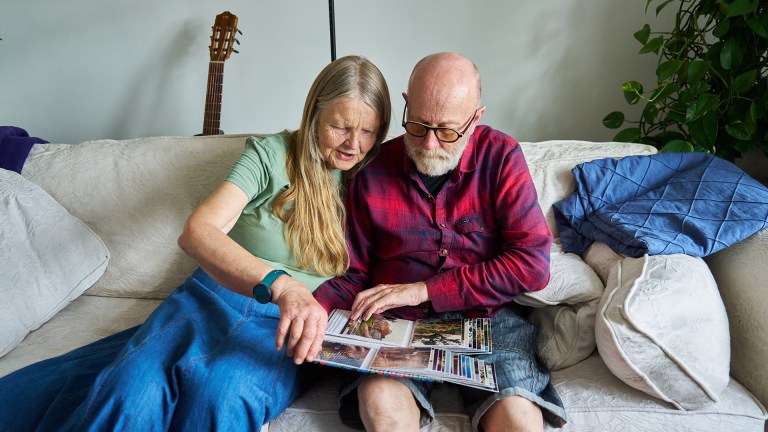
Since my diagnosis, the biggest thing has been trying to make memories, like the crazy axe throwing. One of the reasons I use Facebook is because it tells you what you were doing 12 months before. I’ve got no recollection, but it’s lovely to see the photos. You get a warm feeling and you’re reminded: ‘Oh, yes. That’s why I do it.’
Around 71,000 people with dementia in the UK are under 65 years old. This is called young-onset, or early-onset, dementia.
The word dementia is used to describe a group of symptoms that are severe enough to affect day-to-day life.
Symptoms can include confusion; thinking problems; problems with language, movement and vision; and mood changes.
Dementia is caused by diseases that affect how our brain cells work.
It is often thought of as a condition that affects older people. But around seven in every 100 people with dementia in the UK are under 65 years old.
This is called young-onset, or early-onset, dementia.
The diseases that cause young-onset dementia and dementia in later life (late onset dementia) are similar. But the impact of young onset dementia can be different. People are often working, have financial commitments like a mortgage, and may have children still living at home.