Inside the exhibition explaining how homeless people have been treated as criminals for 400 years
Inside the Museum of Homelessness’s new exhibition, tracing 400 years of criminalisation and resistance
by:
24 Jun 2026
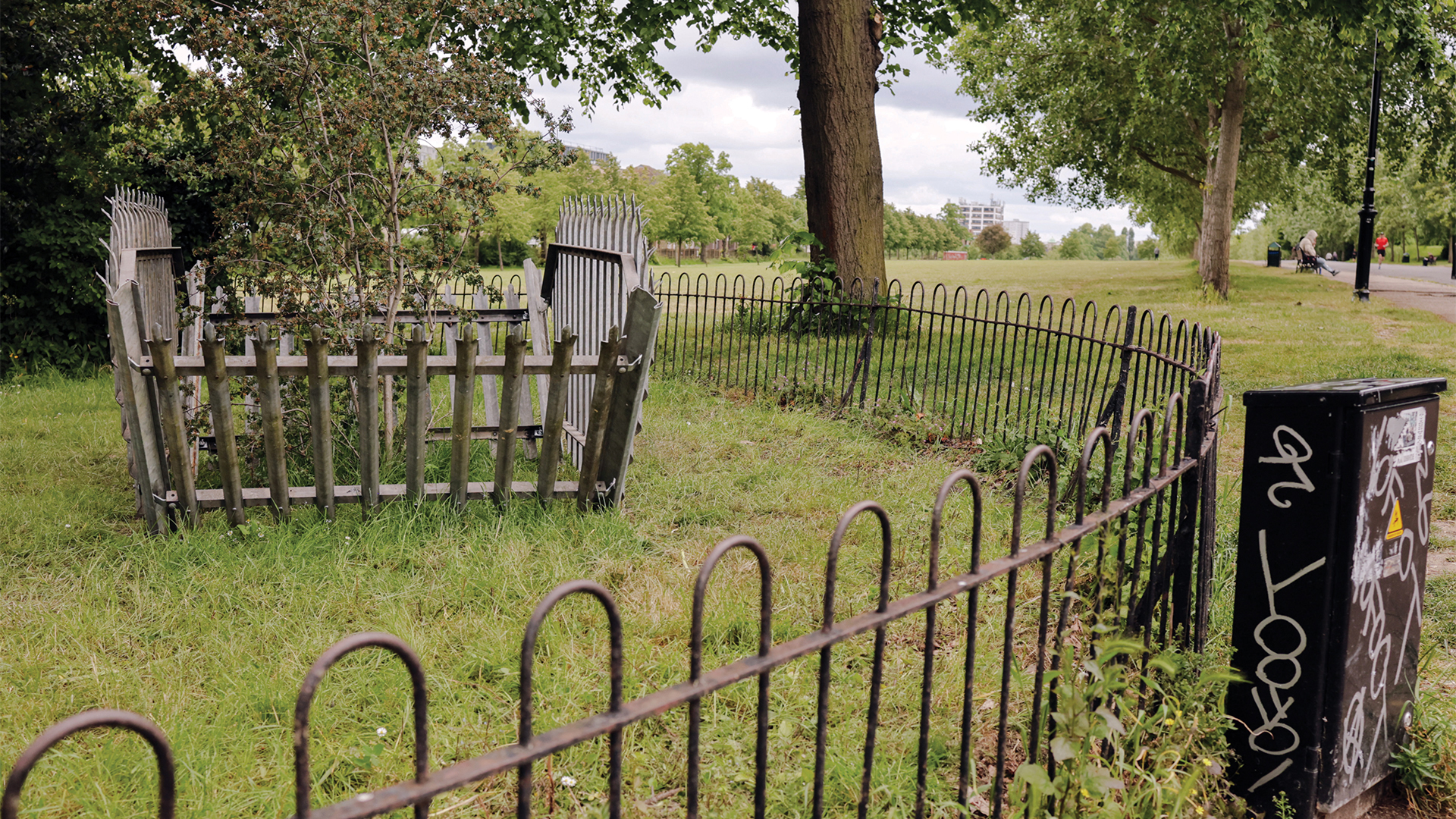
Faerie Newbuild by 10Foot. Image: Lydia Lange
Share
You might not associate renegade graffiti artist 10Foot with 18th-century folk poetry. But he recently sprayed one such poem onto the wall of a London train station.
The law locks up the man or woman / Who steals the goose from off the common / But leaves the greater villain loose / Who steals the common from the goose.
The rhyming quartet refers to the Enclosure Acts, a series of laws that privatised British land and made thousands of people homeless.
Now, 10Foot has assembled four prints of that same graffiti and annotated it for the Museum of Homelessness (MoH)’s exhibition Criminal: An Untold Story of Homelessness, Resistance and Survival. Above the image: “Written in 1700s…” Beneath it: “Written in 2026!!!”
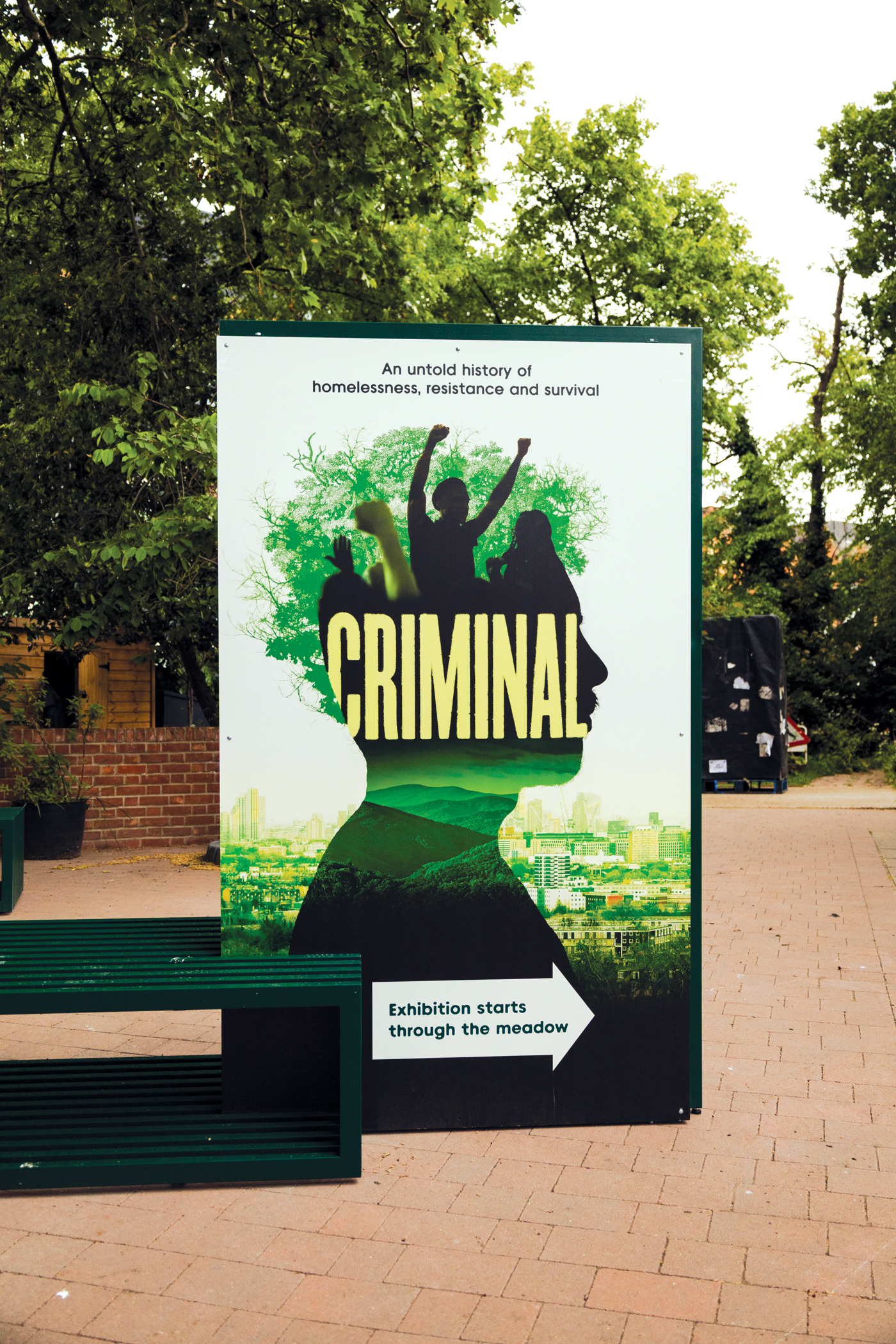
That long arc of history is what the show is built around. Staged in an English perennial meadow at the museum’s site in Finsbury Park, the exhibition traces 400 years of homelessness criminalisation – featuring birdhouses fitted with hostile architecture spikes, a Margaret Thatcher mushroom cloud, and 10Foot’s first ever sculpture, Fairie Newbuild: a skip made out of steel Palisade fencing with a hawthorn tree planted inside it – both representing how land has been sectioned off in the past and the present.
The exhibition has all been created in collaboration with people experiencing homelessness, and tells, in MoH’s words, “stories of stark brutality and generational creative resistance.” According to co-founder Matt Turtle, those stories haven’t ended.
Advertising helps fund Big Issue’s mission to end poverty
Advertisement
“This exhibition matters today because criminalisation as a ‘solution’ to homelessness has never gone away,” he says. “Right now, in 2026, it is ramping up in many places on Earth. For example, the Grants Pass Supreme Court ruling, which made it much easier for [US] states to criminalise any form of homelessness.”
In Grants Pass v Johnson, the Supreme Court gave cities the green light to punish unhoused people for sleeping in public – ruling that doing so does not constitute “cruel and unusual punishment”. In the year that followed, American cities introduced over 320 bills criminalising unhoused people, nearly 220 of which passed.
Last year, Fox News host Brian Kilmeade called for the euthanasia of mentally ill homeless people. “Involuntary lethal injection or something,” he told another anchor. “Just kill ’em.”
Keep reading the journalism that powers our mission
Register free to continue and learn more about the stories, campaigns and the support we provide, helping people facing poverty across the UK.
That remark was the initial spark for the exhibition, Turtle explains. But “it’s not just an American problem”. Around the world, governments are using punitive legislation and enforcement to punish rough sleepers and so-called loiterers.
In the UK, the Vagrancy Act 1824 will finally be repealed this year – but rough sleepers are still “treated like criminals”, Turtle says, dispersed through public spaces protection orders that ban people from city centres, and prosecuted under replacement legislation targeting “nuisance” begging.
“The severity levels in recent years have become particularly acute. As rights get rolled back and authoritarianism on the rise, we see a return to potentially some of the more devastating ideas and thoughts and attitudes that we saw in the 1500s and 1600s. That’s why we say this exhibition should act as a cautionary tale from history.”
By MoH’s telling, this history begins not with the Vagrancy Act but with a ‘Homelessness Big Bang’ two centuries earlier.
The 1597 Vagabonds Act “allowed people to be transported from London streets, from jails around the UK to different parts of the emerging empire,” Turtle explains. “At the same time, the modern enclosures began, eventually thousands of parliamentary bills annexed about 21% of all UK land.”
In 1609, the Virginia Company approached the Mayor of London offering to “ease the city and suburbs of a swarme of unnecessary inmates.” In other words, this rapacious colonial profiteer offered to solve the homelessness problem by securing itself free labour. The city agreed. Records show thousands of homeless children aged eight to 16 were transported to the colonies.
“In the 15th century, vagrancy becomes a term loaded with all these kinds of stigmas that frame people as deserving or undeserving,” Turtle explains. “Those labels create dehumanisation and allow the justification of criminalisation.”
That dehumanisation, says Gemma Lees, disproportionately impacts ethnic minorities.
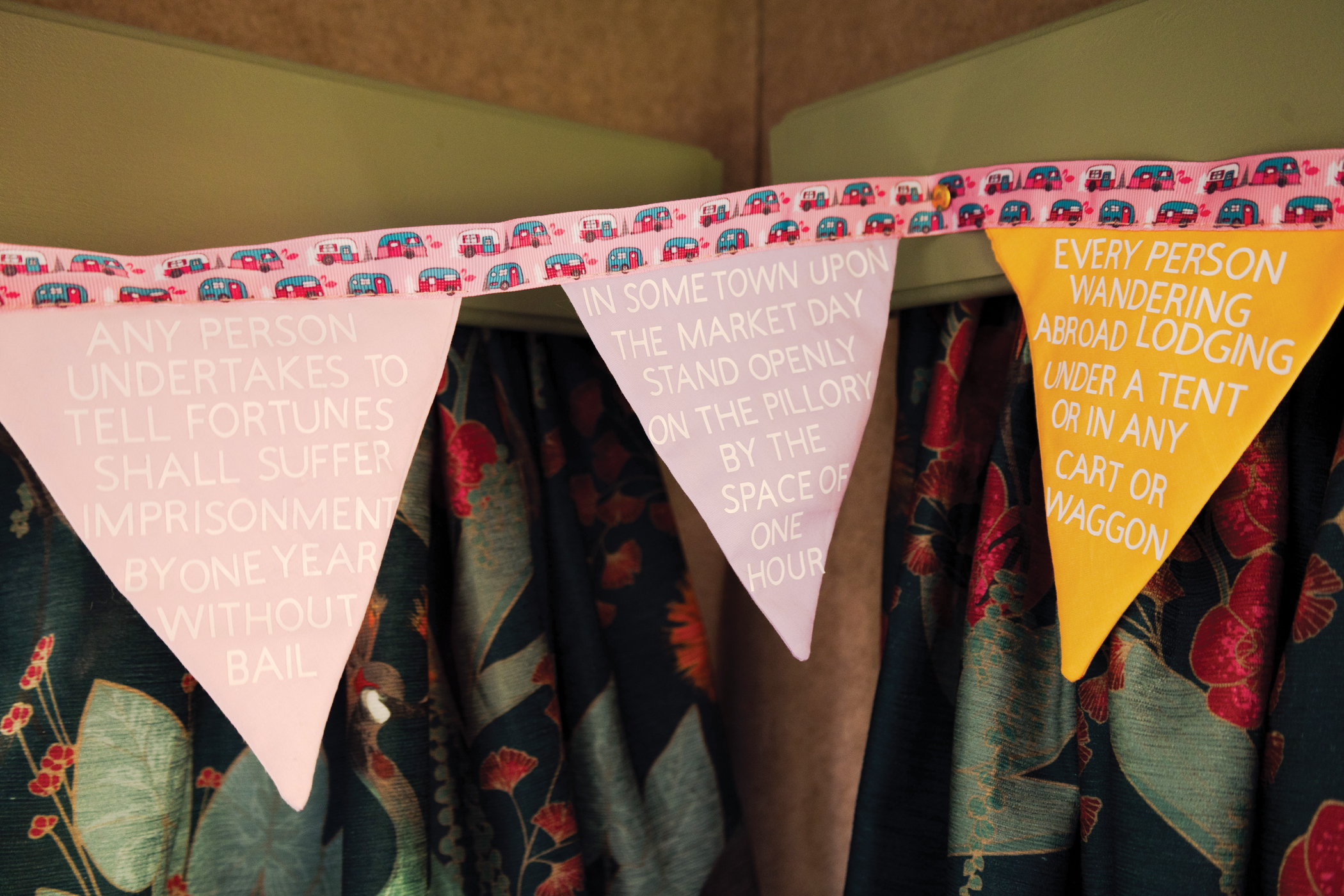
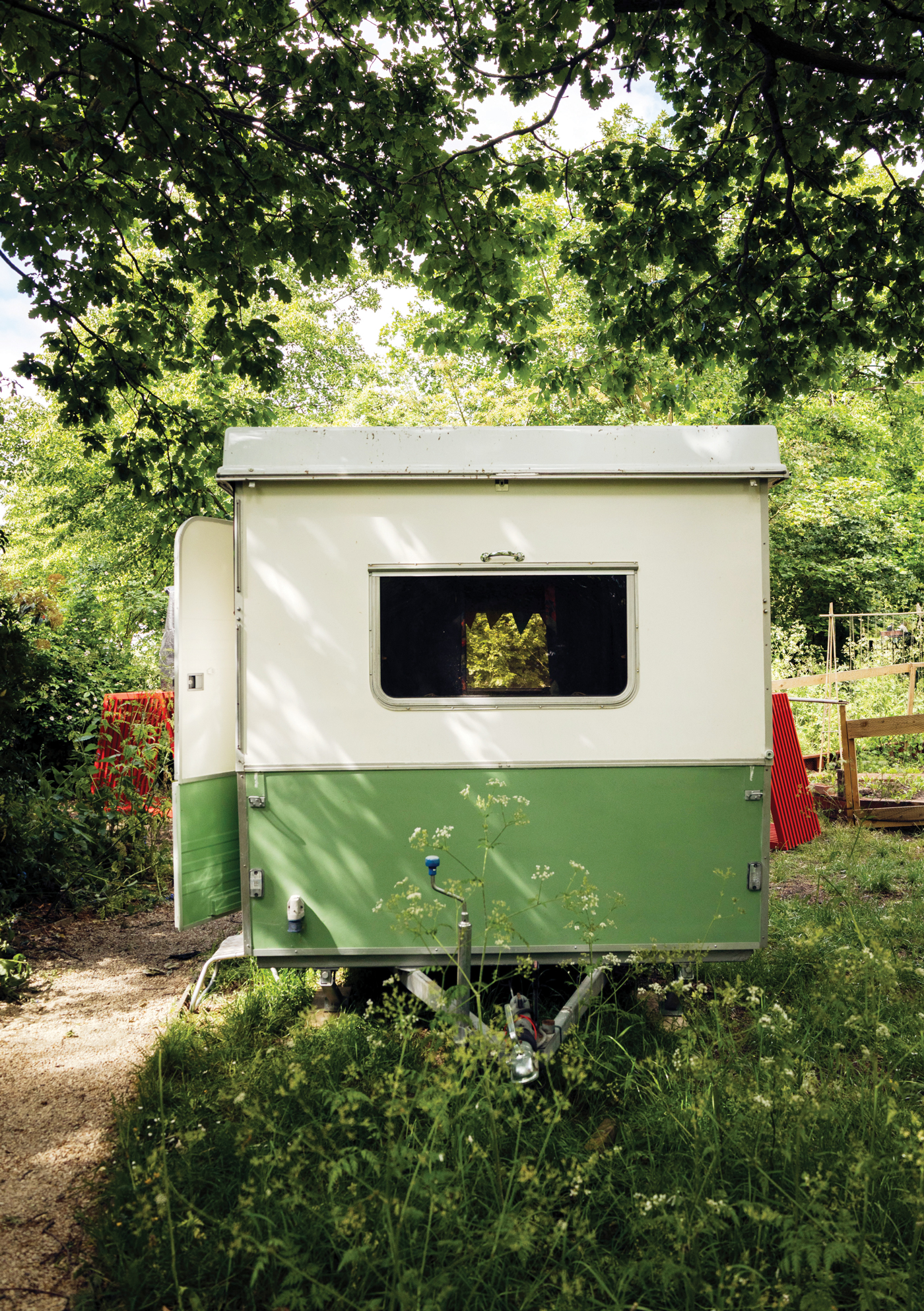
Lees is a Romany Gypsy disabled artist from the Northwest. Her installation – a caravan filled with handcrafted objects – traces the many ways Gypsies and Travellers have been made illegal. The bunting strung inside is hand-stitched, each pennant carrying words from a piece of anti-Traveller legislation, arranged in date order.
Gemma Lees’ bunting. Image: Lydia Lange
The laws begin in 1530, with the Egyptians Act, when Romany people were “assumed to be Egyptians”. The act’s language set a template, penalising “outlandish people calling themselves Egyptians [who] used crafty means”. From there, the bunting follows a near-500-year paper trail: the Witchcraft Act 1735, which framed fortune-telling as fraud; the Vagrancy Act, which specifically named “wandering abroad and sleeping in a wagon or tent”; the Caravan Sites Act 1968, which nominally required local authorities to provide sites while tightening controls on unauthorised encampments. Then the Criminal Justice and Public Order Act 1994, and The Police, Crime, Sentencing and Courts Act 2022, which expanded powers to fine nomadic people.
Making the piece was slow work – Lees has a chronic illness that affects her hands. But she says that was sort of the point: “It was really important for me to put myself literally into the work.”
Three fine china plates – a nod to the Gypsy and Traveller tradition of collecting fine china – reference sensationalist Sun headlines like ‘STAMP ON THE CAMPS!’ The tabloid’s language, Lees argues, maps directly onto the language of the 1500s. A 2023 YouGov poll found around 45% of people wouldn’t want a Gypsy or Traveller living next door to them and roughly 38% wouldn’t want their child to play at a Gypsy or Traveller child’s home.
Gemma Lees’ caravan installation. Image: Lydia Lange
“You’re scared of a creation of the media,” Lees says, of those attitudes. “You’re not actually scared of gypsies and travellers… actually, if you met me and sat down with me and had a chat with me, you probably wouldn’t be so scared and angry.”
Image: Lydia Lange
That fear is also regularly directed at the street homeless – and Turtle says it comes from the same stigma about ‘vagrancy’. Austerity and the housing crisis create a “scarcity mindset, which sort of suggests that some groups are worthy of support and others aren’t”.
It’s important that the Vagrancy Act be repealed, he added: but “it is the tip of the iceberg”.
MoH monitors the number of people who die while homeless every year, releasing the findings each autumn – a reminder of what’s at stake when people experiencing homelessness are treated with contempt. But Turtle is not without hope.
“Communities have always resisted; people have always found ways – through project, through spectacle, through creating networks, through becoming legally literate to resist.”
Buy from your local Big Issue vendor every week – and always take the magazine. It’s how vendors earn with dignity and move forward.
You can also support online: Subscribe to the magazine or support our work with a monthly gift. Your support helps vendors earn, learn and thrive while strengthening our frontline services.
Thank you for standing with Big Issue vendors.
Advertising helps fund Big Issue’s mission to end poverty