But the difference that is most profound since I became a politician is the number of people who don’t have a secure home.
No matter what happened in my life, whatever sidewinds came my way, we had a council house. And that gave me that sense of security where my friends were there, the school was my local school that I went to, my community was the community that I knew, that I grew up with. So it gave me this anchor for everything else, no matter what else was going on, no matter how much chaos there was, that council home was never in question. Whereas many kids today, they don’t have a secure home, they’re in temporary accommodation, they can be moved miles and miles away from the support networks for the family.
JB: Well, I had the opposite. London Irish slums, Notting Hill. My mum and dad liked the drink and the cigarettes more than anything else. Too many children. Homeless at five, because they didn’t pay the rent, homeless at six, homeless at seven, stuck in a Catholic orphanage, came out.
Keep reading the journalism that powers our mission
Register free to continue and learn more about the stories, campaigns and the support we provide, helping people facing poverty across the UK.
We got a council flat. They lived in the council flat until they died, so that was brilliant. By the time we got the flat, I was a raving lunatic and always in trouble with the police.
So from the age of 10, I was on probation and I was in and out of the juvenile courts and all that stuff.
But it’s so incredible what you’re saying, because I’ve never really thought about that [the secure council house being an anchor]. But it’s true. In fact, you’re the first person in politics who has said that to me and, when I think about it, the reason I was unstable was largely because we didn’t know not just where the next meal was coming from, we didn’t know whether we were going to be thrown out.
It was a defeated poverty. Were you surrounded by people who were defeated by poverty or were there people who you felt were getting through it and making the best of it?
AR: There was this sense of: if you grew up where I grew up, my life was already mapped ahead of me.
The police were people that did things to you. Doctors were people that did things to you. The council were people that did things to you. You were not them. It was an us and them. We were very much destined to not do very well.
I was destined to become a teenage mum. I had my son at 16. When I said I was pregnant, it was like: ‘Alright.’ Two of my friends had already had terminations. It was ingrained poverty, a poverty of aspiration for us. But I remember this real sense of community as well.
JB: Let’s be honest, you inherited poverty. I inherited poverty. And one of the big problems that governments have never really tackled is the inheritance of poverty.
AR: But you know what changed for me? This is the other thing, because people will say: ‘Well, Angie, you were always going to do well.’ That’s just not the case. It was opportunity – actual opportunity – that was given. The adult education that I went back into, the Sure Start programme that made me a better mother, that made me understand what I could do. It was the tax credits that allowed me to go to work and I was earning a wage that meant I could pay my rent. It was getting a good job that meant I was able to provide for my son in a way that my mum was never in a position to do.
But even before that, politicians were saying girls like me were getting pregnant to get council houses. They were basically shunning people like me. The taxpayers in the country at that time invested in me. The community around me invested in me.
Read more:
JB: When you were in government, obviously you were trying to address homelessness and poverty and trying to give people opportunity. What did being in government teach you about trying to generate that opportunity and to make change for people?
AR: I think the challenge of government is that it tries to do one-size-fits-all and actually that’s where the work I was doing with local authorities in support for devolution and what they could do for the homeless situation was really important.
I think if you try and do one-size-fits-all, you’ll miss the mark. Actually being able to meet people where they’re at and really drill down into some of the challenges that people face and then work with them on what the opportunities are in their area or the challenges that they face and being more practical and pragmatic about that is important.
If you look at what Andy Burnham has done across Greater Manchester working with the 10 local authorities, for example, they have A Bed Every Night, they do Housing First which is based on the Finland model. You can really start to see how they’re trying to cater for what’s going on in their local area.
I think central government is far too removed and far too siloed.
So working with the community and voluntary sector in local areas is really important. That has a much higher success rate than a central government saying this is what I’m giving, this is my plan and it’s got to be rolled out across the whole of the nation.
JB: I’ve been at this for 35 years and before that I was a campaigner. What I found the most difficult thing about governments of all complexions is the fact that they’re always creating pilots.
They’re always creating, they are always in the pursuit of excellence. But what they rarely do is the mainstream.
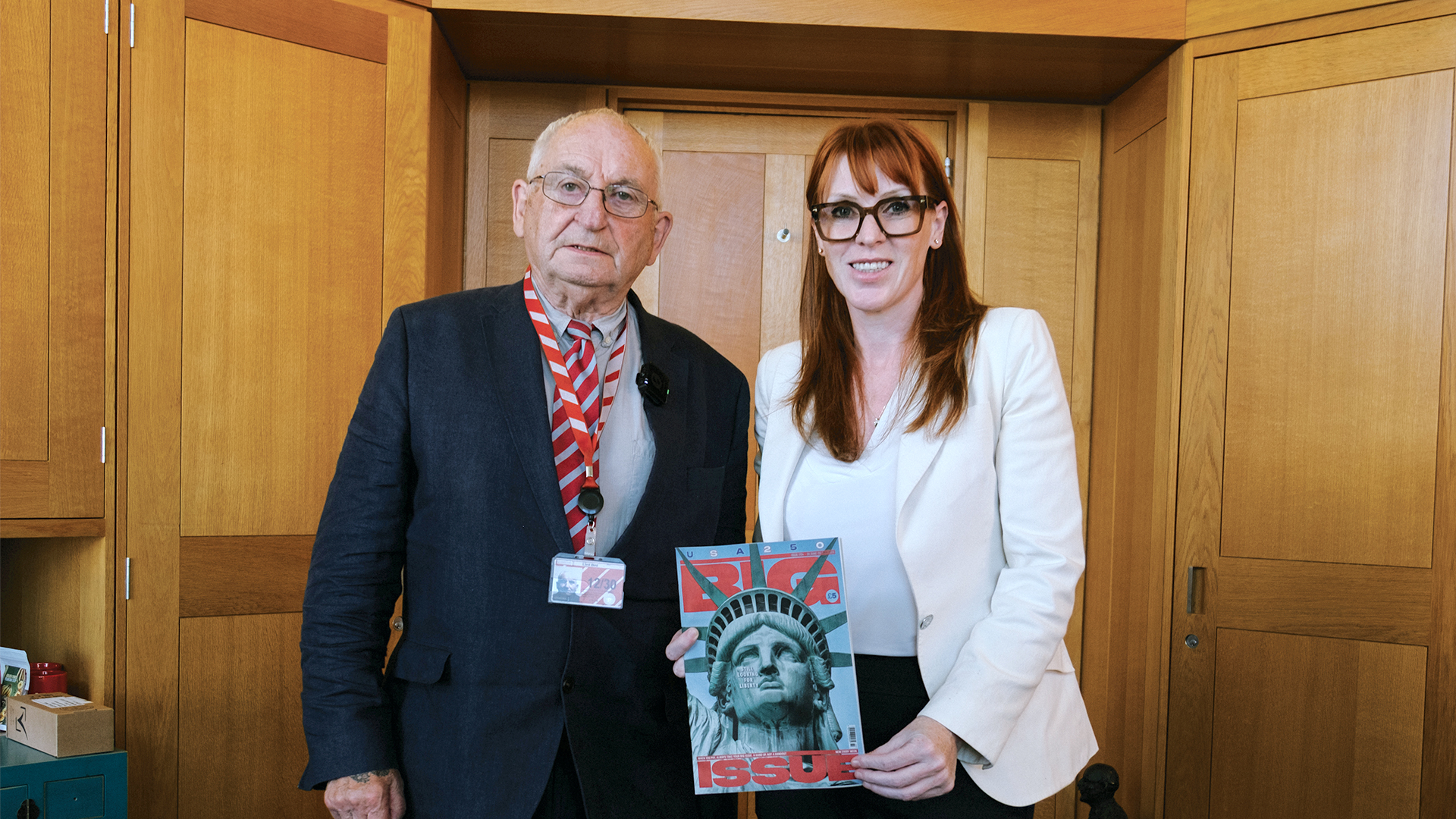
AR: What I like about Big Issue is that it actually gives someone a sense of self-worth and ability and steps that they can choose to take.
It’s a much more respectful way of giving people that sense of self-worth, as opposed to, ‘Actually, you need help, bless you.’
So giving people opportunities and giving people a sense of self-worth, allowing people to get out of that poverty trap, whether it’s in-work poverty or not, or whatever those circumstances are, is what our society is all about.
That’s exactly what my values are about. It’s exactly what people did for me.
JB: But where are the holes? We have four-and-a-half million children in poverty. By 2029, we’ll have lifted half a million of those out of poverty with the end of the two-child cap. I’m interested in how we can get those four million children left behind out of poverty?
AR: It’s the belief the system’s rigged against them at the moment. It’s this poverty trap where you’re just trying to keep your head above the water. We’ve got to deal with the housing crisis because people are paying way too much for their housing now as a proportion of their wages. We need good wages, people need secure jobs, that’s why I made them my priorities.
At the moment the cost of living is too high for the essentials and therefore we’ve got to drive that cost of living down for people. We’re blaming people for their poverty. And it’s not their fault.
JB: You’ve spoken about devolution. What are your thoughts about a No 10 North and what Andy Burnham can do?
AR: I think that we made a really good start on devolution when I was in government. I’m sick of hearing about areas where they call it a lag or a drag. It’s not. It’s an area of opportunity that has been untapped.
I see central government as enablers. They can’t fix everything in all parts of the country. You have to give people power, give people autonomy, give people control over what’s happening in their local areas and they will build those opportunities and we’ll all benefit as a result of it.
JB: Do you think putting a black door with No 10 on it in Ancoats [in Manchester] might help?
AR: I reckon there’s probably a black door with No 10 on it in Ancoats already, if I’m honest. I don’t know if there are any Downing Streets, but I’ve got a feeling I’ve knocked on a No 10 door in Ancoats in my years!
I think that it’s really important having that psychology and that culture that says devolution first. It sets the tone and I tried to do that in government as well around the devolution agenda. We’ve got the Devolution and Empowerment Bill that’s going through parliament at the moment, which is the framework to be able to deliver more and more devolution and devolved powers. I talk about putting rocket boosters up it.
What’s gone wrong with this government? The manifesto was great, but some of the stuff that we’ve delivered that wasn’t in it has been deeply unpopular. Other change that people really wanted to see hasn’t been delivered to the level and to the degree that people expected and they’re impatient for that change to happen.
So I think there is a real opportunity with having that very different mindset and the cultural shift to the way things are done.
Having that cultural shift where power is not concentrated at the top, where it’s actually delivered throughout, is a much more respectful way of being able to deliver the change.
Do you have a story to tell or opinions to share about this? Get in touch and tell us more.
Change a vendor’s life.
Buy from your local Big Issue vendor every week – and always take the magazine. It’s how vendors earn with dignity and move forward.
You can also support online:
Subscribe to the magazine or support our work with a monthly gift. Your support helps vendors earn, learn and thrive while strengthening our frontline services.
Thank you for standing with Big Issue vendors.