Here’s everything you need to know about Labour’s child poverty strategy.
What is the child poverty strategy?
The Labour government’s child poverty strategy is a national plan to tackle levels of child poverty in the UK, created by the Child Poverty Taskforce.
The taskforce was established soon after Labour won the general election. It was led by education secretary Bridget Phillipson and former work and pensions secretary Liz Kendall.
A recent cabinet reshuffle means the new work and pensions secretary, Pat McFadden, was brought onto the taskforce to oversee the strategy in its final stages.
The taskforce has worked alongside children’s charities, experts and families with lived experience of poverty in creating the strategy.
What is the extent of child poverty in the UK?
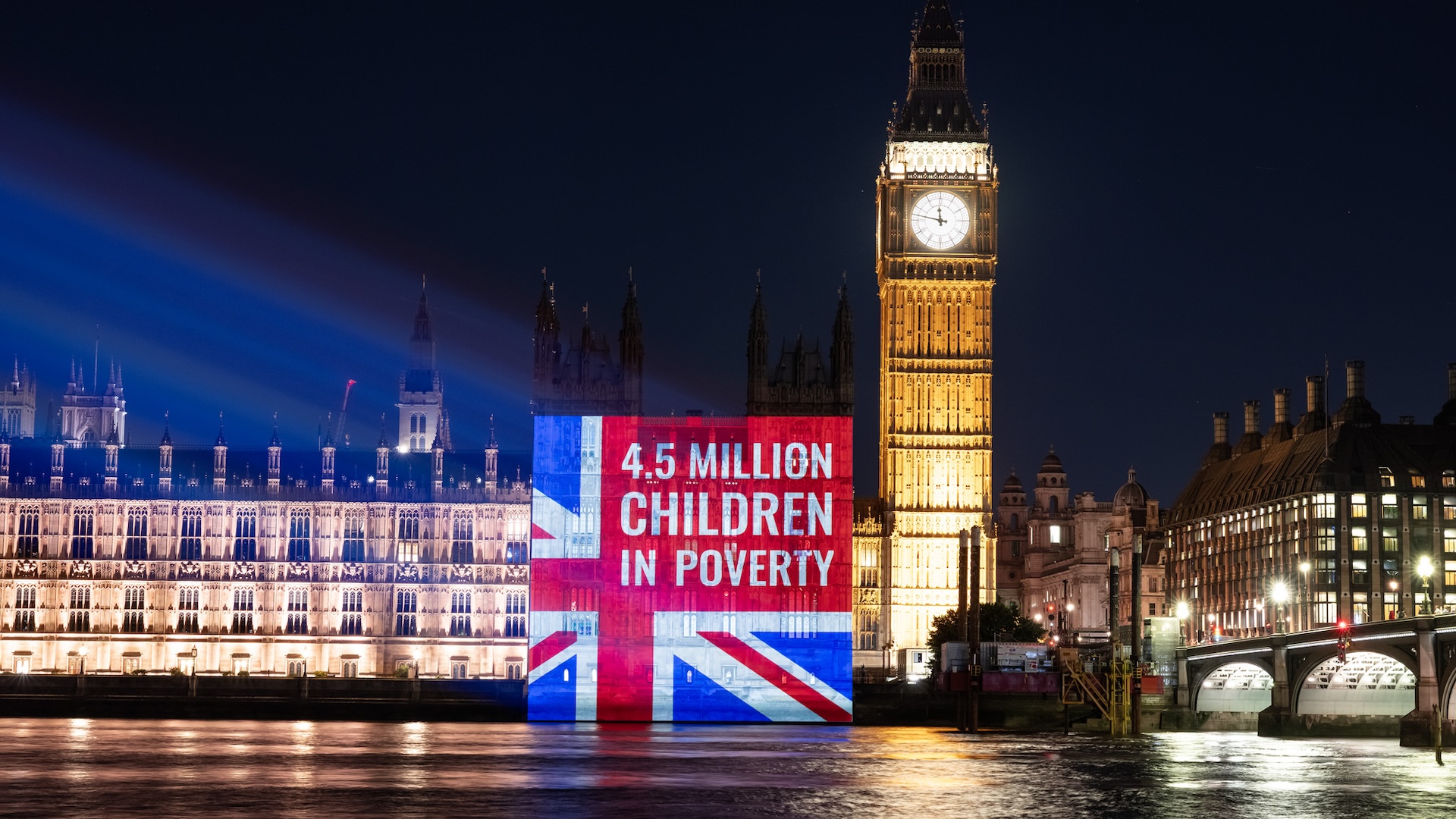
Child poverty has soared in recent years, with 4.5 million children across the country currently living in poverty. That is one in three children facing hunger and hardship.
Advertising helps fund Big Issue’s mission to end poverty
In addition, the government’s latest statistics has found the number of homeless children to have hit record highs, with recent figures finding 172,420 dependent children were living in temporary accommodation in April to June 2025.
The statistics found this crisis to be hitting London particularly hard, with 97,140 children living in temporary accommodation in the capital.
The government’s figures have also revealed that 18% of the UK’s children live in households experiencing food poverty.
Big Issue has reported extensively on the impact of child poverty across the country, with families turning to food banks to survive, parents sacrificing meals so their children can eat, and teachers dipping into their salaries to help struggling pupils.
The Child Poverty Action Group (CPAG) explained that as well as child poverty impacting young people’s health, education, and social and emotional wellbeing, it also comes at a high cost to the economy.
“Children and adults with poorer physical and mental health mean greater demands on the NHS,” the charity stated. “If children and young people do less well at school they have lower skill levels and education levels when they enter the workforce. The effects of poverty mean that extra public services are needed to try to support children, parents, families and society.”
Advertising helps fund Big Issue’s mission to end poverty
What is in the child poverty strategy?
The government had already confirmed an end to the two-child benefit cap from April. The policy, which impacts more than 1.6 million children across the UK, means families are denied extra universal credit or tax credits for their third child or any subsequent children born after April 2017.
The government has announced it will be bringing in new measures to curb the cost of living, helping families buy more affordable baby formula.
It claims parents will save up to £500 a year through stronger guidance on the way baby formula is displayed to ensure that parents can choose the most affordable option.
The government has also confirmed a £18.5 million investment this year in infant feeding services and breastfeeding through the Family Hubs programme, as well as an extension to the National Breastfeeding helpline to provide round-the-clock support for families across the UK.
The child poverty strategy also sets out support for working families to stop the “unlawful” placement of families in bed and breakfasts beyond the six-week limit.
The government has confirmed an £8 million investment in Emergency Accommodation Reduction Pilots in 20 local authorities which have the highest use of B&Bs for families facing homelessness. It will continue the programme for the next three years.
Advertising helps fund Big Issue’s mission to end poverty
Also laid out in the strategy, the government will make it easier for new parents on universal credit to return to work by extending eligibility for upfront childcare costs for those returning from parental leave.
Families on universal credit will also get support for childcare costs for all their children.
The child poverty strategy comes in addition to the government’s existing policies on child poverty, which include rolling out free breakfast clubs, expanding free school meals to all families on universal credit, and introducing a cap on the cost of school uniforms.
What else could have been in the child poverty strategy?
Charities have called for a number of other issues to be included in the strategy, including raising the standard rate of universal credit so that people can afford the essentials, and an end to the benefit cap, which limits the amount of benefits households can get.
Founder of the Big Issue Lord John Bird had urged the government to go further by introducing legal targets to hold itself accountable on pulling children out of poverty. Big Issue was backed in this campaign by 67 children’s charities and campaigners.
Bird said: “This strategy is a disappointing continuation of the old Westminster folly of trying to drive seismic structural change with small-scale projects and initiatives.”
Advertising helps fund Big Issue’s mission to end poverty
“The absence of ambitious targets to propel forward this government’s mission to reduce child poverty is deeply concerning. In this challenging economic climate, there is every reason to worry warm words will not translate into tangible progress,” he added.
Barnardo’s has also called for targets, as well as for the government to implement auto-enrolment for free school meals. Save the Children had wanted to see a triple lock on child benefits, modelled on the pensions triple lock.
Action for Children had suggested ensuring the child-related element of universal credit rises above the rate of inflation and increasing access to benefits for those who are eligible, which it said would reduce child poverty by 1.2 million by 2030.
The charity claimed that if the government were to reduce the child poverty rate by 1.2 million by the end of the decade, the benefits to society would be worth at least £164 billion.
Do you have a story to tell or opinions to share about this? Get in touch and tell us more.
Reader-funded since 1991 – Big Issue brings you trustworthy journalism that drives real change.
Advertising helps fund Big Issue’s mission to end poverty
Every day, our journalists dig deeper, speaking up for those society overlooks.
Could you help us keep doing this vital work? Support our journalism from £5 a month.