The US-Iran war creates a ‘perfect storm’ for the UK’s food supply ‘hitting the poorest hardest’
The US-Iran war is a “perfect storm” that will impact struggling families in the UK, a food poverty charity has explained
by:
8 Apr 2026
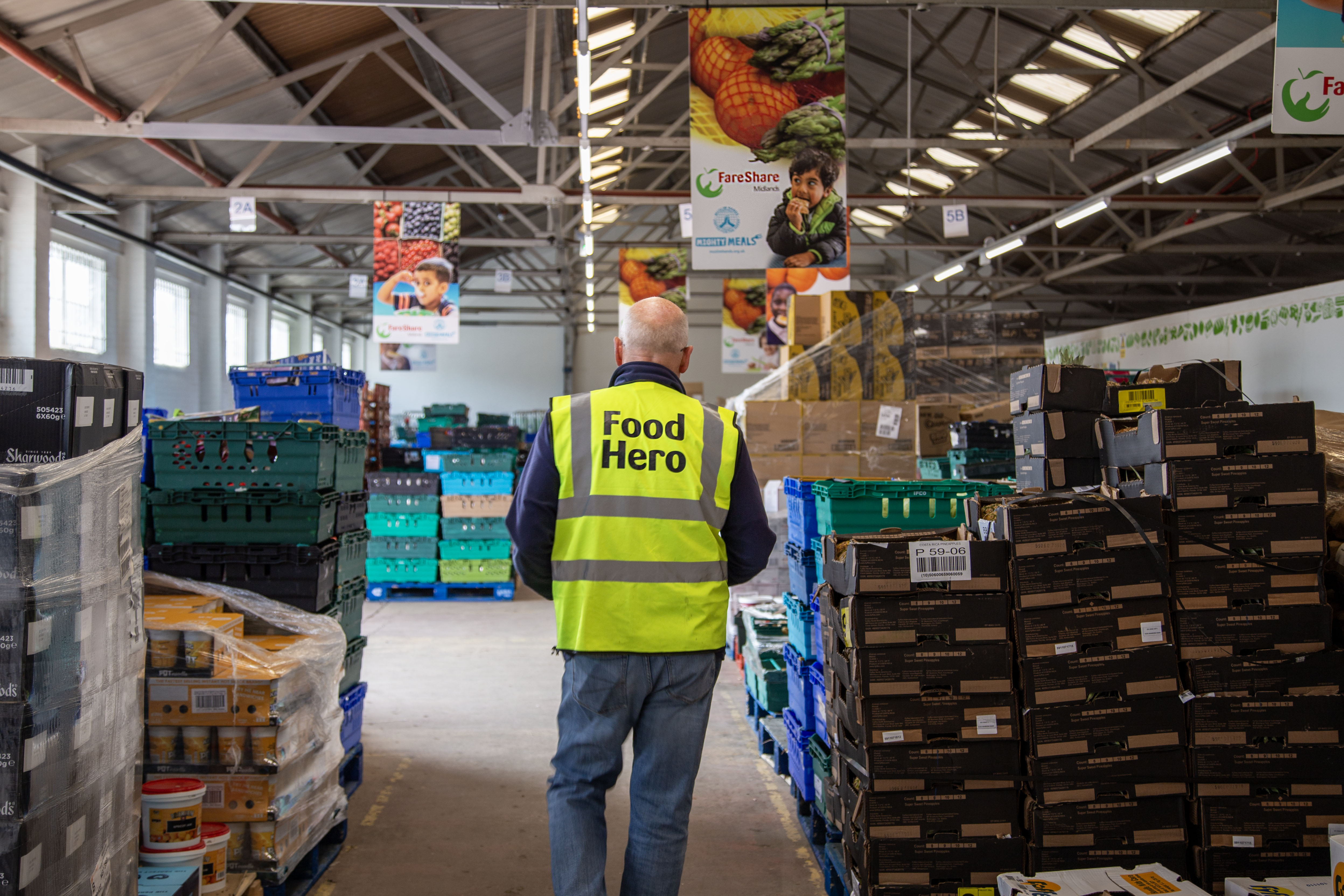
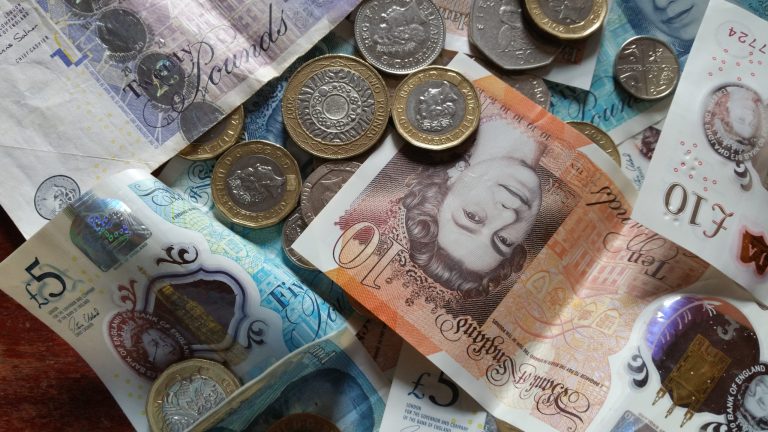
Food poverty charities warn that the Middle East conflict will impact hunger in the UK. Image: FareShare
Share
A food poverty charity has warned it is already seeing the impact of the US-Iran war on families in the UK who are “struggling to put food on the table”.
The various impacts of food inflation, fuel inflation, and the price of goods like fertiliser have caused a “perfect storm” for the poorest in the UK, meaning charities are having to work even harder in order to support those experiencing food insecurity.
Food poverty charity FareShare explained to the Big Issue that food inflation has already had an impact on British families, many of which were stretching their budgets as far as they could before the conflict began in February.
“The Food and Drink Federation, which represents the food industry, shares forecasts for food inflation – yesterday they revised it up to 9%. Food inflation is already 38% up on pre-Covid levels,” Charlotte Hill, CEO of FareShare, told the Big Issue.
“Whether that’s because of the increase in energy costs… increase in fuel costs, fertiliser can’t get through [the Strait of Hormuz] because of what’s happening in the Middle East, we’ve seen fertiliser costs massively go up, we’ve seen logistics costs of moving food around massively go up. Effectively, all of our costs are going up.
“Tragically, we’re about to see the impact of food inflation and fuel inflation hitting the poorest hardest, so our demand is going to go up. It genuinely is a perfect storm, and we are starting to see signs that we saw in Covid or post-Ukraine wa, of the impacts that it’s going to have both in terms of our costs, and the communities we support in terms of their struggling to put food on the table.”
Advertising helps fund Big Issue’s mission to end poverty
The way FareShare works is by “rescuing” surplus food from every part of the supply chain that would normally go to waste, and redistributing it to around 8,000 small, grassroots charities, homeless shelters, domestic violence refugees, food banks, basically anyone who uses food for social good.
The charity, which distributed around 150 million meals in the last year, said it has seen “massively increasing food insecurity” in the UK in the past few years, with around 14 million people living in food insecurity, 3.5 million of which are children.
Hill told the Big Issue that the organisation is coming under huge strain due to the ongoing cost-of-living crisis and the US-Iran war, with the war not only driving up food inflation – increasing demand on food banks – but also by raising the costs the organisation needs in order to run.
“We, as a charity, are also hit by national insurance contribution rises,” Hill said. “We pay them in the same way every other employer does. We’re also a proud Living Wage employer and, as wages go up, we have to make sure our own colleagues are paid the right amount to be able to survive with cost-of-living increases. We’ve got our own fuel costs, we have to get the food all around the country.”
She continued: “Inflation is hitting us, but all of the very small charities, the 8,000 charities we take our food to, about a third of them have less than £10,000 a year to spend. They’re often community organisations, often run by volunteers, supporting the most vulnerable in their communities, and if we can’t get food to them, they won’t be able to deliver their service.”
Advertising helps fund Big Issue’s mission to end poverty
#People who never thought they’d be in food insecurity are impacted’
Hill explained that as a consequence of the war’s impact on fuel prices, against the backdrop of the continuing cost-of-living crisis in the UK, people who “never thought they’d be in food insecurity” are struggling, especially during the Easter holidays which means children may not be able to access free school meals.
“You imagine, if you’re a person who is in work, but on a low wage, and you’ve got to put fuel in your car to get to work, and you’ve got to pay your increased rent or mortgage, and your fuel costs are going up, and probably your rent and mortgage has gone up in recent times or is about to again. You’ve got to pay increased energy costs, and you’ve got no choice but to pay those things,” she explained.
“The only elastic part of your outgoings once you’ve paid all of those things is your food, and so what we are hearing from people now is people who never thought they’d be in food insecurity… simply cannot afford to put food on the table for themselves and their families once they paid all those other big costs that were going up.”
Many families across the UK will feel the effects of food inflation (FareShare)
Hill told Big Issue that some food suppliers and farmers who have been impacted by increasing fertiliser and fuel costs are estimating that food inflation caused by the conflict could last “through to at least 2028”.
She explained that during this crisis, the UK must use every bit of food we create, which is where FareShare’s distribution of surplus food is so important.
“We are working alongside the government on trying to look at a longer term plan of how we can, first of all, end avoidable food waste, but where it’s not avoidable, how can we treble food redistribution,” she said.
Advertising helps fund Big Issue’s mission to end poverty
“They’ve done some brilliant work with us. We want to work with government on things like subsidies for farmers and tax incentives to get food into our system and mandatory food waste reporting. All the things the government could do that would massively reduce the friction of getting the food into our system, and then we could get it out to thousands of charities who could do social good with that food.”
Hill underlined that despite the government’s work on food insecurity, the US-Iran war has caused a “food crisis”, and if nothing is done about it, “it’s the poorest who will suffer.”
Rod Williams, managing director of Crest Co-Operative in North Wales, a charity which receives food from FareShare, explained that the conflict in the Middle East has “already had a real impact on our service”.
“Whilst we remain committed to supporting those in most need in our community, the cost of food has increased, and the costs of our collection network, collecting donated good from across Conwy County has also increased sharply,” he said. “When you combine this with increased fuel costs and the ongoing cost-of-living crisis, we are seeing an influx of new people in need of our services.”
“It is clear to me that if the conflict does not end soon, or support for these services do not increase, then many foodbanks may struggle to continue to meet the demand with these increased prices,” Williams said, adding that Crest has set up an evening foodbank service to “cope with the increased demand.”