The financial world has reacted with euphoric celebration to SpaceX’s recent stock listing. Yet, as market onlookers cheer Elon Musk’s personal fortune crossing the historic $1 trillion threshold, we are forced to confront an uncomfortable, vital truth: the emergence of trillionaires is not an economic triumph, but a structural crisis and the defining political challenge of our era.
There is a fundamental tension between extreme wealth and democracy. Beyond a certain point, capital ceases to be money and becomes power: the power to shape markets, dominate public debate, influence governments, finance elections, and weaken democratic institutions. No democratic society can remain healthy while allowing such vast concentrations of private power.
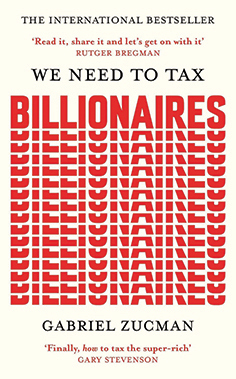
Buy the Gary Stevenson guest-edited edition of the Big Issue magazine now
The speed of wealth concentration is staggering. Since the 2008 financial crisis, billionaire fortunes have grown at an unprecedented pace. Between March 2024 and March 2026 alone, global billionaire wealth increased by around 40%. When Forbes first tracked billionaires in 1987, 140 billionaires collectively held wealth equal to about 3% of world GDP. Today, roughly 3,000 families control assets worth around 17% of global GDP.
After the Second World War, it briefly appeared that such concentrations of wealth had become relics of history. Thanks to the institutionalisation of progressive income and estate taxes – which pushed top marginal rates near 100% in both the United States and the United Kingdom – the oligarchical fortunes of the past had largely dissolved. But it’s now coming back in full force.
The United Kingdom illustrates this transformation. In 1989, the inaugural year of the Sunday Times Rich List, the top 0.001% of wealthiest British households – a mere 200 families – held wealth equivalent to 5% of UK GDP. Today, that identical sliver of the population commands an astonishing 25% of GDP. It means that if they spent all their wealth, these 200 families could buy the equivalent of a fifth of all the goods and services produced in the UK in a given year. It is a deeply alarming paradigm, particularly when juxtaposed against data from the World Inequality Lab showing that the least affluent half of the British population splits a microscopic 4% of national wealth.
Some argue that billionaire wealth is merely ‘paper wealth’. This is a dangerous delusion: extreme wealth is, in fact, always very real. Consider our first trillionaire. Elon Musk’s automotive venture, Tesla, did not record a profit for nearly two decades after its 2003 founding. Yet, this paper-heavy valuation did not prevent him from leveraging his wealth to purchase Twitter for $44 billion, weaponising the network to advance specific political agendas, and effectively engineering a presidential election outcome. This same unchecked leverage allows Larry Ellison to buy up major television networks and social media platforms, just as it allowed billionaire donors to orchestrate 20% of all political funding in the 2024 US election cycle.