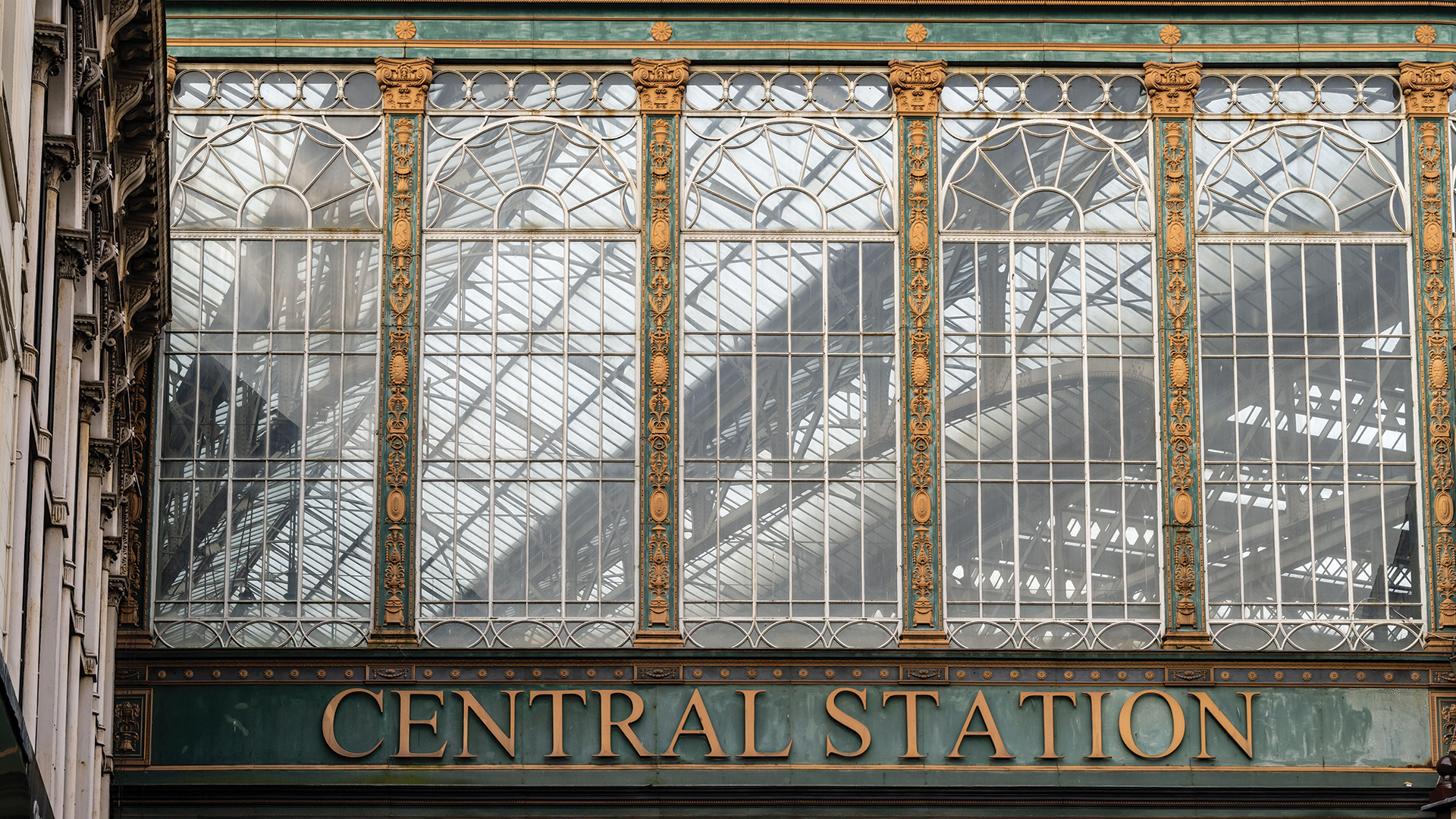
There are 48,000 individual panes of glass in the roof of Glasgow Central Station. The area covers 2.2 square miles. It is a remarkable feat of Victorian engineering. A few days ago, it looked like this roof, and so much more of one of the great stations of Europe, would be lost to fire.
That it remains intact is largely down to the incredible work of firefighters and, they say, a gap between walls of just a few feet.
A fire, that started in a vape shop that sits in a building adjacent to the station, took hold on 8 March. It raged for hours and destroyed the entire B-listed block on Union Corner. From where I sit in Big Issue HQ I can look out the window and straight down Renfield Street into the site of the fire. The ragged wall, jutting like broken teeth, is all that is left of what was a key Glasgow landmark, a place of direction and anchor. It shocks each time I look. The thought of how close we came to losing that station is chilling.
Glasgow Central Station is an incredible place. It’s not just the scale of it – 17 platforms, the busiest in Scotland and one of the UK’s busiest outside London – it’s what it represents. Glasgow is a rail city. The train network webs out, from Central – alongside Queen Street it’s one of the two main terminuses – to towns and villages in the west and south, some east. It establishes the pulse of the city.
A recent upgrade to just one line – that runs to East Kilbride – cost some £144 million, a sign of the growing needs of a growing population out in the suburbs to be carried into the heart of the city for work and for living.
It provides a west coast artery to London too. And once, not so long ago, the boat train would take people to Stranraer and back across to Ireland, the seat of family for so many in and around Glasgow.