Books are also being given to libraries, bookbanks and prisons.
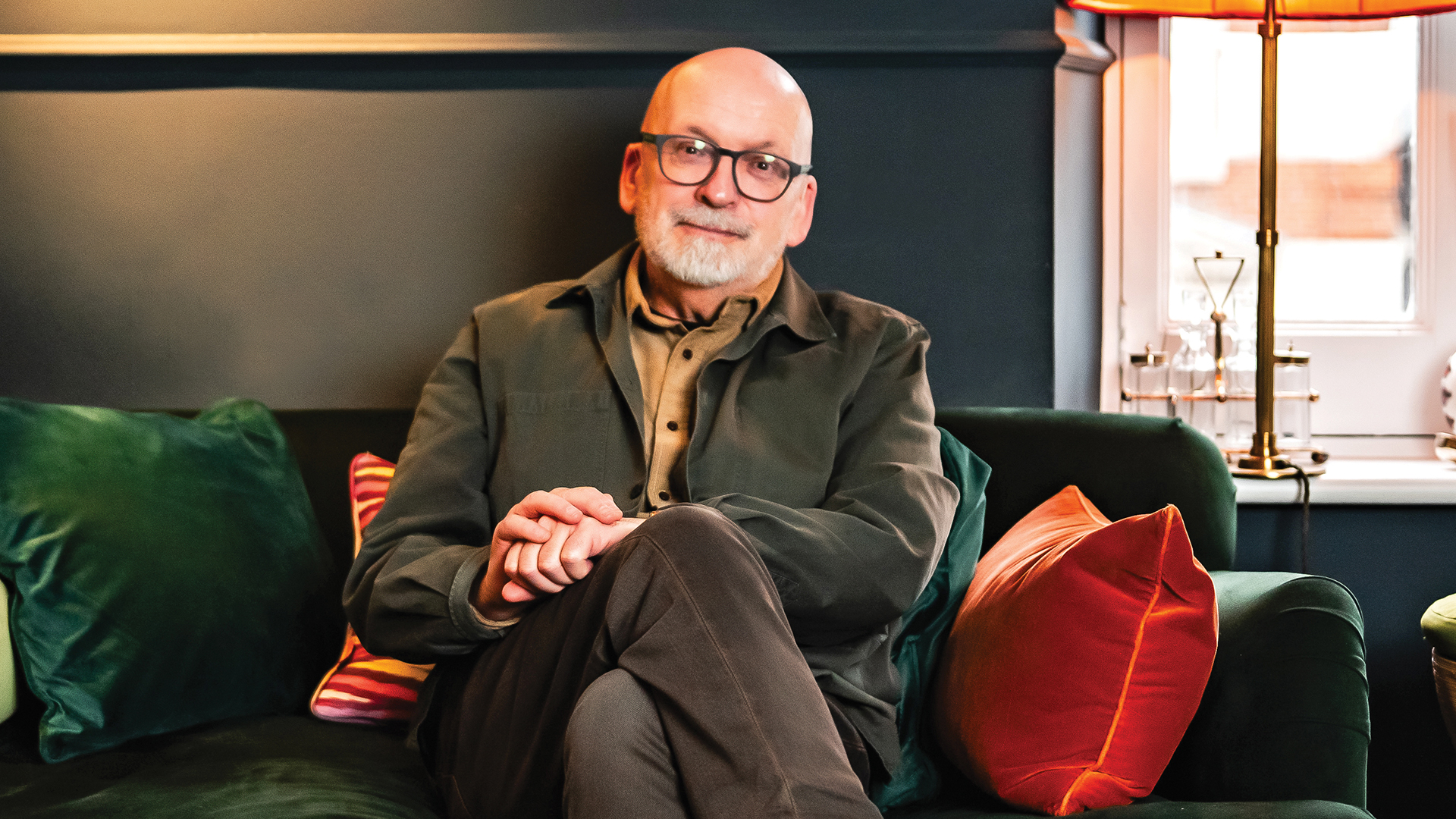
“Most people come up against doors in life. Particularly people from working-class backgrounds. What I’m about, politically, is trying to include as many people as possible.
“And that’s what Quick Reads is all about. They’re for people who don’t ordinarily read books.”
Keep reading the journalism that powers our mission
Register free to continue and learn more about the stories, campaigns and the support we provide, helping people facing poverty across the UK.
‘I was eating books’
The writers range from David Szalay, last year’s Booker winner, when Doyle chaired the judging panel, to Japanese novelist Yõko Ogawa.
“It’s an invitation to read,” says Doyle. “There’s something really nice about being able to read a book relatively quickly.
“And I would imagine, if you’re somebody who isn’t used to reading, that some books can be quite intimidating because of the sheer heft of them. Or if the font is tiny. Or if you flick through it and it just seems to be one interminable paragraph.
Advertising helps fund Big Issue’s mission to end poverty
“Quick Reads is like dipping your toe in the water of literature, with some of the barriers that might put people off removed.”
Those barriers are real and can rise up early in life. A difficult time at school, undiagnosed dyslexia, growing up without books and stories as part of everyday life, there can be many reasons we decide reading is simply not for us.
“I was a secondary school teacher myself for 14 years so I can think of countless reasons why people would think reading isn’t for them,” Doyle says.
“I was very, very lucky. I was in school a few years when my mother noticed that I didn’t seem to be able to read. If it had gone on a little longer, given this would have been the 1960s, I could have been written off as being – and I’m using the words that would have been used then – a dunce or stupid.
“But she realised I wasn’t reading and taught me to read. I have vivid memories of her using comic books, The Beano and The Dandy, and then beginning to take off and read by myself. My mother’s gone now, and it’s a brilliant memory to have, because every time I pick up a book, it’s there.”
Since learning to read at his mother’s elbow, Doyle has been immersed in the written word. As a young boy he was a devotee of Just William: “I think it deserves a place in the classics. It’s a remarkable reading experience, the world of the boys seemed so bang on. All the adults were idiots, which tallied with my own assessment when I was 10.”
Advertising helps fund Big Issue’s mission to end poverty
The first recognised classic he recalls being transfixed by was Charles Dickens’ A Tale of Two Cities. “Once my mother taught me to read, I was eating books,” he says. “Somebody gave it to me for my birthday and I remember having doubts. I didn’t think books were a present – you couldn’t play with them. But once I started reading it, I was hooked.”
He still is.
“I read voraciously. I read for hours in the morning before I start work. I read at any opportunity. One reason I’m a user of public transport is because I can read when I’m on the train. If I could get away with it, I’d read while I was driving.”
Read more:
‘Your life might be in here somewhere’
The short story collection Doyle has put together is an invitation to dive into the world of words. And everybody is welcome. Reading is, he says, an inclusive experience. All of life is in these pages – tears in the kitchen, adultery in a long marriage, water and memory, warfare and love, loss and longing, ageing.
“A lot of people might feel there is nothing about their world in books,” says Doyle.
Advertising helps fund Big Issue’s mission to end poverty
“But my story in this, The Buggy, is about a man who has aged and is remembering a time when he was pushing a buggy with his own children. It’s about his sense of feeling a bit redundant, a bit old, yearning for fatherhood again. I’ve been told by a lot of younger women, ‘oh, it’s just like my dad’.
“The other stories have these access points too. Afternoon At the Bakery is set in Japan, but at a counter in a bakery. We all stand at counters every day. We all have moments of anxiety. So the stories might alert readers to the fact that, actually, your life might be in here somewhere.”
Is this the case across the board in literature today?
“In terms of age, gender, background and geographical spread, things have improved.
“When I started out in publishing, it was a world of men and the occasional woman. That’s not the case
any more,” says Doyle.
“I think there’s more varied representation. I don’t know how you measure these things, but I’m thinking of Shuggie Bain, a recent winner of the Booker Prize by Douglas Stuart, a brilliant depiction of working-class life.
Advertising helps fund Big Issue’s mission to end poverty
“And last year’s winner Flesh is a brilliant depiction of the life of an immigrant and working-class life and ageing. Nobody wants to age, but from a writing point of view, it’s a brilliant source of inspiration.”
Doyle also hopes these short stories can be a route into a new-to-you author’s work.
“I think to this day about a short story I read by Joyce Carol Oates about somebody driving into a tropical storm in one of the southern states of America, going against the advice of the weather people,” Doyle recalls.
“I read it about 25 – or even 30 – years ago. I remember there was a baby on my shoulder when I was reading, and that’s not yesterday. It was absolutely riveting, like watching a brilliant film, a hugely satisfying, complete experience. And it was only about 15 pages long. If I’m feeling that way when I read this short story, why wouldn’t I feel it when I read her other work?”
Happily, there were a few hundred books by Oates to choose from after first reading Upon The Sweeping Flood, the short story that so entranced Doyle. And there are well in excess of 50 novels by the assembled authors in All Around the World to get stuck into – alongside many more short story collections and works of non-fiction.
Where would he start with his own work? If he had to pick just one – would it be The Woman Who Walked into Doors (1996), the first of his Paula Spencer novels, still as powerful as ever 30 years on? Or perhaps, A Star Called Henry (1999), following a young man from Dublin to Depression-era USA? Nope. He picks a comic novel with a big heart, looking at class, community and family, published in 1990, adapted into a film in 1993 and brought to the stage in 2018.
Advertising helps fund Big Issue’s mission to end poverty
“Even if the house is on fire and all the first editions are gonna go up in smoke, would I be grabbing a book?” he asks. “Well, the children don’t live there any more, so I’d feel less guilty about running out of the house clutching a book. So if I was only allowed to grab one book that represented what I do, I think it’s probably The Snapper.”
The aim is to persuade or remind us that great literature should not be exclusive or intimidating – and hundreds
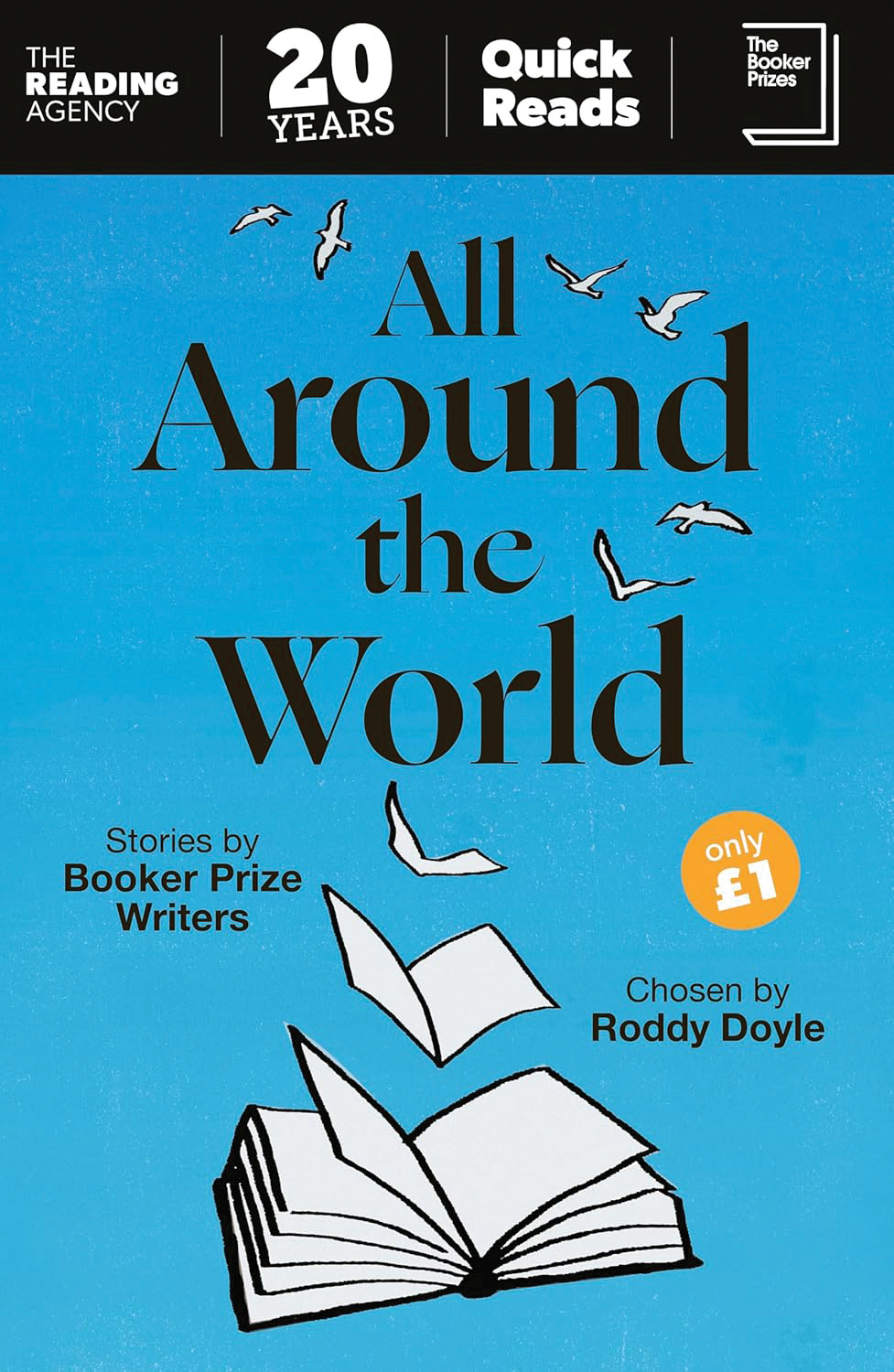
All Around the World: Stories by Booker Prize Writers is published by Vintage, and is out now for £1 from bookshop.org and Waterstones retailers.
But if you’re a Big Issue reader you can get a copy absolutely free.
Do you have a story to tell or opinions to share about this? Get in touch and tell us more.
Advertising helps fund Big Issue’s mission to end poverty
Change a vendor’s life.
Buy from your local Big Issue vendor every week – and always take the magazine. It’s how vendors earn with dignity and move forward.
You can also support online:
Subscribe to the magazine or support our work with a monthly gift. Your support helps vendors earn, learn and thrive while strengthening our frontline services.
Thank you for standing with Big Issue vendors.