Terry Butcher: ‘I feel sorry for homeless veterans’
The former England captain was fearless on the pitch, playing in three World Cups. Now he’s harnessing his grief over the loss of his son to bring hope to others
by:
12 Jun 2026
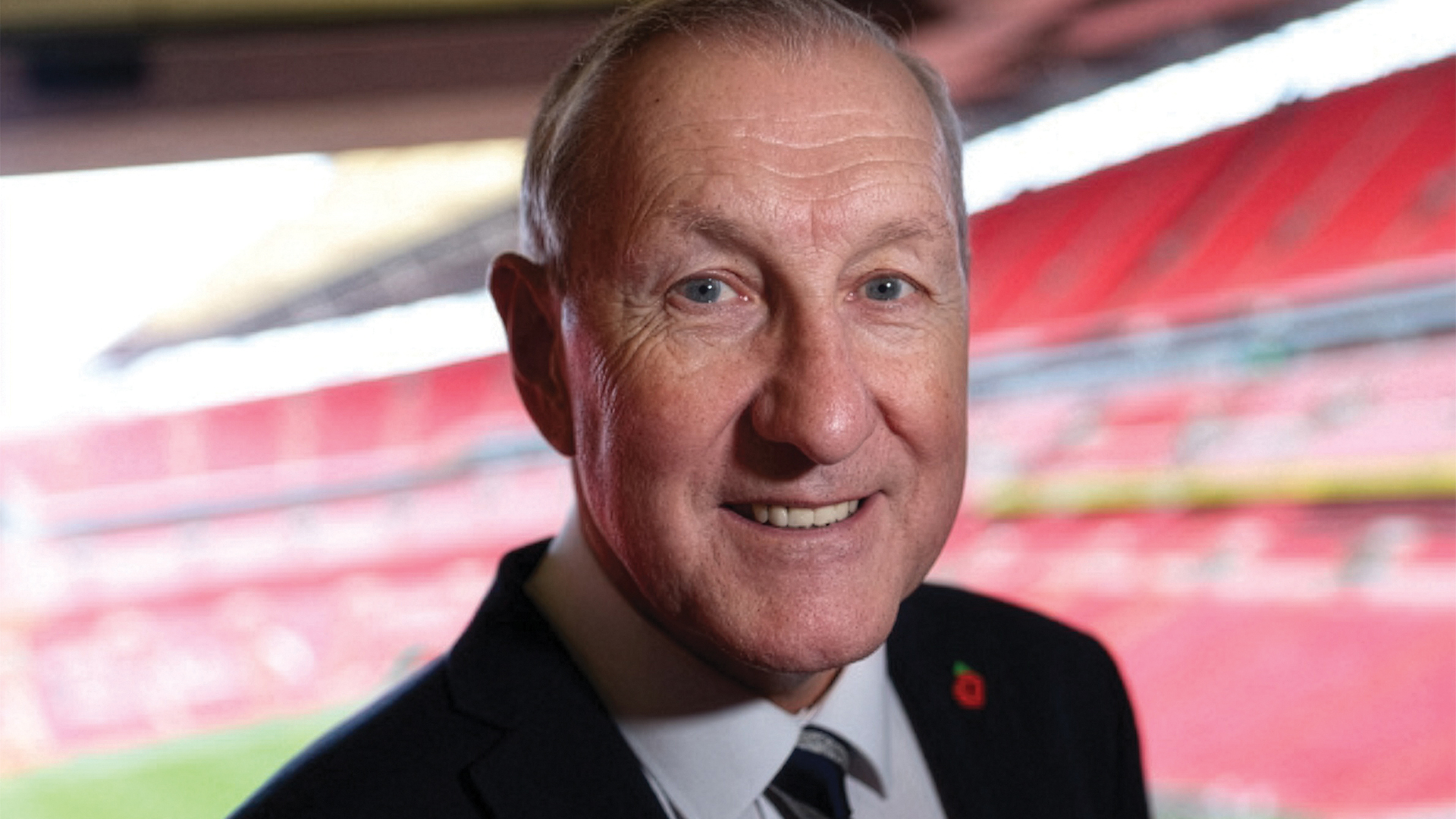
Former England captain Terry Butcher. Image: Isabel Infantes / Getty
Share
Terry Butcher was born in December 1958 in Singapore. He joined Ipswich Town in August 1978 and went on to make 271 appearances for the team, winning the UEFA Cup in 1981. During this period, he became a regular in the England national team – he’d eventually play 77 times for his country between 1980-1990, appearing in three world cups. In 1986, Butcher joined Rangers, where he won the Scottish Premier Division championship three times. He became player-manager of Coventry City in 1990 and had further management stints at clubs including Sunderland, Motherwell, Inverness and Hibs.
Following the 2017 death of his son Christopher, an army captain who served in Afghanistan and suffered with severe PTSD, Butcher has become a committed advocate for veterans’ mental health. In 2024, Butcher became Patron of Combat2Coffee and a new documentary Butcher: Invisible Wounds tells his story.
In his Letter to My Younger Self, Butcher looks back on his playing career, family life and charity work.
At 16, I was very shy. I was gangly and introverted. I was a nightmare. My hair was all over the place, my dress sense was crap, I didn’t have many girlfriends – I was just very shy and had no confidence. It’s not far away from what I am now.
My mother worked in the careers office and she couldn’t work her magic on me at all. I didn’t know what I wanted to do. I ended up applying for a course at Trent Polytechnic to do quantity surveying but didn’t have a clue about it. I’d just heard there were five girls to every boy there. Luckily football came along.
I was put up a year when I was at junior school because I was quite clever – but that wore off. I went to the grammar school and played schoolboy football and for Lowestoft Town under-15s and eventually made it into the Suffolk County side. But I didn’t have any scouts looking at me or any trials until I was 17. I got a trial at Norwich City but I hated Norwich. When I had to put the Norwich City kit on, I felt sick and had the worst trial ever. Luckily, I got a trial at Ipswich a few weeks later. It was the summer of 1976, the hottest summer ever, so the pitches were bone hard. I had cuts all over my knees and arms but after three weeks, I became a professional footballer on £50 a week. It had been my dream. But I never had the confidence to say. I didn’t want anybody telling me I wasn’t good enough.
Advertising helps fund Big Issue’s mission to end poverty
Advertisement
I was totally shaped by my family. My father taught me about manners, about morals, and about standards. He was quite strict, but he loved English – he loved words and writing. So he made me spell five words correctly at the dinner table every night. And it worked.
I’m the odd one out in my family. My father was in the navy, my eldest son Chris was in the army, and my second son Edward is a firefighter in the RAF, so we are quite a military family. If I met my younger self, I would say, get all your qualifications and try to be more assured – because I still lack confidence today. I’d tell him to travel more and maybe join the forces. Because then you’ll get trained, you’ll get discipline. It’s a great organisation to be with.
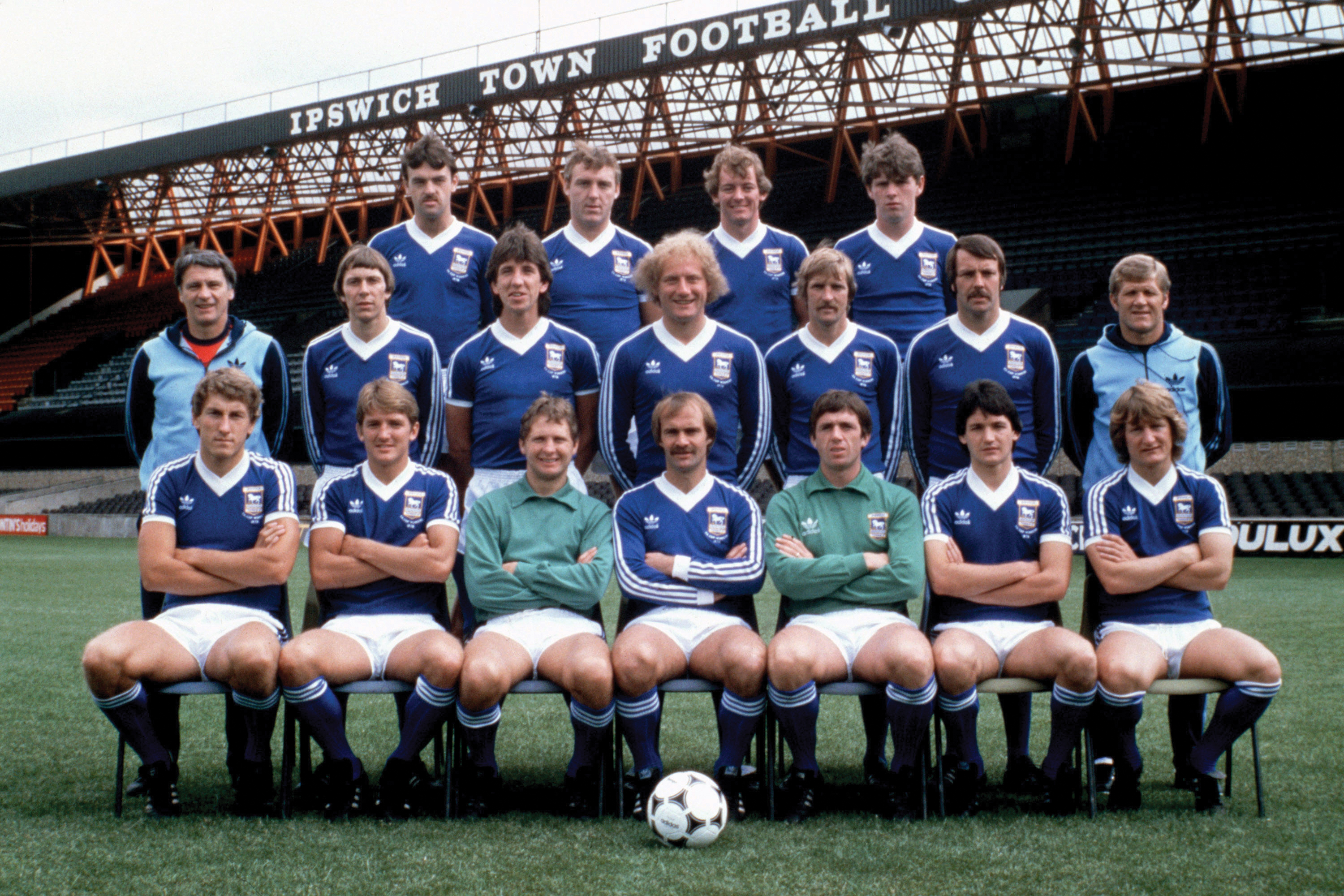
Terry Butcher, front left, in 1980 with the Ipswich squad at the start of the season that they won the UEFA Cup. Image: PA Images / Alamy
I was very laid back so being an animal on the pitch was alien to me. If I was to talk to my younger self about being a footballer, I’d say you’d better learn to be aggressive. It took me a while to adopt that attitude because my dad brought me up so that if you knock someone over, you pick them up and say sorry. You couldn’t do that as a footballer. So I had to change my style and persona on the pitch.
Keep reading the journalism that powers our mission
Register free to continue and learn more about the stories, campaigns and the support we provide, helping people facing poverty across the UK.
When I joined Ipswich Town, Bobby Robson was manager. He didn’t mean to be funny but he always was. He was strict, wanting us to tuck our shirts in and keep our socks up, and very clever – he knew all about people and knew which buttons to push. He’d give me lots of rollickings when we were with England because I was the person he knew best. If the other players saw him doing that to me, they knew they might get it as well.
My younger self would think I was joking if I told him about my playing career. He wouldn’t believe it for a second. He’d have said, well, that’s never gonna happen. Winning a major trophy with Ipswich and playing for England would have been so exciting for him. Because that’s everybody’s dream when you go to a football club as a young kid.
Advertising helps fund Big Issue’s mission to end poverty
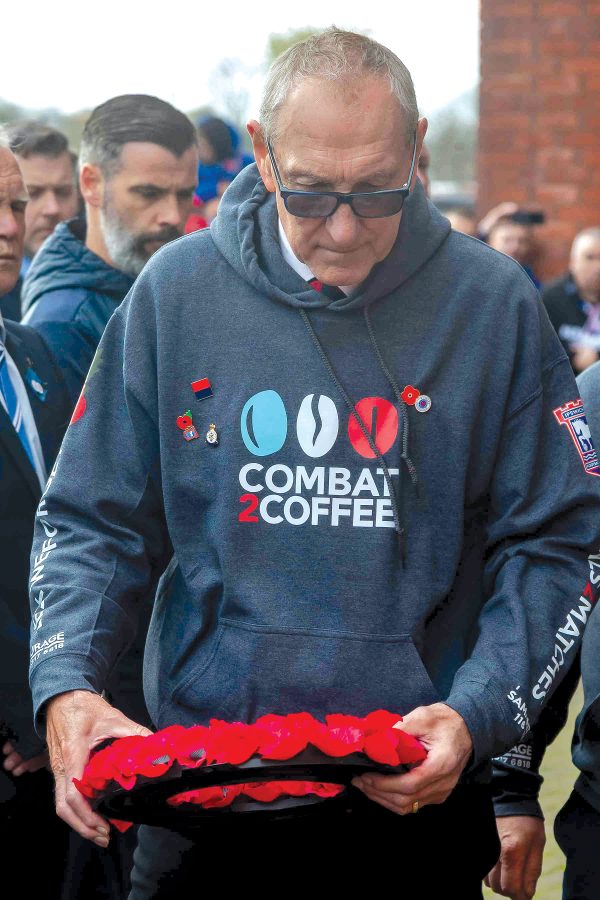
Terry Butcher laying a wreath as part of his work with charity Combat2Coffee. Image: Colin Poultney / ProSports / Shutterstock
Going to the World Cup in 1982 was so far beyond my wildest dreams. I had a serious nose injury in January so didn’t even think about the World Cup squad. I just wanted to get back playing for Ipswich after five weeks in hospital. Back then, you found out you were in the squad on Ceefax – it was barbaric. But I got into the squad, started the first match and had a hand in one of the fastest ever goals in the World Cup – well, not a hand, that was Maradona in 1986, but a head in Bryan Robson’s goal [against France after 28 seconds].
In 1986, I’d just been relegated with Ipswich so there was a big ‘for sale’ sign over my head. The club needed to sell me to pay the debt on their new stand. I felt so disappointed by Maradona’s handball incident [at Mexico 86]. Then he beat me twice on that mazy run for the second goal. We should have gone further and I should have done my job better. I always beat myself up about that.
By 1990, I knew my career was virtually over. I had bad knees. So I wanted to go out with a bang. There were so many leaders in that [Italia 90] squad – Mark Wright, Des Walker, Stuart Pearce. I was captain, and although we didn’t get off to a good start, we progressed really well. That gave me a lot of pride. Being part of the World Cup magic was so exciting. Only Peter Shilton made more finals appearances than me – I’m second alongside Ashley Cole, Bobby Moore and Bobby Charlton. Can you believe it? That’s not bad company.
On my first date with Rita, we went to the pub, got chips, then heard on the radio Elvis had died. It was a unique night and you never forget those moments. Then she stood me up the next day. I went to the pub and she never came. Eventually she agreed to another date. In 1977, we’d been to Hawaii on an end of season trip with Ipswich and I went to a barber’s in Vancouver. So when I met Rita she was pleased that I had reasonably decent hair because she was a hairdresser. I still need her reassurance all the time. She’s wonderful. Mind you, she can give a bollocking as well.
Our son Chris was born in April 1982 – between me breaking my nose against Luton and the World Cup. Rita asked the doctor why she had such a big baby and he said, “Madam, if you want small babies, marry a smaller man!” Wonderful. We had Edward three years later and Alastair in 1990. We wanted a girl and we got three boys, but we’ve just had a granddaughter, and we are made up.
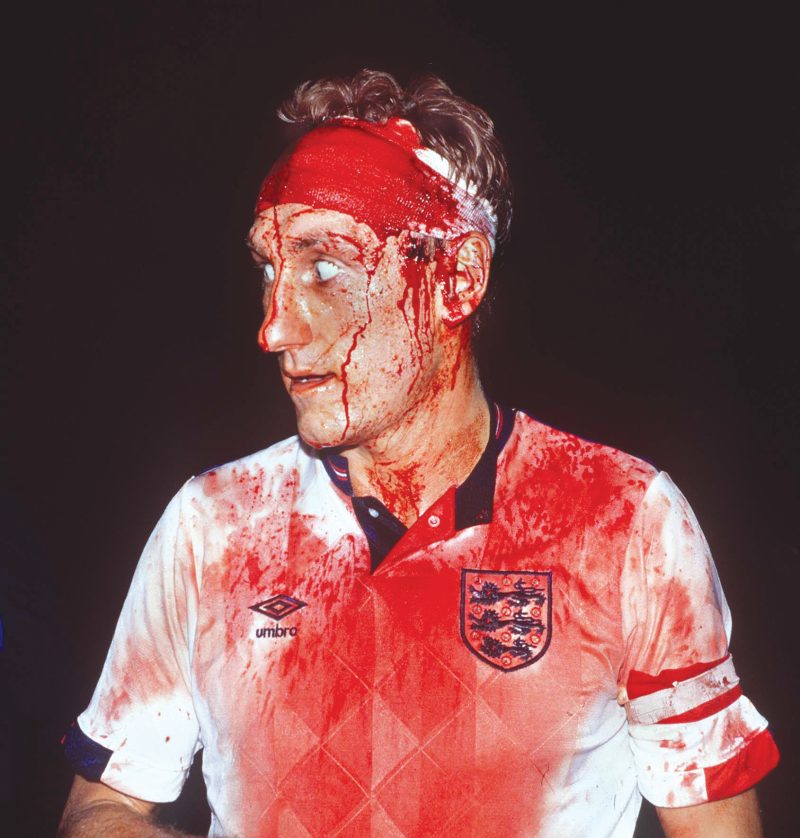
Terry Butcher against Sweden in 1989. Image: Colorsport / Shutterstock
Being heroic on a football pitch is nothing like doing it in the theatre of war. I only kicked the ball about the park. They are the real heroes. People called me a hero for playing on with a cut head [vs Sweden in 1989], but any captain of England would do that. I’m embarrassed seeing that picture. I was just doing my job. You might see yourself as someone who scored a winning goal or made a good tackle, but that’s not heroic. It’s a game.
Advertising helps fund Big Issue’s mission to end poverty
When Chris joined the army we were so proud. Going to Sandhurst when he became Lieutenant Christopher Butcher was very special. And then he became captain and we were even more proud. It’s a wonderful thing. I’d never been in a military establishment – so going to his graduation when the Queen and Prince Philip were there was beautiful.
With football and the military, you are serving your country but in different dimensions. Just like my parents were proud to see me pulling on the England shirt, we were proud of him. And it’s all about teamwork, discipline, solid units. When you play alongside somebody you see the strengths and weaknesses. You see their soul.
We lost Chris to PTSD [in 2017]. It was the hardest time of our lives.Revisiting that time for the film [new documentary Butcher: Invisible Wounds] was really tough and when we first watched it, we couldn’t speak. But talking for the film has helped me and Rita, because we got no therapy. Now, the more I talk about Chris, the lighter I feel. I want people to ask us about him. They have never known what to say when I say we lost him to PTSD. So I want people to ask what he was really like, because talking about him helps. I tell them he was brilliant, he was buoyant, he was bubbly, he was the life and soul. And I was so proud of him.
There is always hope. Our message is to get a brew then conversations can start – that’s why I got involved with Combat2Coffee. We’re a charity, and when we get together we might talk about football, then we might talk about tragedy, but then we will talk about hope. Because there is always hope. It’s always worth talking to someone, because it could save your life or a veteran’s life. I feel so sorry for homeless veterans. A lot of them are dealing with PTSD and didn’t get the support they needed. The grieving process was so hard. But we have used that grief to help Combat2Coffee. I think my younger self would be proud of the journey I’ve been on.
Butcher: Invisible Wounds is available to watch on ITVX
Combat2Coffee was set up to improve the mental health and wellbeing of the armed forces community and their families
Advertising helps fund Big Issue’s mission to end poverty
Buy from your local Big Issue vendor every week – and always take the magazine. It’s how vendors earn with dignity and move forward.
You can also support online: Subscribe to the magazine or support our work with a monthly gift. Your support helps vendors earn, learn and thrive while strengthening our frontline services.
Thank you for standing with Big Issue vendors.
Advertising helps fund Big Issue’s mission to end poverty