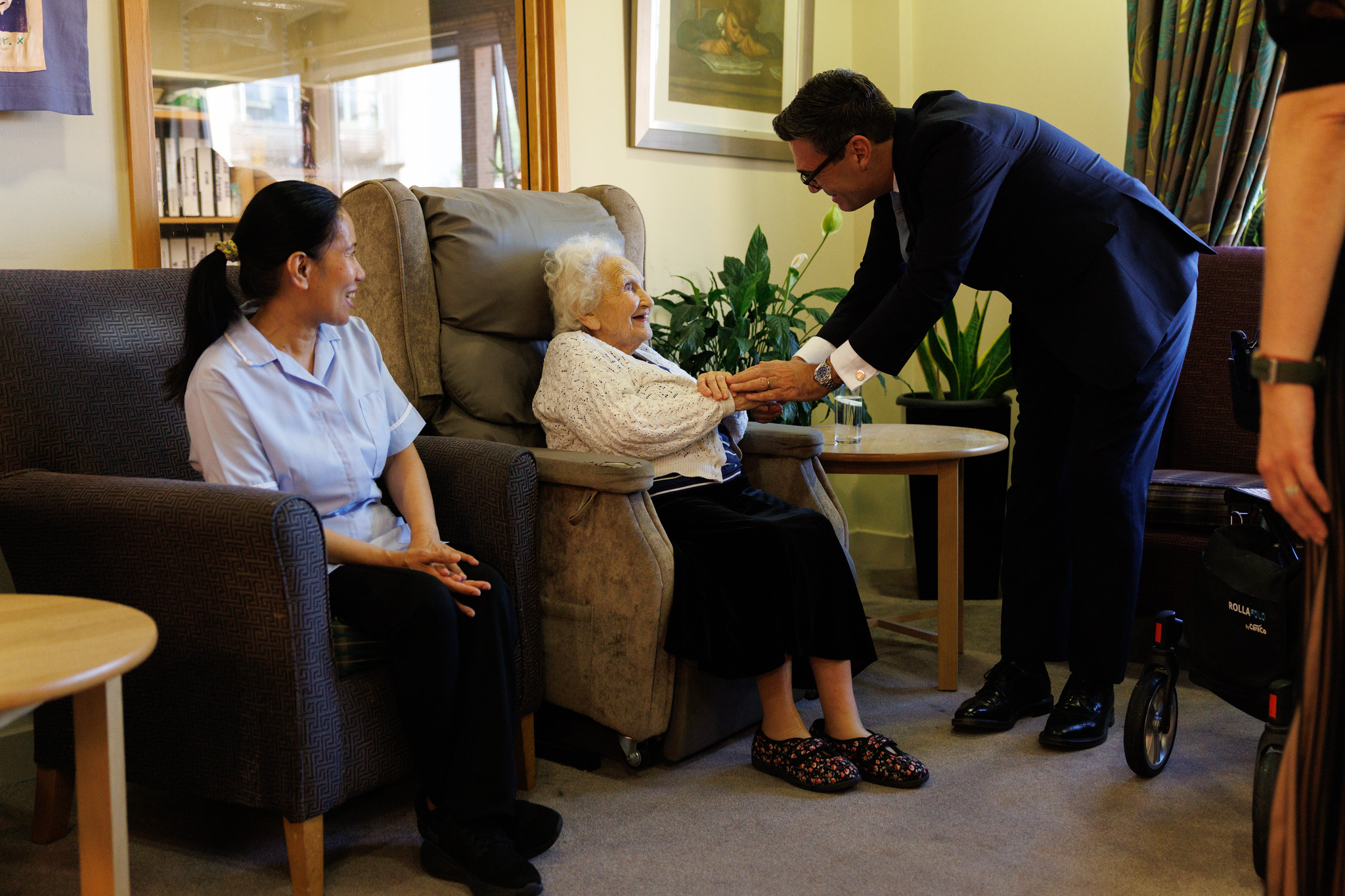
“Social care staff perform a vital service,” said Hannah Slaughter, principal economist at the Resolution Foundation, “but that is not reflected in how they are valued by society.
“They are among the lowest-paid workers in Britain, are often subject to insecure contracts and constantly have to battle with staff shortages that make their jobs more intense.”
Around 21,000 care workers are being paid below the minimum wage illegally, the analysis suggests, though the true figure is likely to be higher. Home carers are often not paid for the time spent travelling between visits, meaning their ‘effective hourly wage’ can fall below the legal minimum.
Keep reading the journalism that powers our mission
Register free to continue and learn more about the stories, campaigns and the support we provide, helping people facing poverty across the UK.
A care worker with five or more years’ experience earns, on average, just 7p an hour more than someone starting the job, down from 33p in 2016.
One in five care workers is employed on a zero-hours contract, while more than a third of providers say better pay elsewhere is the main reason staff leave. Three in 10 say it is also the biggest obstacle to recruiting new workers.
Burnham acknowledged the reality facing many workers in his speech, pointing to “staff doing what they do on poverty pay.”
He added: “I’ve been made aware of somebody homeless working in a care setting, living out of a mobile home.”
The fair pay agreement, Slaughter said, “should help to address many of these issues, especially if complemented by better progression routes both within care and into the NHS”.
She added: “This should encourage more people to consider care as a career.”
A better staffed and more affordable social care system for families should ease the pressure on unpaid carers.
There are 4.7 million unpaid carers in England, according to Carers UK, and around 600 people give up paid work every day to care for a loved one. More than half say they are providing more care than they were a year ago, while eight in 10 have experienced problems with social care services.
More than a third of carers who left employment said more affordable, accessible or reliable social care services would have stopped them from having to quit.
Emily Holzhausen, director of policy and public affairs at Carers UK, welcomed Burnham’s announcement but warned the scale of the challenge should not be underestimated.
“In the sixteen years since the last white paper set out the fundamentals of a National Care Service, the scale and complexity of the problems with social care have grown far worse,” she said. “There are chronic shortages of care, high costs and challenging systems placing families providing unpaid care under extreme pressure.”
“We want unpaid carers’ futures to be at the heart of this conversation. It’s conversation that affects us all. Almost all of us will either provide unpaid care or receive care at some point in our lives.”
Do you have a story to tell or opinions to share about this? Get in touch and tell us more.
Change a vendor’s life.
Buy from your local Big Issue vendor every week – and always take the magazine. It’s how vendors earn with dignity and move forward.
You can also support online:
Subscribe to the magazine or support our work with a monthly gift. Your support helps vendors earn, learn and thrive while strengthening our frontline services.
Thank you for standing with Big Issue vendors.