I work with pregnant women and new mothers in Gaza. Every day, they have to fight for survival
Samaher Said, protection manager for Medical Aid for Palestinians (MAP) in Gaza, works directly supporting women going through childbirth and motherhood. This is the reality of daily life for the women she supports
by: Samaher Said
15 Apr 2026
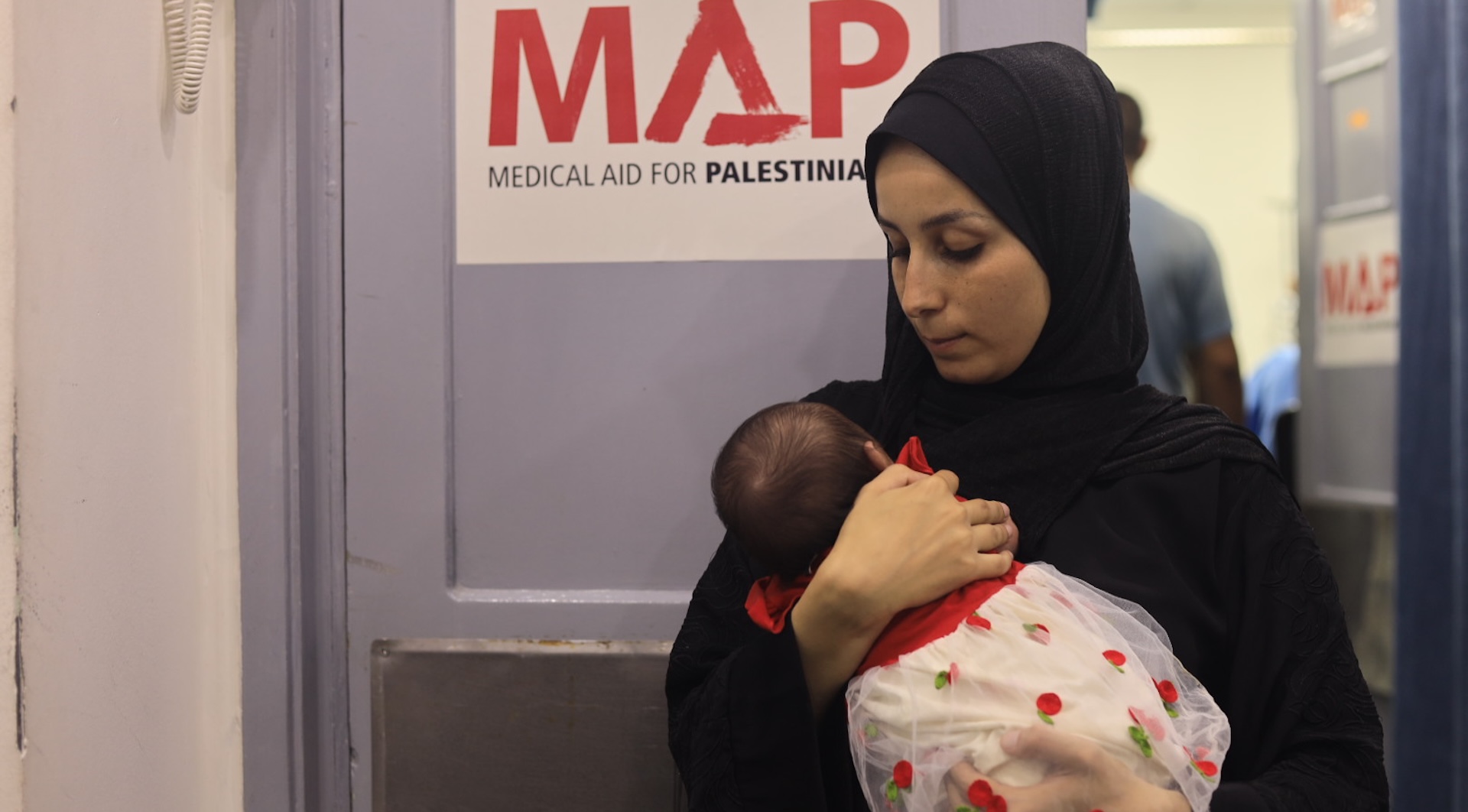
A young mother with her baby in Gaza City. Image: Haneen Salem
Share
In Gaza, pregnancy and childbirth have become a continuous battle for survival.
At any one time there are around 50,000 pregnant women in Gaza, with up to 160 women giving birth every day. As a humanitarian worker with Medical Aid for Palestinians (MAP), I work with my colleagues and our local partners to support pregnant women and new mothers in some of the most crucial moments of their and their children’s lives.
My role is to ensure that their rights to health and dignity are upheld and protected, but in Gaza, where we have been living through a prolonged genocide, this is far from easy. I want to share the reality that many mothers here are living, which I think the wider world does not fully understand or see.
For more than two years, we have watched as our healthcare system has been systematically dismantled and attacked by the Israeli military. Almost every hospital has been damaged or destroyed, and many wards are little more than walls without sufficient equipment. I know of women who have undergone excruciating cesarean sections without anesthesia or pain relief because medications were simply unavailable.
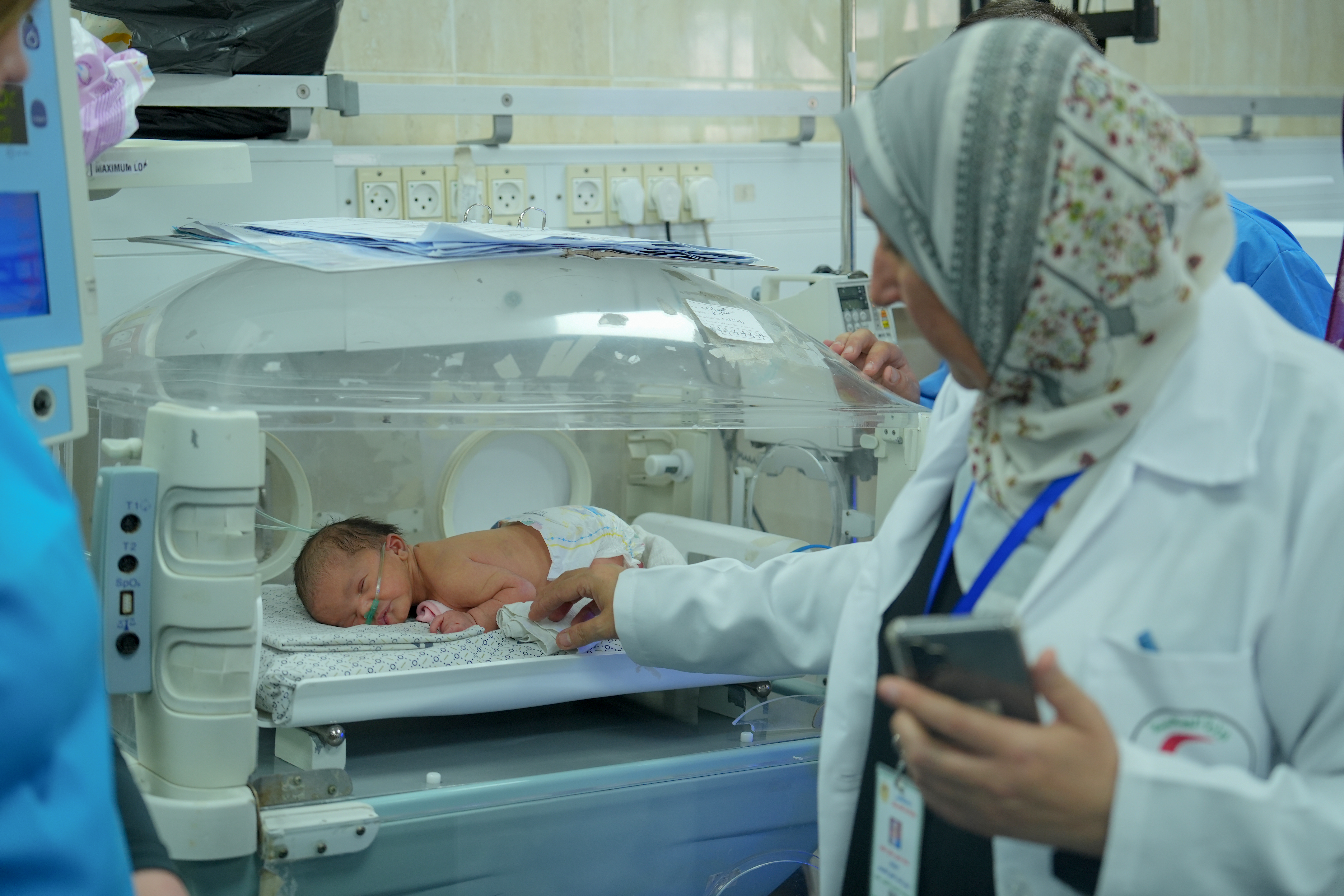
One in three pregnancies is high-risk, and 70% of newborns are premature or underweight. In some facilities, multiple newborns share a single incubator, significantly increasing the risk of death or illness. Healthcare workers do their best, and my colleagues supporting neonatal care go to every length to keep children healthy, but we are all constrained by our environment.
Advertising helps fund Big Issue’s mission to end poverty
Advertisement
Not every mother is fortunate enough to give birth with medical support, and around 15 births each week happen outside health facilities, in unsanitary tents and shelters. These environments are extremely dangerous for childbirth and can intensify pain and risk.
Pregnancy in Gaza means creating new life inside a body that is already exhausted, traumatised, and struggling simply to survive. Despite the ‘ceasefire’ agreement last year, Israeli military attacks have continued almost daily here, and more than 100 children have been killed since October 2025. Women give birth while fearing bombardment, praying for their and their babies’ lives. The psychological toll may be the most devastating aspect of this crisis. Every explosion or even the sound of something falling feels like an immediate threat.
Babies in Gaza are born into a context of economic decline and a collapsing healthcare system with shortages of basic medical supplies and equipment. Image: Palm Media
This April marks six months since a “ceasefire” agreement came into effect in Gaza. For those of us living here, it has felt like a ceasefire in name only, and the hardships, Israeli military attacks and punishing shortages due to aid restrictions have continued, impacting every aspect of our lives.
Keep reading the journalism that powers our mission
Register free to continue and learn more about the stories, campaigns and the support we provide, helping people facing poverty across the UK.
Harsh and ongoing restrictions on aid and food entry by Israeli authorities means that access to proper and nutritious food in Gaza remains incredibly difficult and unaffordable for many pregnant women. There are some days when we can’t find any vegetables or meat we need in the market. Daily survival also demands intense effort: collecting water, cooking over fires due to the lack of gas, and living in rubble and tents. Even basic hygiene supplies such as sanitary pads, clean water, or shampoo are scarce.
These difficult living conditions mean I see daily cases of malnutrition, illness, chronic stress, high blood pressure, depression and anaemia, draining women’s physical strength, and making them more vulnerable to complications during pregnancy and childbirth. Physical exhaustion also contributes to miscarriages, another painful form of loss.
We have encountered women who feel ashamed of being pregnant while living in tents, from a painful sense that they are bringing new life into circumstances that cannot sustain it. One particularly heartbreaking case involved a woman living in a tent whose husband had been killed. After his death, she discovered that she was pregnant. What should be a moment of joy becomes intertwined with profound grief, creating a deeply complex emotional burden.
Once the baby is born, we still see so many challenges for women that we try to help ease. Breastfeeding becomes difficult due to malnutrition and stress, while safe infant formula is often unavailable. Postnatal care is extremely limited but without follow-up medical checks or necessary medications, complications for both mothers and newborns often worsen.
Despite everything they have to face, a mother’s instinct to protect her children remains stronger than anything else. Motherhood in Gaza is often expressed through quiet acts of extraordinary courage. At the sound of bombardment, many mothers instinctively throw their bodies over their children to shield them from harm. When pulled from beneath the rubble, the first question they ask is almost always: “Where are my children?”
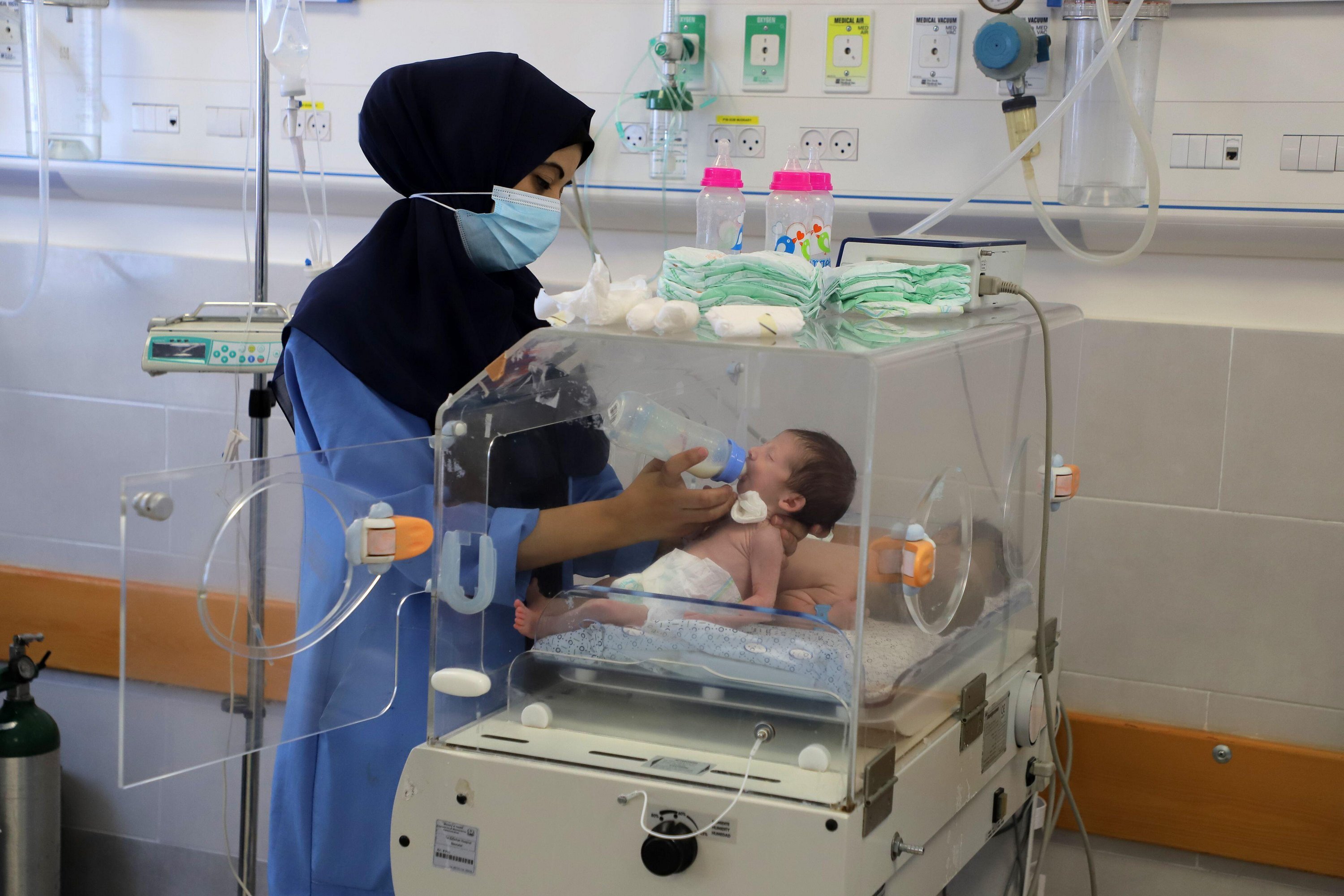
A health worker takes care of evacuated premature babies at a hospital in the southern Gaza Strip city of Rafah. Image: Maddie Powell
I have seen mothers spend their limited money on food for their children, rather than medication for themselves, or give their entire food portion to their children despite suffering from severe anaemia. I met a woman living with cancer who received a medical referral to travel abroad for treatment, but she refused to leave Gaza because she was the only caregiver for her children.
A mother in Gaza is not merely a symbol of resilience. She is a heart that continues to care despite unbearable loss, a spirit that refuses to give up, and a pair of eyes that rarely sleep because of fear for those she loves. A mother’s strength does not mean she is not afraid or suffering.
Motherhood in Gaza is motherhood in its harshest form, yet it carries the deepest meaning of humanity, courage, and sacrifice. The protection we as local humanitarian workers can offer them is only so much, we need the world to understand their plight and take concrete action to protect healthcare and civilians.
Samaher Said is protection manager for Medical Aid for Palestinians (MAP) in Gaza.
Last year, MAP’s local team delivered almost two million services to Palestinians, working with local partners across Gaza.Its teams are supporting hospitals, reopening health facilities, and delivering emergency care, clean water, and vital supplies to displaced families.
Buy from your local Big Issue vendor every week – and always take the magazine. It’s how vendors earn with dignity and move forward.
You can also support online: Subscribe to the magazine or support our work with a monthly gift. Your support helps vendors earn, learn and thrive while strengthening our frontline services.
Thank you for standing with Big Issue vendors.
Advertising helps fund Big Issue’s mission to end poverty