“Clearly, the Government must redouble its efforts to support disadvantaged families, children on FSMs, and address the wider challenges they face.”
The Government said the number of children who qualify for free lunches is “typically lower” than for other pupils, including before the pandemic.
Demand for free school meals soared in lockdown when more than 300,000 children became eligible for free school meals after Covid-19 hit the UK in March last year. Pandemic-driven redundancies, income cuts and increased living costs have pushed families across the country further into hardship.
Keep reading the journalism that powers our mission
Register free to continue and learn more about the stories, campaigns and the support we provide, helping people facing poverty across the UK.
“Schools are the best place for children’s education and wellbeing, and we want to encourage all children eligible for FSMs to attend,” a government spokesperson said.
“We have made sure that throughout the pandemic schools have continued to accept applications for FSMs, providing meals to anyone who becomes newly eligible, including while pupils were learning remotely.”
A similar attendance gap of roughly five per cent between children eligible for free school meals and those who are not was recorded on April 15 was recorded after the Easter holiday.
Attendance was even lower among pupils known to have a social worker, dropping to just below 82 per cent overall.
Ministers have committed to extending the breakfast clubs programme for low-income pupils for another two years, the Government spokesperson added.
Rachael Anderson, head of schools at classroom food aid charity Magic Breakfast, said it was “particularly important” for disadvantaged children to attend school to ensure they can benefit nutritionally from the healthy meals on offer.
More than 1.63 million children were eligible for free school meals – meaning their families receive income-based benefits such as jobseeker’s allowance or universal credit – by October 2020, a 190,000 rise in the number of pupils registered for the free food.
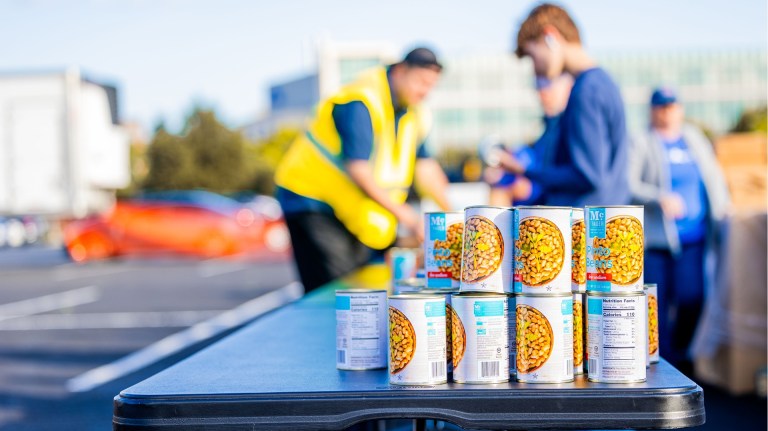
There has been a rise in the number of families forced to turn to food banks during the pandemic. The Trussell Trust gave out 2.5 million emergency food parcels last year – a 1.5 million increase since 2016 – with nearly a million of those going to children, amounting to two every minute.