“Employers have certain expectations and I can’t always fulfil those expectations and targets. I do what I can but unfortunately it’s never enough.”
There are thousands of care leavers who have been unable to find employment. Around 40% of care-experienced people aged 19 to 21 are NEET. That’s compared with 12.7% of their peers who are not care-experienced, according to Office for National Statistics figures.
Hill has managed to secure part-time work in a supermarket but has been unable to find full-time employment. At times, he has had to turn to a food bank to survive.
Keep reading the journalism that powers our mission
Register free to continue and learn more about the stories, campaigns and the support we provide, helping people facing poverty across the UK.
He says this the challenges have impacted his mental health. “When I was younger, all I wanted was freedom and independence. Financial support would mean I’d be able to go out and not feel trapped in being unemployed and having no money,” he explains.
The job application process can be “lengthy” and mean personality tests even before a candidate has got to interview stage.
“Young people are facing a perfect storm of challenges. The high cost of living, insecure work and housing, and inadequate universal credit are pushing young people into financial hardship and towards food banks,” says Emma Reekie, youth engagement lead at food bank charity Trussell.
Alan Milburn, the former health minister commissioned by the government to review the levels of youth unemployment, argues that it is a “whole-system failure”.
“This is not a failure of young people,” Milburn wrote in the first part of his report published in May. “It is a failure of a system stuck in the past. It would be easier to blame one thing: Covid, smartphones, benefits, schools, employers, parents or young people themselves.
“The evidence does not support a single explanation. It supports something harder to accept: that the institutions we built to support young people into adulthood are no longer fit for that purpose, and that the country has known this for some time.”
Rising ill health, a weak labour market, a changing online world, limited vocational education and a hands-off benefits system were deemed key drivers of youth unemployment.
Work and pensions secretary Pat McFadden said he commissioned the report “because we cannot afford to lose a generation of young people”. He welcomed Milburn’s “vital work which lays bare the scale of the challenge and the root causes of youth unemployment we now need to confront”.
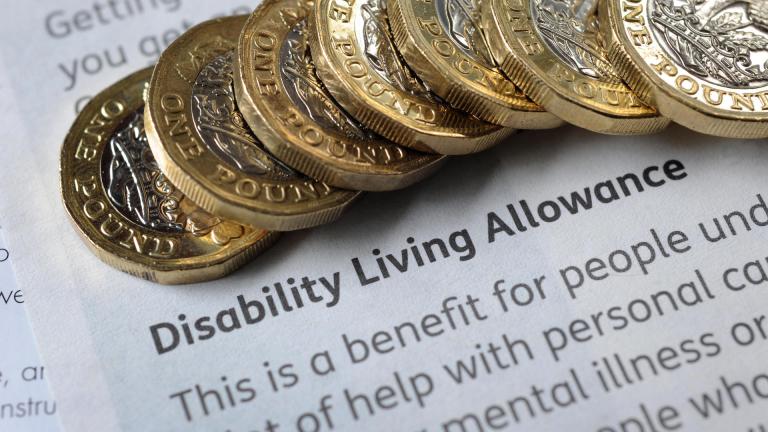
Wren relies on universal credit to afford to live alongside a part-time salary, but people under the age of 25 get around £100 less each month than claimants who are older. The assumption is that these young people will be able to rely on family members financially, but this is not always the case.
“The cost of essentials does not care how old you are – so why do people under 25 receive less in universal credit payments? This isn’t right,” says Rekie.
“But young people are still hopeful that change is possible. Policymakers must make the bold changes that will mean we can all afford the essentials, or risk failing the next generation and holding back our families, communities, and economy.”
Become, which has supported Hill, is advocating for care leavers to receive the higher over-25 rate of universal credit from age 18.
Hill says that the charity has helped him understand his rights and “build confidence”. He has also taken part in its Propel into Work programme, which helps care leavers up to the age of 27 with employment support, tailoring their CVs and offering them advice with job applications and interviews.
Wren would like to start his own business, “ideally sharing my own experiences, doing training or personal development and possibly mentoring” and he “would love to travel for work”.
“There should be more support for employment,” adds Wren. “I do think there’s a lot of employers that take advantage of young people in work. They need to stop, frankly. I also think there just needs to be mental health support within work where you’re not going to be fired or you’re not going to be judged over that.”
Big Issue Recruit also has a programme supporting care-experienced young people get into work. The specialist recruitment service offers one-to-one support from a work coach to help people from marginalised and disadvantaged backgrounds who face barriers to getting into employment.
Beyond care-experienced young people, there are other groups who face additional challenges.
One in five people supported by Big Issue Recruit is aged 18 to 25.
“Many have applied for hundreds of jobs and struggle to find an employer to give them a chance,” says Catherine Parsons, managing director of Big Issue Recruit. “Some of these are being supported through a project focused on care- experienced young people, many of whom may face additional barriers, and discrimination.”
Ruby, a 20-year-old woman from Abertridwr in Caerphilly, South Wales, has been supported by a Big Issue Recruit work coach since the start of 2026 as part of a programme helping young people from South Wales get into work, backed by Bute Energy.
She lives in an ex-mining village with few job opportunities and limited public transport links with no train station. She does not drive, although she is learning, which restricts her options for work.
“I’ve been applying for roles that are suitable for me. Most of the time, I hear nothing back. It’s awful. I think it’s hard for everyone,” Ruby says. “Everyone wants a job and it’s just a nightmare. Obviously, they want people with experience. But when you’re young, you don’t have experience. And to get experience, you need a job.”
Ruby went to college after school but struggled with it so only did one year. She has had short-term jobs in hospitality and in retail, but these have not given her consistent work.
Her job coach Nicci Button has helped her claim universal credit and ensure her CV and job applications are strong, but it remains a challenge to find work.
“I apply for around five jobs a day. I’m always going on Indeed and other job websites. It’s just a nightmare. It makes me feel horrible. I’m just not getting anywhere. I want to do well in life, and I can’t do that without getting a job for myself,” Ruby says.
It is her dream to run her own business or work in sales and beauty, but at the moment, she just wants to get a full-time job.
“In Big Issue Recruit, each young person works on a one-to-one basis with a job coach to identify their skills, strengths and aspirations and to match them with employers who have vacancies and want to create a more diverse workforce,” said Parsons.
“We have partnerships with employers in hospitality, construction, logistics and green energy, and job coaches provide support to the young person and their manager for the first six months after they start work. This makes the world of work feel safer for everyone and means that over 90% of people who find a job through Big Issue Recruit stay employed, gaining the skills and experience to start building a career.”
Do you have a story to tell or opinions to share about this? Get in touch and tell us more.
Change a vendor’s life.
Buy from your local Big Issue vendor every week – and always take the magazine. It’s how vendors earn with dignity and move forward.
You can also support online:
Subscribe to the magazine or support our work with a monthly gift. Your support helps vendors earn, learn and thrive while strengthening our frontline services.
Thank you for standing with Big Issue vendors.